catbird grape
Vitis palmata
BloomEDU
Identify it today. Know it next time.
Add catbird grape to BloomEDU and a short quiz tomorrow will check if the name stuck.
Get BloomEDU — add catbird grapeFree · iOS · Android
Identity & Classification
Scientific name: Vitis palmata
Common name(s): catbird grape
Family: Vitaceae
Genus: Vitis
Vitis palmata is a North American grapevine in the grape family, placed within the same genus as other wild and cultivated grapes and closely related to other eastern U.S. Vitis species.
Visual Description
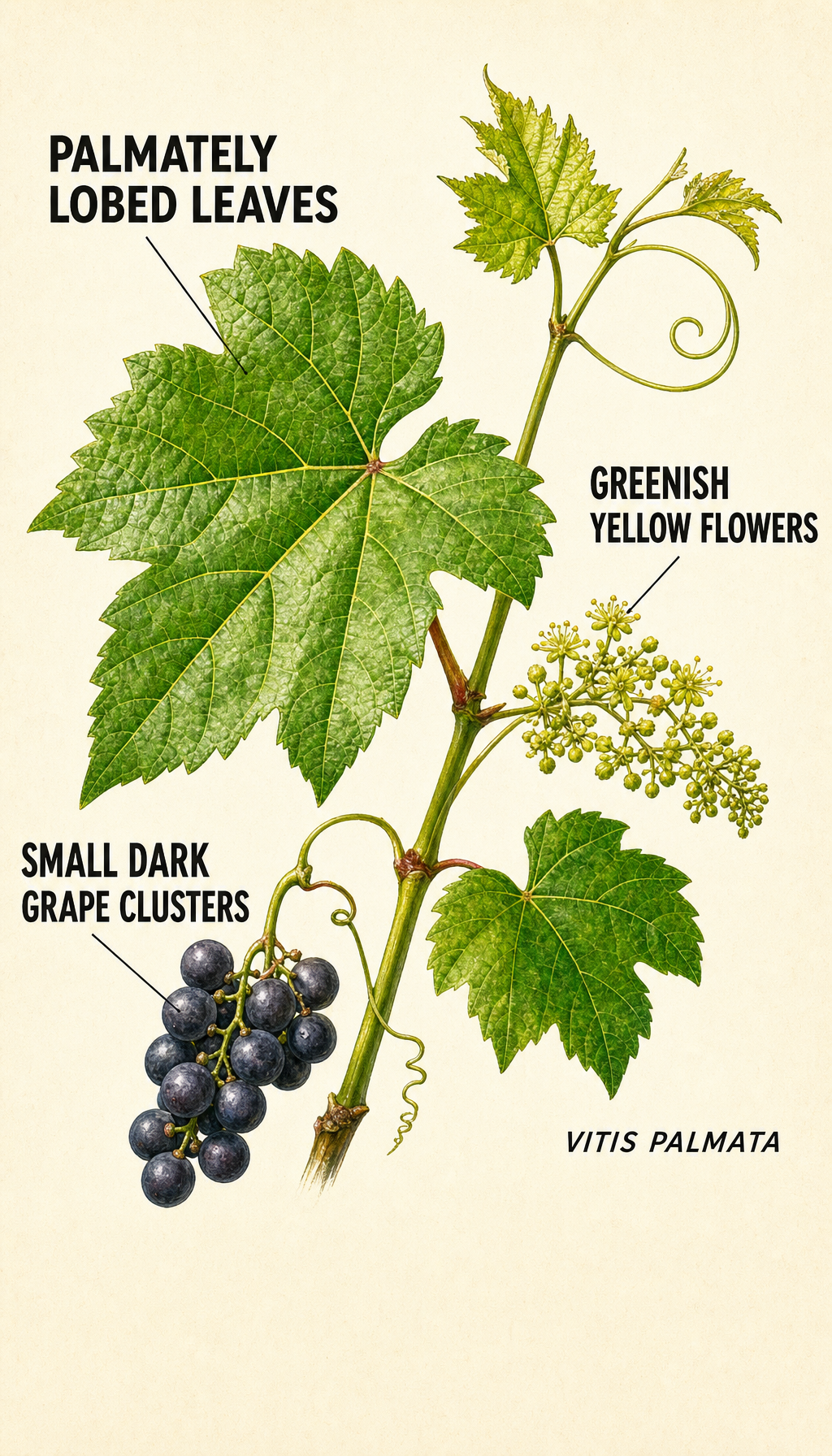
Vitis palmata is a deciduous, woody climbing vine that typically twines over shrubs and small trees. Plants often reach lengths sufficient to climb into the canopy of surrounding vegetation. Flowers are small, greenish to yellowish, borne in loose clusters (inflorescences) and typically have 4–5 petals and similar numbers of sepals. Fruits are fleshy berries produced in clusters; berries typically mature to dark purple or nearly black and may persist into the fall. Leaves are characteristically palmately lobed, often with 3–5 deep lobes and a coarsely toothed margin; leaf surfaces may be smooth to slightly rough. Leaves are alternately arranged on the stem with tendrils produced opposite the leaves. Distinctive identifying features include the palmately lobed leaves combined with a twining habit and clustered dark berries. Seasonal variation includes green foliage through the growing season, with leaves often turning color and grapes ripening by late summer to fall.
Habitat & Distribution
Catbird grape is typically found in moist, wooded settings and along streambanks, floodplain forests, woodland edges, thickets, and similar habitats. It often favors soils that remain moderately moist and can occur in partial shade to full sun where vines can climb. Geographic distribution includes numerous eastern U.S. states — documented occurrences include Alabama, Arkansas, Connecticut, Florida, Georgia and additional states across the Southeast into parts of the Mid-Atlantic and Northeast — reflecting a generally eastern North American range.
Ecological Role
Flowers are insect-pollinated, visited by a range of small generalist pollinators. Fruits are an important food source for birds and mammals; seed dispersal is primarily by wildlife that consume the berries. As a climbing vine, Vitis palmata can contribute structural complexity in woodland edges and riparian thickets and provides seasonal fruit resources for wildlife.
Human Uses & Cultural Significance
Fruits of wild Vitis species, including V. palmata, are generally regarded as edible and are consumed by people and wildlife; local uses may include fresh eating or culinary preparation where harvested. Grapes can present toxicity risks for domestic dogs, as members of the grape group are known to be toxic to some canids.
Conservation & Interesting Facts
The species name palmata refers to the palmately lobed leaves that are diagnostic for identification. The common name "catbird grape" reflects the frequent consumption of the fruit by frugivorous birds. Vitis palmata climbs using tendrils and a twining habit, allowing it to reach light in densely vegetated habitats.
From Instagram