small white clover
Trifolium nigrescens
BloomEDU
Identify it today. Know it next time.
Add small white clover to BloomEDU and a short quiz tomorrow will check if the name stuck.
Get BloomEDU — add small white cloverFree · iOS · Android
From Instagram
Identity & Classification
Scientific name: Trifolium nigrescens
Common name: small white clover
Family: Fabaceae
Genus: Trifolium
Note: Placement in the genus Trifolium indicates this plant is a true clover and shares general morphology and ecological traits with other Trifolium species.
Visual Description
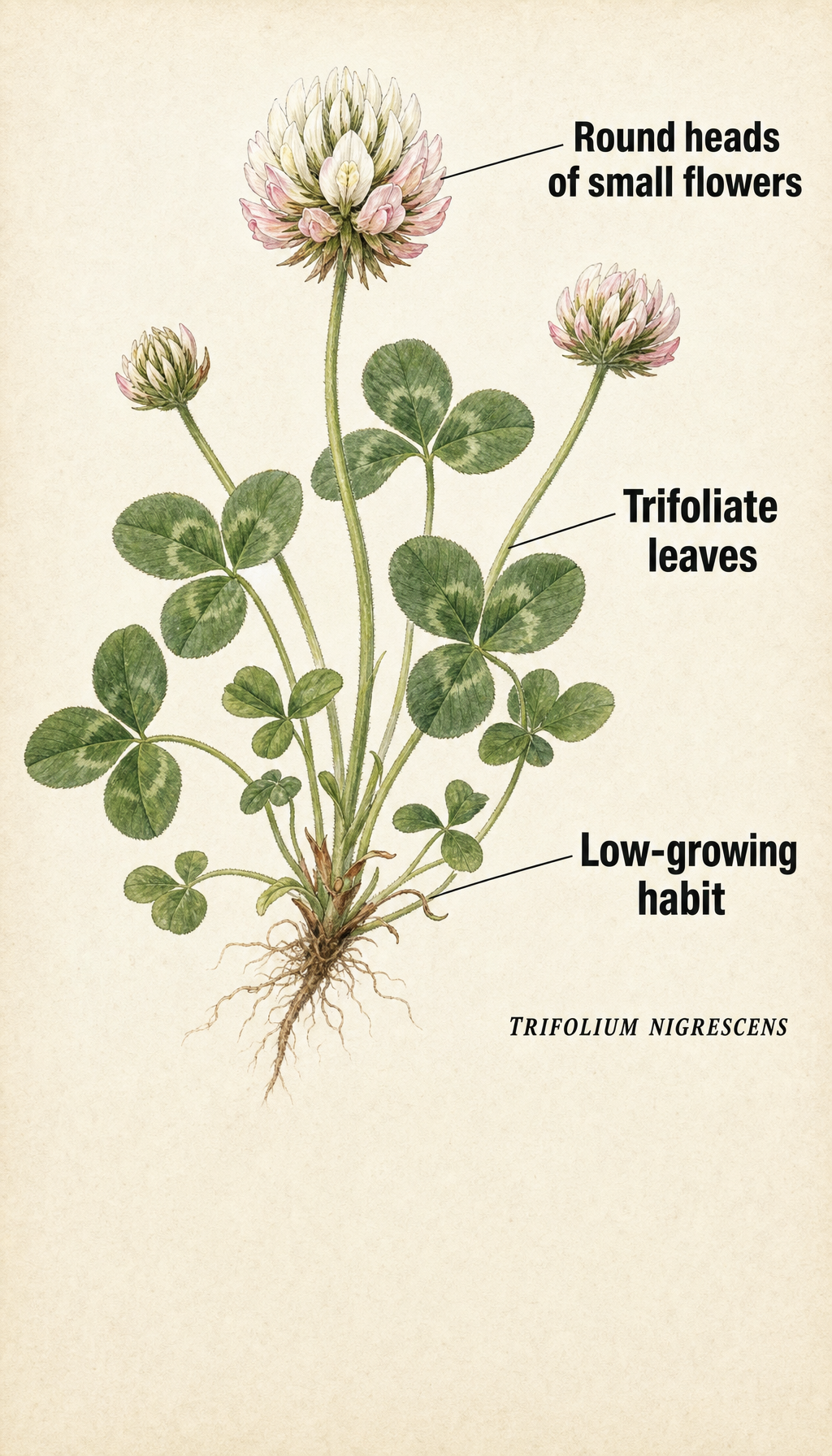
Overall form: A low-growing, herbaceous legume that typically forms small patches or mats in open ground. Plants are generally prostrate to loosely ascending rather than erect.
Size: Individual stems and flower heads are typically small compared with larger agricultural clovers; plants often remain close to the ground.
Flowers: Inflorescences are compact, rounded heads composed of many small papilionaceous (butterfly-shaped) flowers. Flower color is generally white to off-white and may show subtle pink or cream tinges. Each flower typically has the five-petaled arrangement characteristic of Fabaceae (banner, wings, keel).
Leaves: Leaves are compound and usually trifoliate (three leaflets). Leaflets are often oval to oblong with entire margins; some clover species show a pale chevron or crescent mark on leaflets and similar markings may occur in this species.
Distinctive features: The combination of small, globose white flower heads, trifoliate leaves, and a low, mat-forming habit helps distinguish this species from taller, more erect legumes. Stipules and a short petiole commonly accompany each leaf cluster.
Seasonal variation: Flowering and vegetative vigor can vary with regional climate; in warmer parts of its range flowering may occur over an extended season, while cooler or drier periods reduce aboveground growth.
Habitat & Distribution
Growing conditions: Typically found in open, often disturbed or grassy habitats such as meadows, roadsides, pastures, and lawn margins. Can occur in both somewhat moist and well-drained soils.
Light and soil: Often grows in full sun to partial shade and tolerates a range of soil textures; prefers neutral to mildly acidic soils in many localities.
Geographic distribution: Recorded in the southeastern United States, including Alabama, Florida, Georgia, Louisiana, Mississippi and one additional nearby state. Local abundance may be patchy within this region.
Ecological Role
Pollination: Flowers of Trifolium species generally attract a variety of bees, including honeybees and native solitary and bumble bees, which visit for nectar and pollen. This species likely provides a concentrated nectar resource when in bloom.
Nitrogen fixation: As a member of Fabaceae, it forms symbiotic associations with nitrogen-fixing bacteria in root nodules and can contribute to soil nitrogen enrichment.
Wildlife interactions: May provide forage for grazing animals and nectar for pollinators; seeds and foliage can be part of the diet of small mammals and insects in the habitat.
Conservation & Interesting Facts
Conservation status is not broadly listed as threatened in major regional floras for this species. Interesting facts: Like other clovers, Trifolium nigrescens participates in a beneficial mutualism with rhizobia bacteria to fix atmospheric nitrogen, and its dense flower heads make it an efficient nectar source for many small bees.