common dandelion
Taraxacum officinale
BloomEDU
Identify it today. Know it next time.
Add common dandelion to BloomEDU and a short quiz tomorrow will check if the name stuck.
Get BloomEDU — add common dandelionFree · iOS · Android
**Identity & Classification**
Taraxacum officinale — common name: common dandelion (often just “dandelion”)
- Kingdom: Plantae
- Order: Asterales
- Family: Asteraceae (the daisy/sunflower family)
- Genus: Taraxacum; Species: T. officinale
- Taxonomic notes: The name Taraxacum officinale is applied to the familiar common dandelion, but the genus Taraxacum contains many closely related taxa and numerous apomictic (asexually reproducing) microspecies. Because many populations produce seed asexually and show local morphological variation, taxonomy in this group can be complicated and different authors split or lump taxa in different ways. **Physical Description**
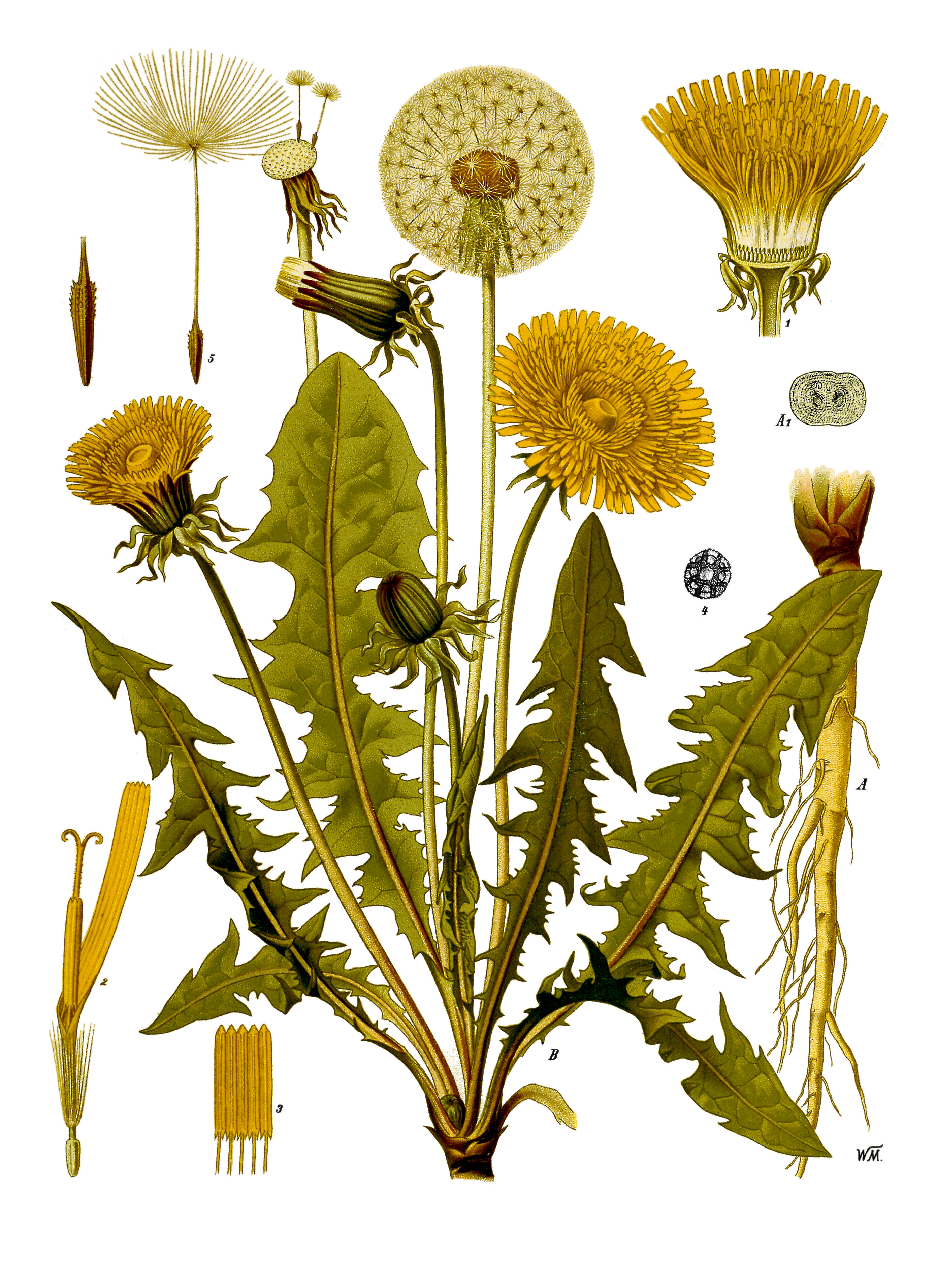
A charismatic little powerhouse of a plant — easy to spot once you know what to look for. - Growth form: Herbaceous perennial forming a basal rosette of leaves and sending up one or more leafless flowering stalks (scapes). - Leaves: Basal rosette of lance-shaped leaves, usually deeply toothed or lobed (hence “dent de lion” = lion’s tooth). Leaves vary in size and shape among plants and populations. - Flowers: What looks like a single yellow “flower” is actually a capitulum (flower head) made of many small ligulate (strap‑shaped) florets packed together; heads are typically bright yellow. - Flower stalks (scapes): Usually hollow and leafless, bearing a single flower head at the top; stalks exude a characteristic white, milky sap (latex) when broken. - Fruit/seed: After flowering the head usually develops into a spherical “blowball” (seed head) composed of many achenes, each topped with a tuft of fine hairs (pappus) that acts like a parachute for wind dispersal. - Root: A stout, usually deep taproot that stores resources and can resprout the rosette after mowing or grazing. - Size: Plants commonly produce rosettes low to the ground with flowering stalks that often reach on the order of tens of centimeters; exact size varies with growing conditions. **Habitat & Range**
- Native/introduced: Originally native to parts of Eurasia; now widely established beyond its native range. - Distribution notes: The species (or species complex) is widely naturalized in temperate regions around the world and has been introduced to many continents. - Typical habitats: Very adaptable — commonly found in lawns, meadows, pastures, roadsides, disturbed ground, and other open sunny places. It tolerates a wide range of soils, including compacted and low-nutrient sites, and can occur in both moist and relatively dry conditions. - Light and soil: Often favors full sun to partial sun; tolerates a range of soil types and moisture regimes. **Ecological Role**
- Early-season resource: Dandelion flowers often bloom early in the season and provide accessible pollen and nectar when fewer other flowers are available, making them important for early-emerging pollinators. - Pollinators: Visited by a variety of insects, including bees and syrphid (hover) flies; the composite flower head provides many small foraging units in one place. - Dispersal and colonization: The pappus-equipped achenes are adapted for wind dispersal, which helps the plant quickly colonize open or disturbed ground. - Soil and ecosystem functions: The taproot can help break up compacted soil and may bring mineral nutrients up from deeper layers, contributing to nutrient cycling; as a perennial that resprouts, it can be a persistent component of grassland and lawn communities. - Trophic links: Dandelions are used by a range of herbivores and invertebrates; specifics of specialized relationships vary regionally and among insect species. **Human Uses & Cultural Significance**
- Culinary uses (well-documented): Young leaves are commonly eaten as cooked greens or in salads (often picked before flowering to reduce bitterness). Flowers and roots are also used in various traditional preparations: flowers have been used for making beverages such as dandelion wine; roots have been roasted or used as a coffee substitute. These culinary practices are widely reported in many cultures. - Herbal/traditional use (historical documentation exists): Dandelion parts have long been used in folk and traditional herbal medicine in multiple regions. Statements about specific medicinal efficacy, dosages, or safety are not provided here — historical use does not equal proven therapeutic effect. - Cultural roles: The seed head has inspired many children’s rituals (blowing the “clock” or “blowball” to make a wish or “tell the time”), and the toothy leaf shape gave rise to the common name derivation “dent de lion” (lion’s tooth). - Safety note: Dandelion is commonly eaten, but individual reactions (allergy or intolerance) are possible. If considering dandelion for food or as a herbal product, consult reliable, specific sources and, when appropriate, health professionals. **Interesting Facts**
- What you call a “flower” is actually hundreds of tiny flowers: each yellow “petal” is a single floret capable of producing an individual seed (achene). - The iconic “blowball” is a highly efficient wind-dispersal unit: each achene has its own parachute (pappus) that allows it to travel on air currents. - The plant exudes a milky latex from stems and leaves when damaged; this latex is characteristic of many members of the Asteraceae and related groups. - Dandelions are remarkably good at thriving in human-altered landscapes — their combination of a deep taproot, rapid seed production, adaptable reproduction, and tough rosette habit makes them resilient lawn and roadside colonizers. - Taxonomic trickster: because many dandelions reproduce asexually and show local morphological variation, botanists sometimes debate how many species to recognize within the Taraxacum group — it’s a classic example of how reproduction mode complicates species concepts.
From Instagram