white heath aster
Symphyotrichum ericoides
BloomEDU
Identify it today. Know it next time.
Add white heath aster to BloomEDU and a short quiz tomorrow will check if the name stuck.
Get BloomEDU — add white heath asterFree · iOS · Android
**Identity & Classification**
Symphyotrichum ericoides — Common names: Manyflowered aster, white heath aster, frost aster, heath aster. - Family: Asteraceae (the aster or daisy family)
- Genus: Symphyotrichum
- Species: ericoides
- Taxonomic notes: This species was formerly placed in the genus Aster (commonly cited as Aster ericoides) and has been transferred to Symphyotrichum in modern North American treatments. It belongs to the tribe Astereae within Asteraceae. Hybridization can occur with close relatives (see “Interesting Facts”). **Physical Description**
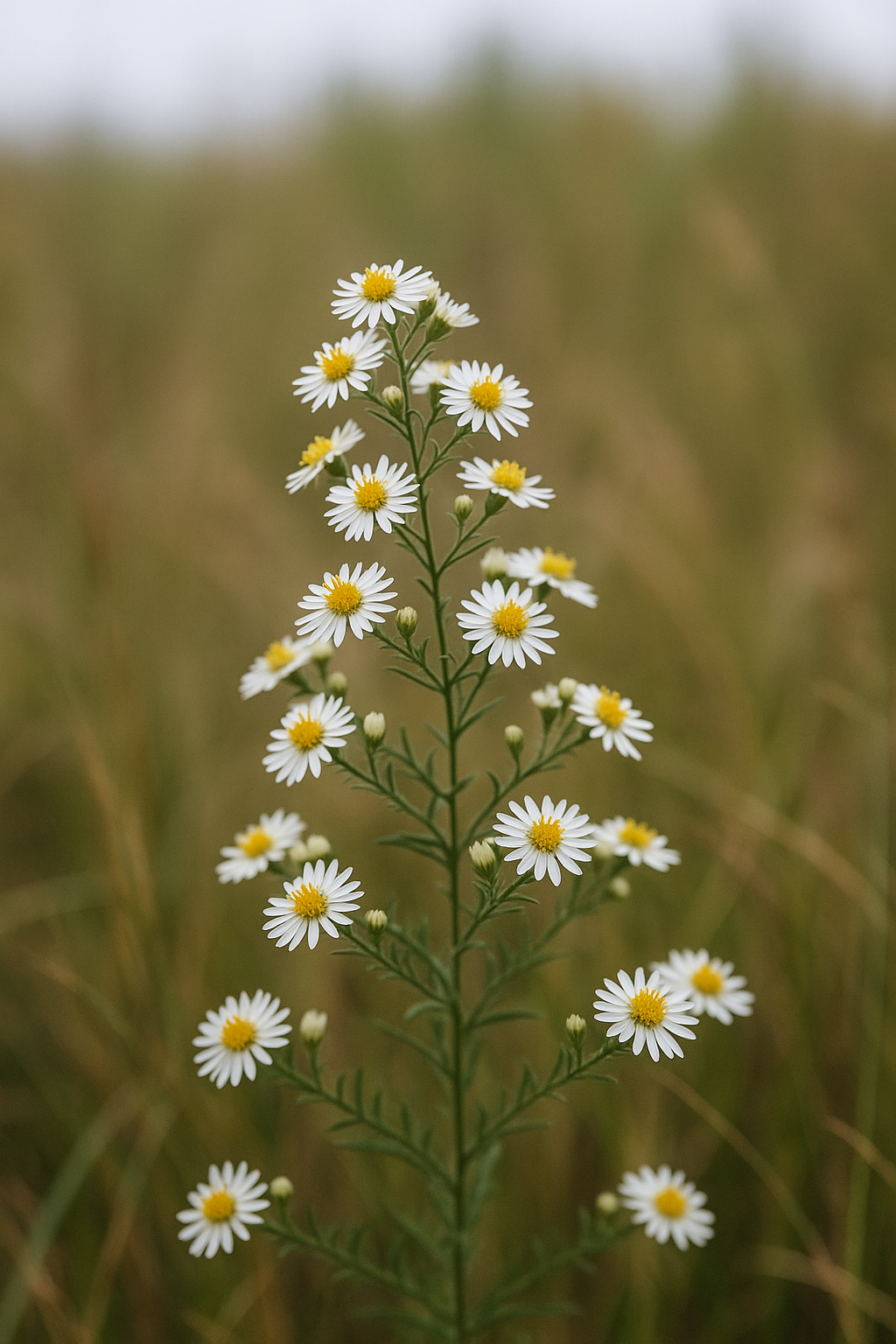
A lively little fall-blooming perennial that rewards close inspection — what looks like a single “flower” is actually a composite head made of many tiny florets. Key features:
- Habit: A clump-forming, herbaceous perennial that often produces many branching stems and numerous flowering heads. - Inflorescences: Many small composite flower heads with white ray florets surrounding a central disk of yellow-to-golden disk florets; when disk florets age they may become darker. - Leaves: Generally small and narrow, often linear to lanceolate — a “heath-like” foliage appearance (the specific epithet ericoides means “resembling Erica/heath”). - Fruit and dispersal: Like other asters, the fruits are achenes topped with a pappus (fine hairs) that aids wind dispersal. - Distinguishing points: Lots of relatively small white flower heads borne in abundance (hence “manyflowered”), and narrow leaves that contrast with some larger-leaved aster species. **Habitat & Range**
- Native distribution: Native to much of central and eastern North America. - Introduced: Has been introduced to parts of Europe and western Asia. - Typical habitats and growing conditions: Often found in open, sunny to partly sunny sites with well-drained soils — places such as prairies, meadows, roadsides, and other open disturbed or semi-natural sites. It is commonly associated with drier, sunnier situations compared with some other asters. (Note: precise local range limits vary by region; consult local floras or native plant databases for county-level or state/province-specific distribution.)
**Ecological Role**
- Pollination: Provides nectar and pollen to a variety of insects — bees, butterflies, and other flower-visiting insects frequently use asters for late-season resources. - Phenology: As a late-summer to autumn bloomer in many areas, it is an important source of floral resources as the season winds down. - Seed dispersal & wildlife: Seeds are wind-dispersed via the pappus. The plant can contribute to seed banks and colonize open ground; seeds may also be used opportunistically by seed-eating wildlife (specific species interactions are not exhaustively documented here). - Community role: Often part of open prairie, meadow, and disturbed-site plant communities where it contributes to floral diversity and late-season forage for pollinators. **Human Uses & Cultural Significance**
- Horticulture: Frequently used in native-plant and pollinator-friendly gardens for late-season white flowers and to support insect life. Gardeners value its ability to produce many small blooms and its tolerance of sunny, well-drained sites. - Ethnobotany / medicinal uses: Specific traditional medicinal or cultural uses are not well-documented here. I will not assert medicinal or toxic properties without reliable sources. - Other uses: Cultivars and selections have been made for garden use, but named cultivars are not detailed in this entry. **Interesting Facts**
- Composite trickery: Each “manyflowered aster” inflorescence is a composite head — hundreds of tiny, individual florets (disk and ray florets) work together to attract pollinators. That’s classic Asteraceae engineering. - Name clues: The species name ericoides means “Erica-like” (erica = heath), a nod to the plant’s small, narrow leaves that resemble those of heath plants. - Frost-friendly common name: Common names like “frost aster” reflect its tendency to bloom late into the season — sometimes persisting until the first frosts — though the exact origin of the common name is historical and not strictly botanical. - Hybrids: Where Symphyotrichum ericoides grows close to Symphyotrichum novae-angliae (New England aster), they can hybridize; the naturally occurring hybrid is known as Symphyotrichum × amethystinum (amethyst aster). - Lightweight travelers: The pappus on each achene makes the seeds efficient at wind dispersal — tiny parachutes that help colonize open, disturbed ground. New England aster and others), or suggest pollinator-friendly companion plants for a native pollinator garden using this species.
From Instagram