Pacific aster
Symphyotrichum chilense
BloomEDU
Identify it today. Know it next time.
Add Pacific aster to BloomEDU and a short quiz tomorrow will check if the name stuck.
Get BloomEDU — add Pacific asterFree · iOS · Android
Identity & Classification
- Scientific name: Symphyotrichum chilense
- Verified common names: Pacific aster, coastal aster
- Family: Asteraceae
- Genus: Symphyotrichum (formerly placed in the genus Aster; the reclassification to Symphyotrichum is well-established)
Visual Description
- Overall form: A perennial herbaceous plant to short subshrub that typically forms clumps or loose colonies; growth habit can range from low and spreading to moderately erect.
- General size: Plants typically produce multiple stems and may range from low-growing forms to stems over medium height for herbaceous perennials, depending on site conditions and competition.
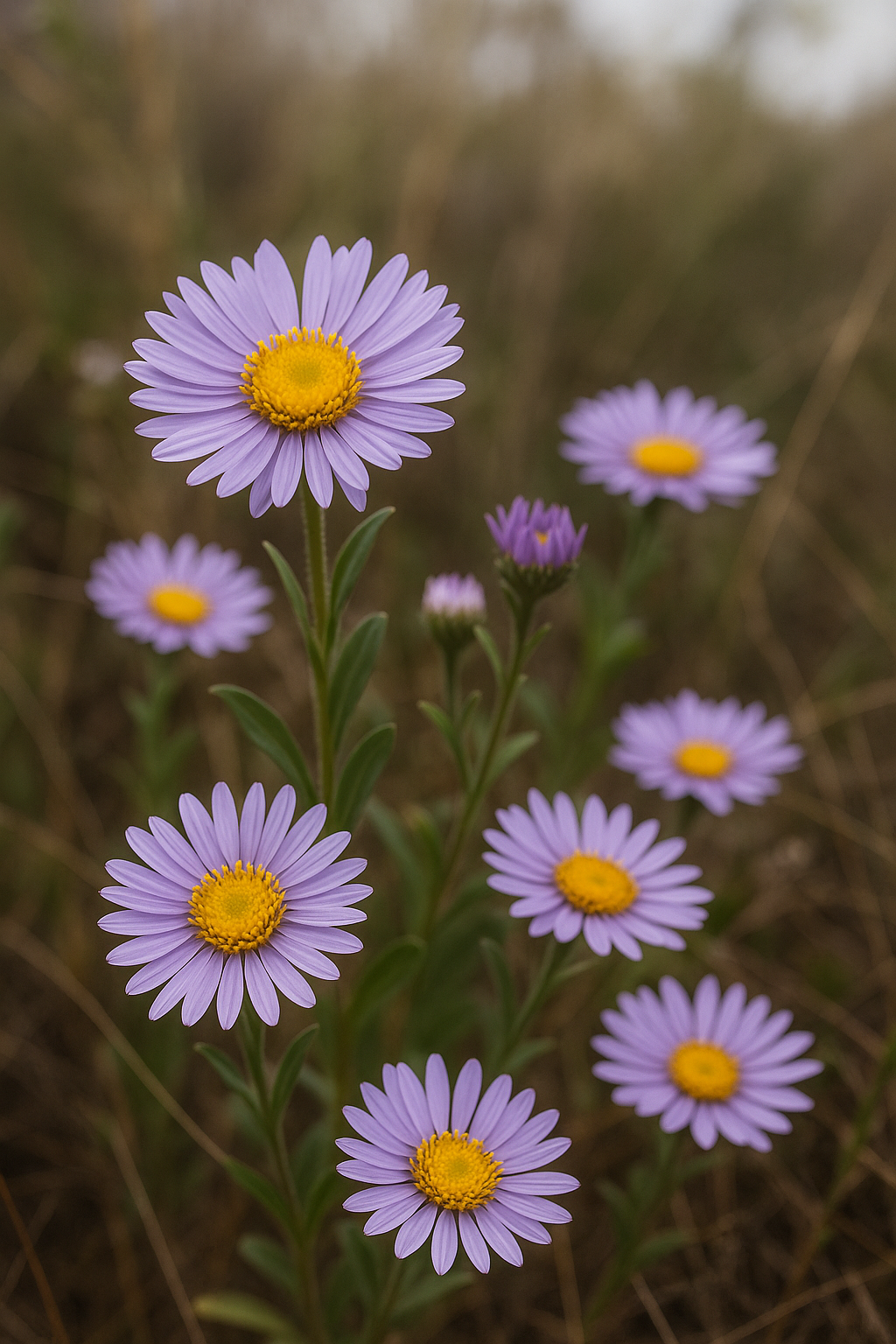
- Flowers: Flower heads are composite, with numerous narrow ray florets in shades of lavender to purple and sometimes pale or white. Each head has a central cluster of tubular disk florets that are yellow when fresh and may age to darker tones. Flower heads are borne in loose clusters or corymb-like arrays.
- Leaves: Leaves are alternate, generally lanceolate to elliptic in shape, often with toothed or slightly serrate margins. Lower leaves may be larger; upper leaves are smaller and may clasp or narrow toward the stem. Leaf surfaces may be slightly hairy or rough in some populations.
- Distinctive features: Coastal occurrence combined with clusters of purple-lavender daisy-like heads and alternately arranged lanceolate leaves help distinguish this species from inland asters. Seasonal variation includes changes in disk color as flowers age and a late-season display of blooms.
Habitat & Distribution
- Typical ecosystems: Often found in coastal ecosystems such as bluffs, dunes, coastal prairie, marsh edges, and other nearshore sites.
- Growing conditions: Typically thrives in well-drained to seasonally moist soils, often tolerating sandy or rocky substrates and exposure to wind and salt spray. Prefers full sun to partial shade.
- Geographic distribution: Native to the U.S. Pacific Coast and commonly recorded in California, Oregon, and Washington.
Ecological Role
- Pollinators: Flowers provide nectar and pollen and are visited by a variety of insects, including native bees and butterflies, especially as a late-season nectar source.
- Wildlife interactions: Flower heads contribute to pollinator resources; seeds have a pappus adapted for wind dispersal and can contribute to local plant community dynamics.
- Niche: Functions as a coastal late-flowering perennial that helps sustain pollinators into the later part of the growing season and stabilizes soils in exposed coastal habitats.
Human Uses & Cultural Significance
- Gardening and restoration: Often used in native plant landscaping and coastal restoration projects for its habitat value and tolerance of maritime conditions.
Conservation & Interesting Facts
- Taxonomic note: The species was long known as Aster chilensis before being reassigned to Symphyotrichum.
- Adaptations: Tolerance of salt spray, wind exposure, and sandy soils helps this species persist on exposed coastal sites.
- Ecological interest: Provides important late-season floral resources for pollinators along the Pacific coast.
From Instagram