nightshade
Solanum L.
BloomEDU
Identify it today. Know it next time.
Add nightshade to BloomEDU and a short quiz tomorrow will check if the name stuck.
Get BloomEDU — add nightshadeFree · iOS · Android
Identity & Classification
Scientific name: Solanum L.
Common names: nightshade (genus-level), often referred to locally as black nightshade, bittersweet nightshade, horsenettle (names vary by species)
Family: Solanaceae
Genus notes: Solanum is a large, globally distributed genus that also includes well-known cultivated species such as tomato (Solanum lycopersicum), potato (Solanum tuberosum), and eggplant (Solanum melongena).
Visual Description
Form: Species in Solanum range from annual and perennial herbs to shrubs, woody vines, and occasionally small treelets. Many wild species form erect or sprawling stems; some are climbing or twining.
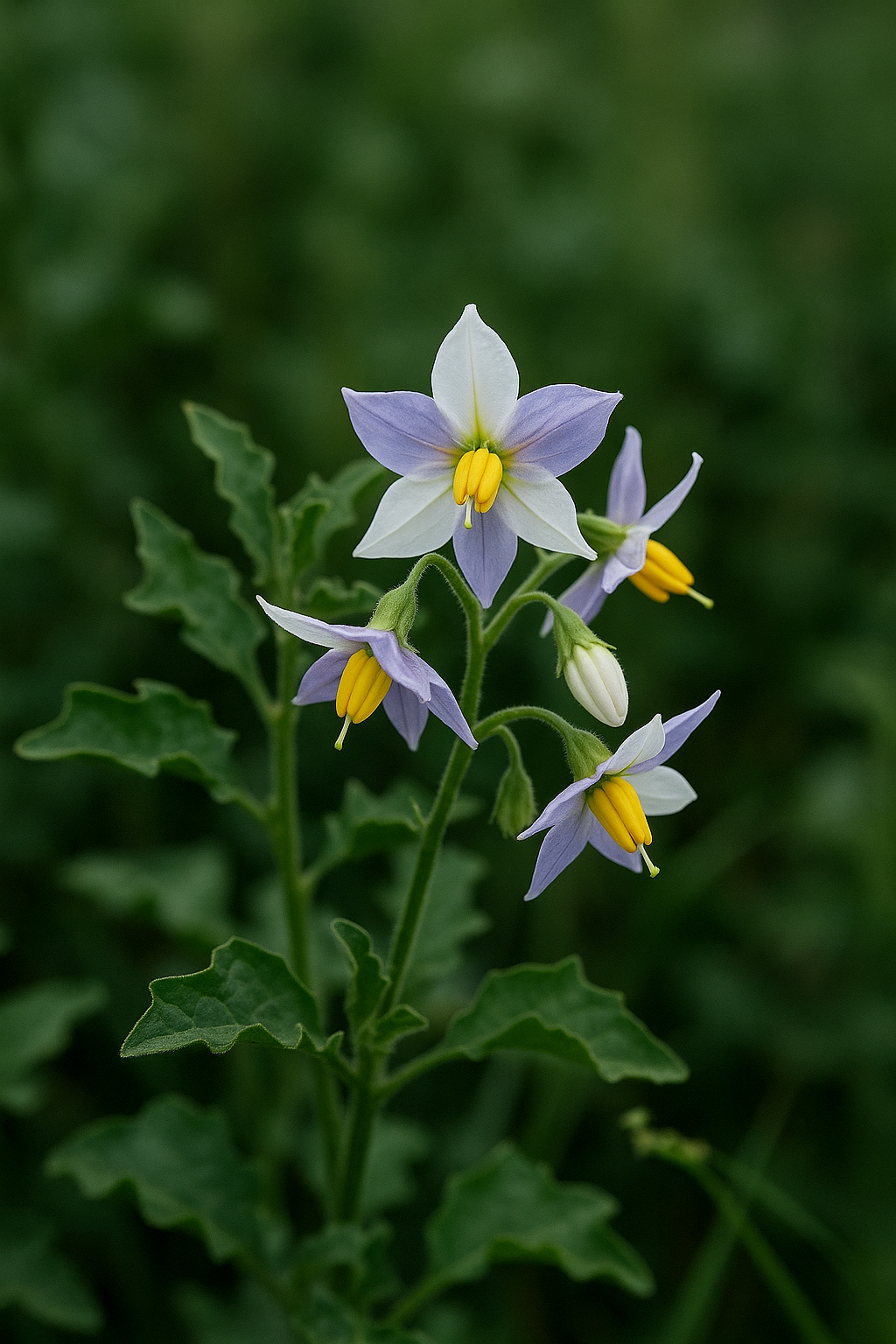
Flowers: Flowers are typically actinomorphic and 5-merous (five-parted), often appearing as a star-shaped corolla with petals that may be white, purple, blue, yellow or greenish. Stamens are usually prominent and fused into a central cone or cluster; anthers are often yellow to orange.
Fruit: Fruit is a fleshy berry, generally globose to ovoid, variable in color when ripe (black, purple, red, orange, or yellow depending on species). Berries commonly contain multiple small seeds embedded in pulp.
Leaves: Leaves are usually alternate and simple, sometimes lobed or shallowly divided; surface may be glabrous to hairy. Stipules may be absent or small. Some species have spines or prickles on stems and/or leaves.
Distinctive features: Star-like 5-part corolla with a central cone of fused stamens and a berry-type fruit are diagnostic for many Solanum species. Presence of prickles on stems or distinctive berry color can aid identification.
Seasonal variation: Many species flower in warm seasons with fruits following flowering; in mild climates some species retain foliage or fruit later into the year.
Habitat & Distribution
Growing conditions: Solanum species are commonly found in a wide range of habitats, often favoring disturbed sites, field edges, roadsides, open woodlands, riparian margins, and gardens. They typically tolerate a range of soils and moisture regimes and are often found in full sun to partial shade.
Geographic distribution: The genus is widespread globally; in the United States it occurs broadly — documented in Alaska, Alabama, Arkansas, Arizona, California and many other states across diverse regions.
Soil, moisture, light: Many species are adaptable to varied soil types, often occurring in mesic to moderately dry sites; light preferences range from full sun to partial shade depending on species.
Ecological Role
Pollination: Many Solanum species are adapted for buzz (sonication) pollination and are commonly visited by bees capable of vibrating flowers (e.g., bumblebees), which release pollen from the anthers.
Wildlife interactions: Berries are eaten by birds and mammals, which commonly disperse seeds. Plants can serve as food or host plants for insect herbivores, including specialist beetles and lepidopteran larvae.
Human Uses & Cultural Significance
Crop species: Several economically important food crops (tomato, potato, eggplant) belong to Solanum and are intensively cultivated worldwide.
Toxicity: Many wild Solanum species contain glycoalkaloids (e.g., solanine) and related compounds; parts of some species can be toxic to humans and livestock, especially unripe berries and foliage. Exercise caution and consult reliable sources before any use.
Conservation & Interesting Facts
Conservation status varies by species — some Solanum taxa are common or weedy, while others are rare or locality-restricted. Notable facts: many Solanum flowers require buzz pollination by bees to release viable pollen, and the genus includes both staple food crops and chemically defended wild species containing potent alkaloids.
From Instagram