Dixie whitetop aster
Sericocarpus tortifolius
BloomEDU
Identify it today. Know it next time.
Add Dixie whitetop aster to BloomEDU and a short quiz tomorrow will check if the name stuck.
Get BloomEDU — add Dixie whitetop asterFree · iOS · Android
Identity & Classification
- Scientific name: Sericocarpus tortifolius
- Common name(s): Dixie whitetop aster
- Family: Asteraceae
- Genus: Sericocarpus
- Taxonomic notes: Member of the aster family (Asteraceae). Related to other small, white-headed asters in the same genus; taxonomic treatments can vary among regional floras.
Visual Description
- Growth form: A herbaceous perennial that typically produces one or more erect to ascending stems from a short rootstock. Plants often form loose clumps or small colonies.
- Size: Generally a low-to-medium stature plant; stems typically reach modest heights (often under a meter) depending on site conditions.
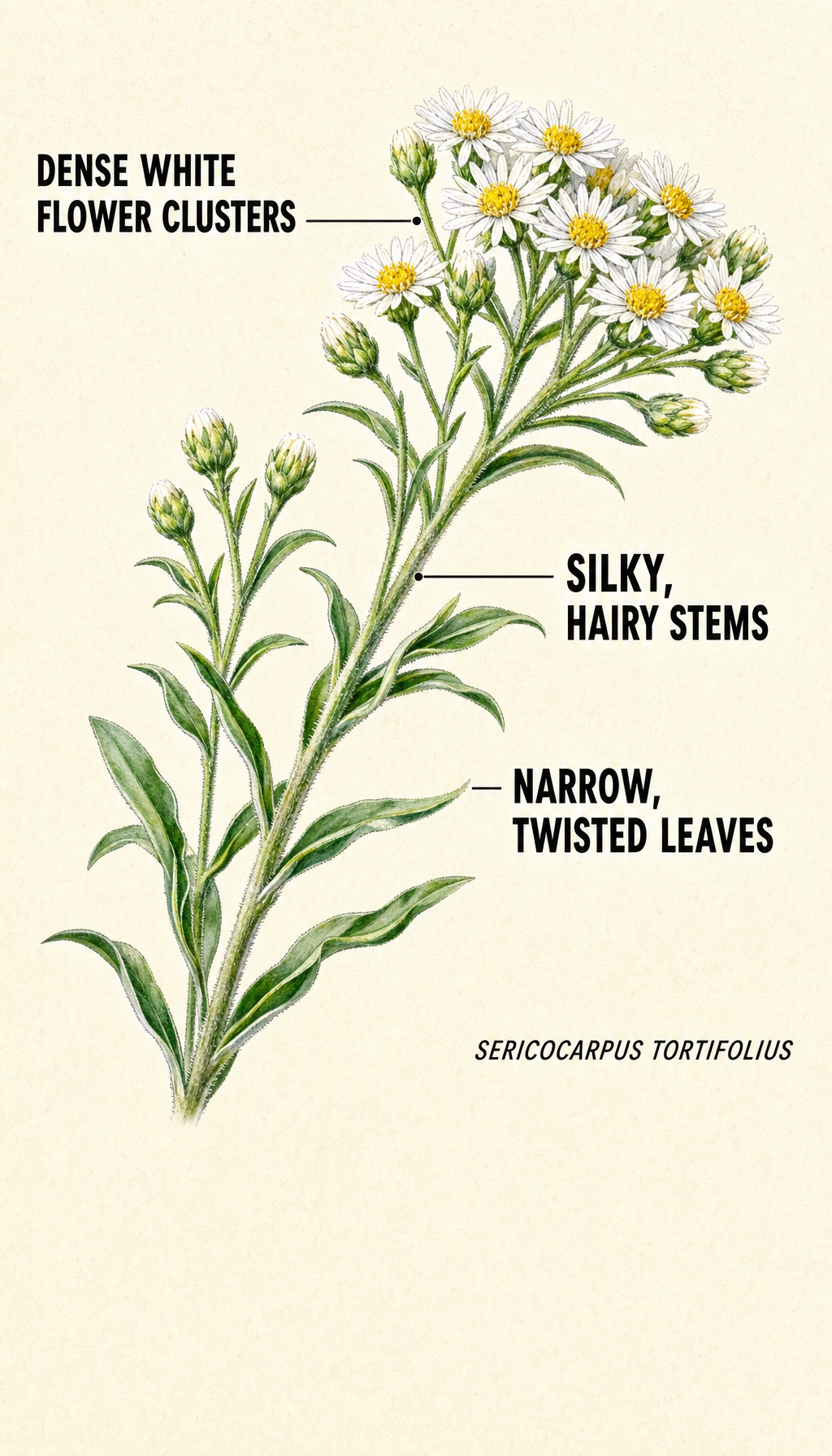
- Flowers: Inflorescences are composed of multiple small composite heads clustered at stem tips or in loose corymbs. Each head typically has a ring of white ray florets surrounding central yellow disk florets, giving the overall appearance of a “whitetop.” Flowering is often conspicuous when plants are in bloom.
- Leaves: Leaves are alternate and simple, often narrow to lance-shaped, and may have entire to slightly toothed margins. Leaf texture can range from smooth to somewhat hairy.
- Distinctive features: The combination of small white-rayed heads in flat-topped clusters, alternate narrow leaves, and a southeastern coastal plain distribution helps distinguish this species. Parts of the plant (involucral bracts or stems) may show fine hairs or a silky appearance, consistent with the genus name.
- Seasonal variation: Typically flowers in late summer into fall when many asters bloom; foliage and flowering abundance can vary with moisture and light availability.
Habitat & Distribution
- Typical habitats: Often found in open woodlands, pine flatwoods, sandhills, and other coastal plain or upland openings. Commonly associated with well-drained, sandy to loamy soils and sites that receive moderate to full sun, though it may tolerate some light shade.
- Moisture and soil: Generally prefers well-drained acidic soils; tolerates drier upland conditions more than persistently wet soils.
- Geographic distribution: Native to the southeastern United States — documented in Alabama, Florida, Georgia, Louisiana, Mississippi and at least two additional nearby states in the region.
Ecological Role
- Pollination: Flowers are typically visited by a variety of native pollinators and nectar-seeking insects, including bees and butterflies, and contribute to late-season nectar resources.
- Wildlife interactions: Serves as a nectar and pollen source for insects; seed and foliage interactions with wildlife are not broadly documented but fit the general ecological role of small asters in supporting insect communities.
Human Uses & Cultural Significance
- No well-documented traditional or widespread modern uses are broadly cited in standard botanical literature. No specific toxicity concerns are commonly reported.
Conservation & Interesting Facts
- Conservation status: Regional status can vary; population trends are not broadly documented across its entire range.
- Interesting facts: The genus name Sericocarpus refers to a “silky” aspect of the fruit or pappus, reflecting fine hairs on parts of the flower head. As a late-season bloomer in the coastal plain, Dixie whitetop aster can be an important nectar source when fewer other wildflowers are in bloom.
From Instagram