giant sequoia
Sequoiadendron giganteum
BloomEDU
Identify it today. Know it next time.
BloomEDU can suggest a name from a plant photo, and later ask if you still know it.
Get BloomEDUiOS · Android
From Instagram
Identity & Classification
Scientific name: Sequoiadendron giganteum. Verified common names: giant sequoia, Sierra redwood, Wellingtonia (historic). Family: Cupressaceae. Genus: Sequoiadendron. Taxonomically distinct from the coast redwood (Sequoia sempervirens) but closely related within the cypress family.
Visual Description
Form and size: A massive, long‑lived evergreen conifer that typically forms a single, straight trunk with a broad, rounded crown. Trees commonly reach great heights and develop extraordinarily large trunk volumes; individual trees can grow to very large sizes over centuries.
Flowers/cones: Reproductive structures are coniferous—no true flowers or petals. Male pollen cones are small and produced on shoots; female seed cones are woody, ovoid to egg‑shaped and often persist on the tree for several years before opening to release winged seeds. Cone opening and seed release can be influenced by heat or decay.
Leaves: Leaves are evergreen, awl‑shaped to scale‑like, generally short and densely arranged along the shoots, giving a feathery or flattened spray in parts of the crown. Foliage is typically deep green.
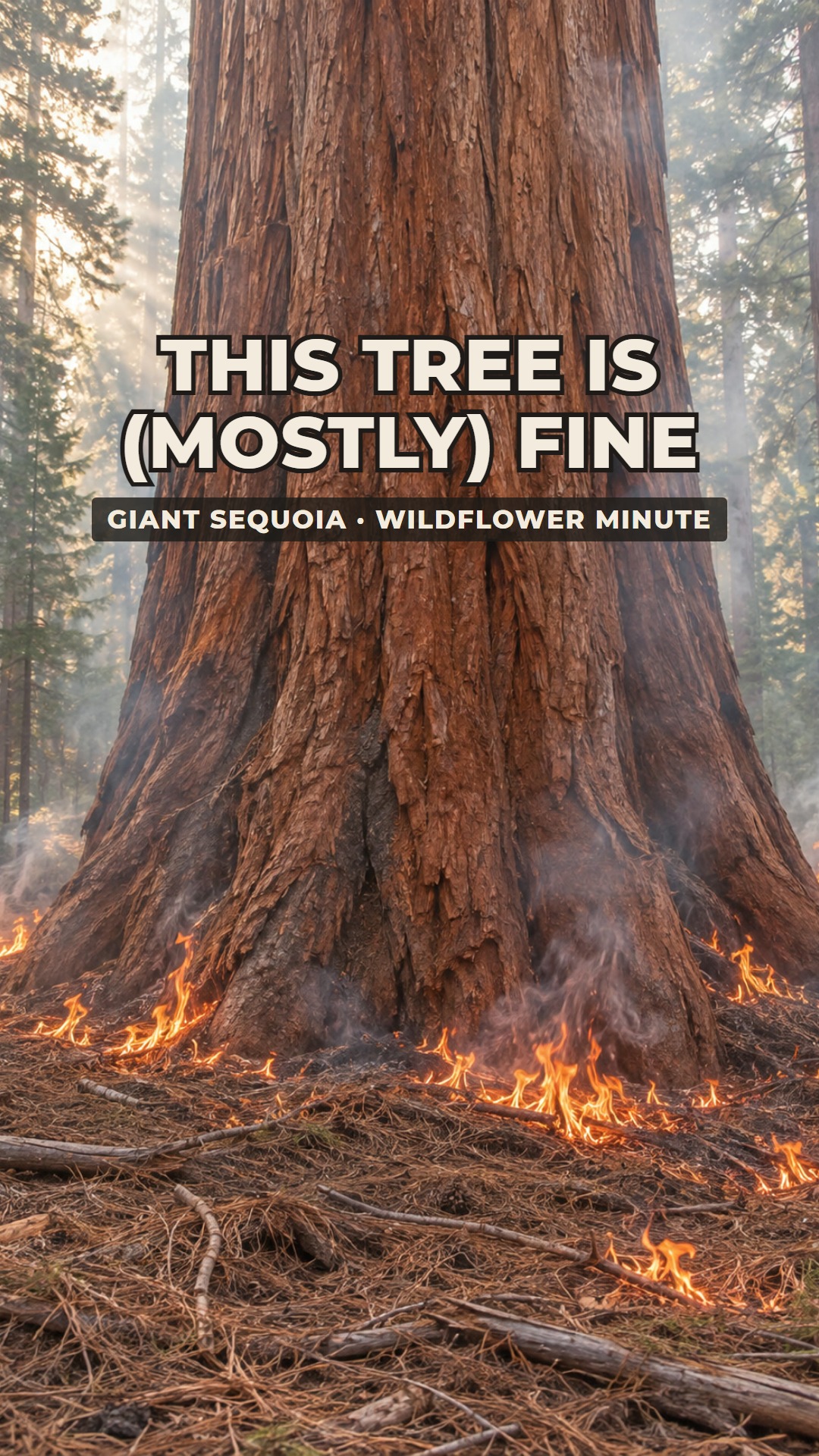
Distinctive features: Very thick, fibrous, reddish‑brown bark that is deeply furrowed and spongy to the touch; massive, buttressed trunk base; persistent, small woody cones. Bark thickness and the immense trunk volume are among the clearest field identifiers.
Seasonal variation: Foliage remains year‑round; cones may remain closed for seasons and open gradually. New cone and shoot production is most noticeable in growing seasons.
Habitat & Distribution
Grows naturally in montane forest settings. Typically found on moist, well‑drained sites such as river benches, south‑facing slopes, and canyon bottoms within mixed‑conifer forests. Prefers full to partial sun and soils that retain moisture seasonally but drain well. Geographic distribution: endemic to California, commonly occurring in scattered groves on the western slopes of the Sierra Nevada.
Ecological Role
Wind is the primary pollination vector. Seeds are small and winged; small birds and mammals may consume or disperse seeds, and fallen trunks and cavities provide habitat for insects, birds, and mammals. The species occupies an ecological niche as a long‑lived canopy member that contributes large woody biomass, influences local microclimate, and benefits from periodic fire regimes that reduce competition and promote seedling establishment.
Conservation & Interesting Facts
Conservation status: considered at risk due to its limited natural range and threats from altered fire regimes, drought, and climate change. One verifiable adaptation is its very thick, tannin‑rich bark, which confers strong resistance to low‑severity fire and many pests. The giant sequoia is among the most massive tree species on Earth by trunk volume and often attains extreme longevity, commonly living many centuries and sometimes far longer.