coneflower
Rudbeckia L.
BloomEDU
Identify it today. Know it next time.
Add coneflower to BloomEDU and a short quiz tomorrow will check if the name stuck.
Get BloomEDU — add coneflowerFree · iOS · Android
From Instagram
Identity & Classification
Rudbeckia L. — commonly called coneflower or black‑eyed Susan (applied to several species) — is a genus in the family Asteraceae. The genus comprises a group of North American herbaceous perennials and annuals. Taxonomic placement within Asteraceae is established at the genus level; species concepts and circumscriptions vary among floras.
Visual Description
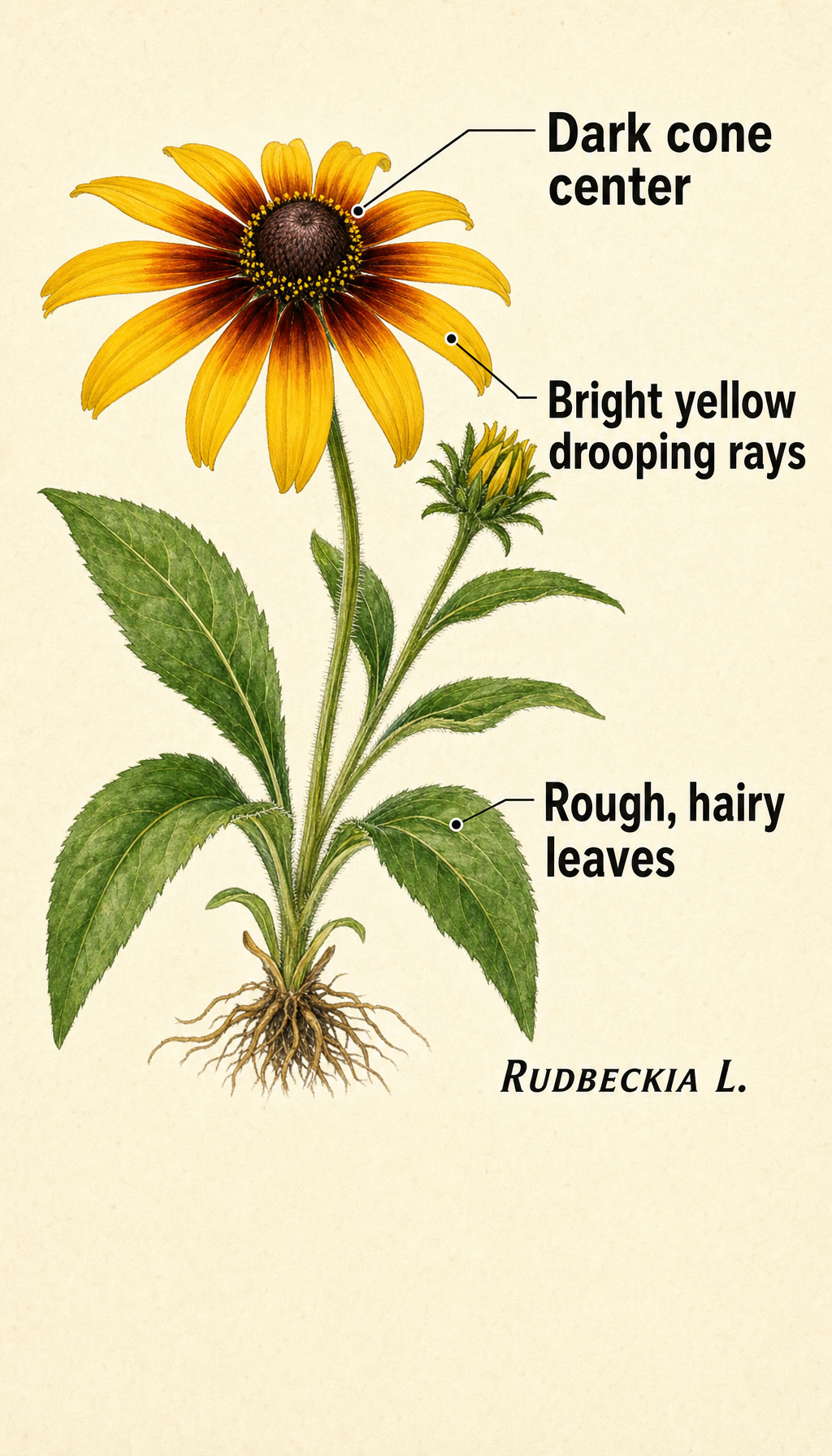
Rudbeckia species form clumps of herbaceous stems that are typically upright; growth habit ranges from low basal clumps to taller, erect stalks often 0.5 m or more in height depending on species and growing conditions. Flower heads are composite: a prominent, rounded to conical central disc made of many tubular disc florets, surrounded by several to many ray florets (often 8–20) that are typically yellow, gold, orange, or reddish. The central cone is usually brown, blackish, or deep bronze and is a key identifying feature. Leaves are generally alternate, simple to deeply lobed or pinnatifid in some species, and often rough‑haired to some degree. Stems and foliage may be coarse‑textured and slightly hairy. Seasonal variation: most species bloom in summer into autumn, with seedheads persisting and darkening as florets dry.
Habitat & Distribution
Rudbeckia is native to North America and is widely distributed across many U.S. states (recorded in AK, AL, AR, AZ, CA and numerous others). Species are often found in open, sunny habitats such as prairies, meadows, roadsides, fields, and open woodlands. They typically prefer full sun to partial sun and do well in a range of soils from well‑drained loams to heavier clays; many are tolerant of periodic drought once established and commonly occur in moderately fertile to poorer soils.
Ecological Role
Rudbeckia flower heads are well‑suited to pollinators: the nectar and pollen attract bees, butterflies, and other daytime pollinators. The conical seedheads provide a concentrated food source for seed‑eating birds (notably finches) in late summer and winter. The plants serve as nectar sources in pollinator‑friendly plantings and contribute to late‑season floral resources.
Conservation & Interesting Facts
Conservation status varies by species; some Rudbeckia taxa are widespread and common, while a few localized species may have conservation concern. One notable fact: the genus name Rudbeckia was assigned by Carl Linnaeus in honor of the Swedish botanist Olof Rudbeck. The distinctive conical discs are made of many individual florets that mature in sequence, an adaptation that sustains pollinator visits and later produces a dense supply of seeds.