Illinois dewberry
Rubus centralis
BloomEDU
Identify it today. Know it next time.
Add Illinois dewberry to BloomEDU and a short quiz tomorrow will check if the name stuck.
Get BloomEDU — add Illinois dewberryFree · iOS · Android
From Instagram
Identity & Classification
Scientific name: Rubus centralis — common name: Illinois dewberry. Family: Rosaceae. Genus: Rubus (brambles, a group that also includes blackberries and other dewberries). Taxonomic placement within Rubus follows general bramble groupings; finer subgeneric assignments can vary among sources.
Visual Description
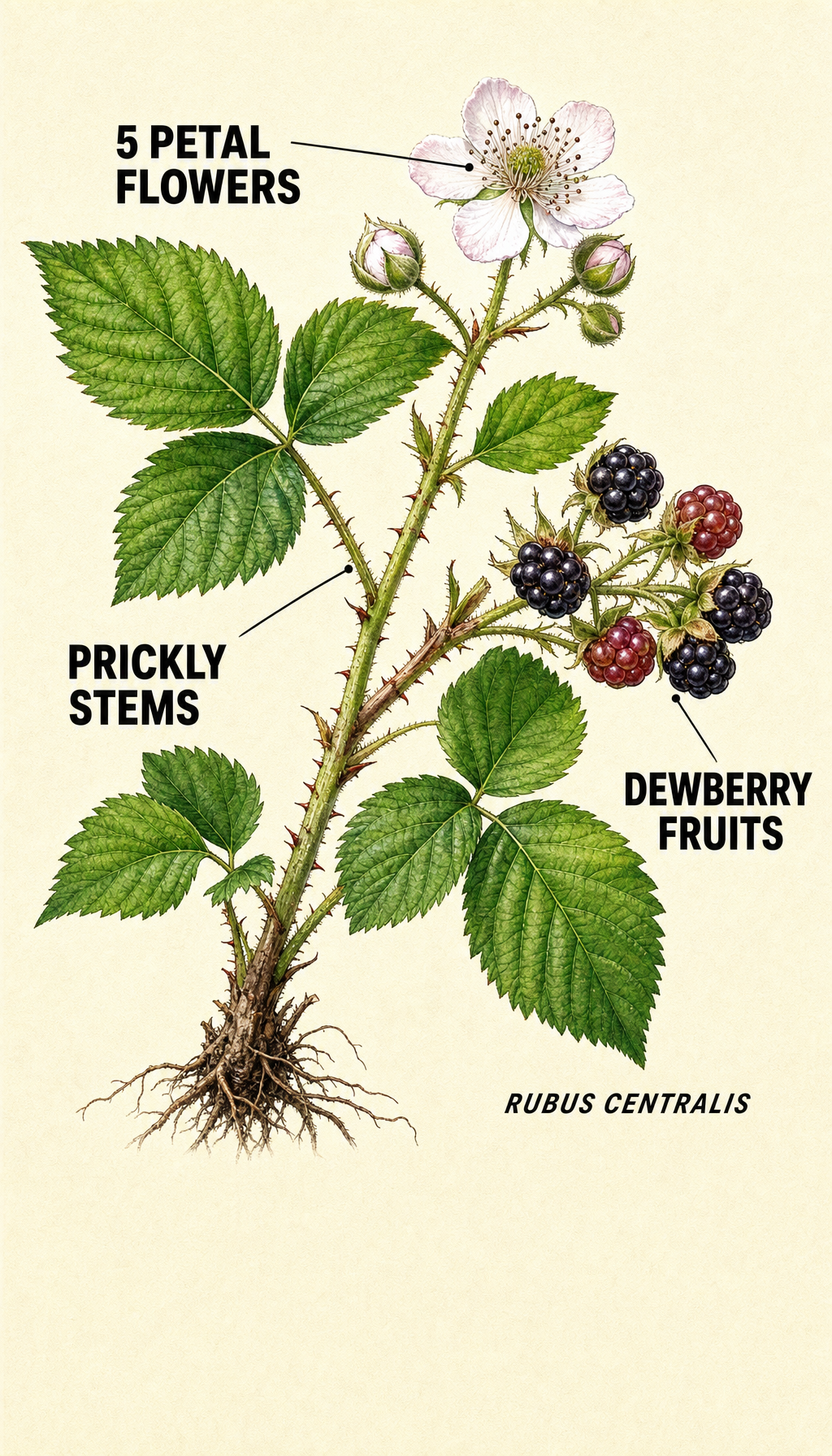
A low, sprawling bramble that typically forms trailing or arching canes rather than erect shrubs. Canes are often prickly or bristly and may root at tips where they contact soil. Overall height is generally low (ground-hugging to arching canes), with patches spreading by tip-layering. Flowers are produced on second-year flowering canes and usually have 4–6 petals, typically white to pale pink. Leaves are alternate and pinnately compound, most often bearing 3 leaflets (occasionally 5); leaflet margins are serrate. Fruit is an aggregate of drupelets that ripens to dark purple or black and resembles small blackberries. Seasonal pattern commonly includes vegetative (first-year) canes, flowering and fruiting on older (second-year) canes, spring–summer bloom, and summer fruiting, with foliar dieback in late season.
Habitat & Distribution
Rubus centralis is often found in open, sunny to partly shaded sites such as woodland edges, clearings, fields, roadsides, and other disturbed or successional habitats. It commonly tolerates a range of soils but is frequently encountered on well-drained to moderately moist sites. Recorded occurrences include Indiana, Maryland, and Michigan; within those regions it is typically associated with local thickets and edge habitats rather than dense forest interiors.
Ecological Role
Flowers are commonly visited by a variety of pollinating insects—especially bees—which facilitate fruit set. Fruits provide a food source for birds and mammals and are often consumed and dispersed by wildlife. The plant’s trailing habit and tip-layering contribute to vegetative spread and to creating dense groundcover patches that can stabilize soil and provide cover for small animals.
Conservation & Interesting Facts
No widely reported, special conservation status is commonly cited for typical dewberry populations at a national scale. Notable adaptations include tip-layering (arching canes root at their tips to form new plants), a common and effective vegetative spread strategy in dewberries, and production of aggregate drupelet fruits that encourage wide animal-mediated dispersal.