Carolina rose
Rosa carolina
BloomEDU
Identify it today. Know it next time.
Add Carolina rose to BloomEDU and a short quiz tomorrow will check if the name stuck.
Get BloomEDU — add Carolina roseFree · iOS · Android
From Instagram
Identity & Classification
Scientific name: Rosa carolina L.
Common names: Carolina rose, pasture rose, swamp rose (regional use may vary)
Family: Rosaceae
Genus: Rosa
Rosa carolina is a member of the wild roses (genus Rosa) and is taxonomically allied with other native simple-rose species of eastern North America.
Visual Description
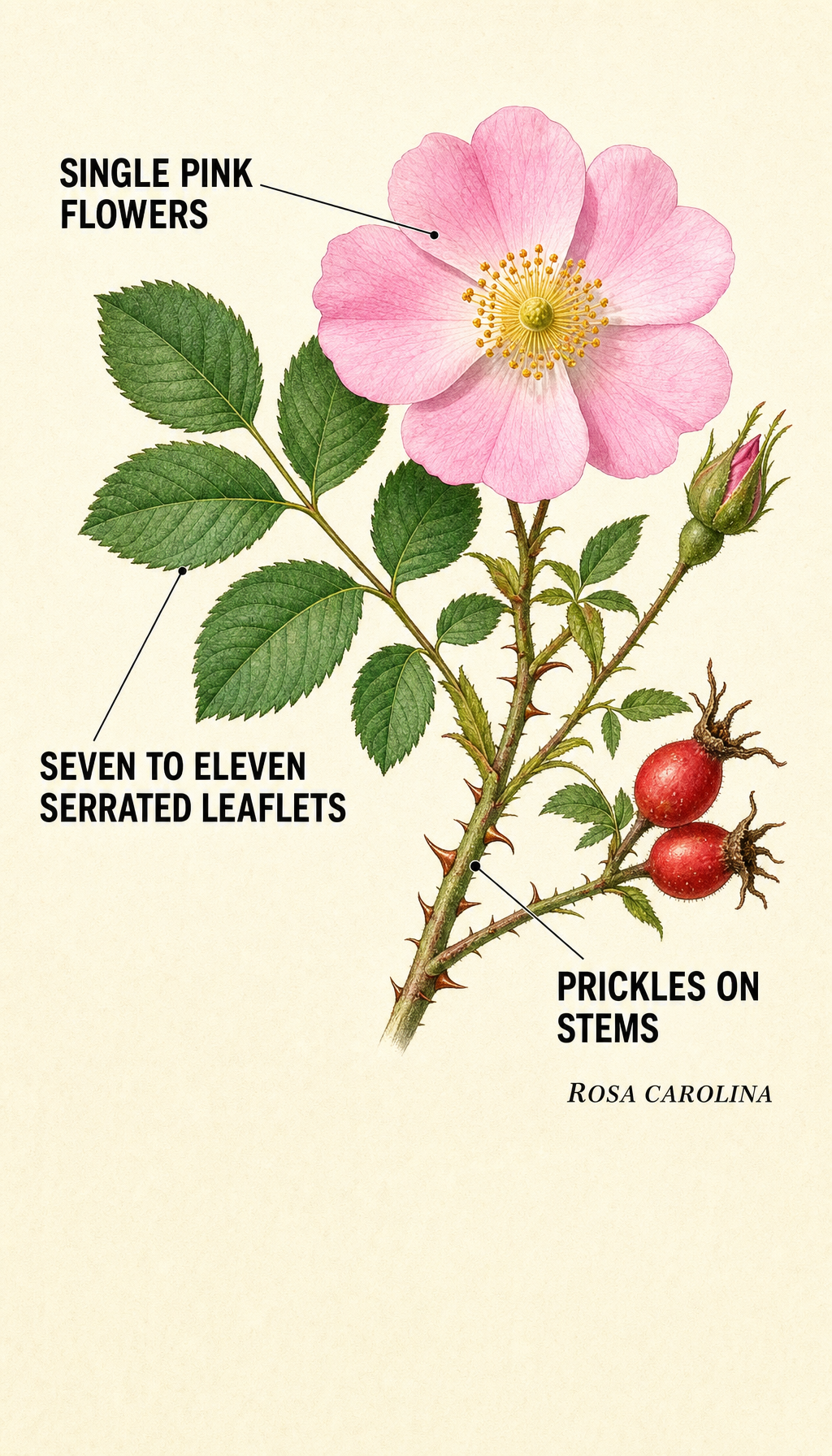
Carolina rose is a low to medium-sized, deciduous shrub that often forms loose, suckering colonies. Stems are typically slender and bear straight, sharp prickles rather than dense hooked thorns. Flowers are single and showy, usually pink to light pink, with generally 4–6 petals arranged around a prominent cluster of yellow stamens; blooms are borne singly or in small clusters. Leaves are pinnate, commonly with several (often 5–7) sharply toothed leaflets and paired stipules at the base of the petiole. After flowering the plant produces small, rounded to ovoid rose hips that turn red to orange and often persist into fall. Seasonal variation includes spring–summer flowering followed by summer–fall development of hips; foliage turns and drops in autumn as the plant goes dormant.
Habitat & Distribution
Carolina rose typically occurs in open woods, thickets, fields, roadsides, clearings and along forest edges. It often favors well-drained, sandy to rocky soils but can be found across a range of soil types from dry to mesic sites. The species tolerates full sun to partial shade and is commonly found in disturbed as well as semi-natural habitats. Geographically it is native to much of eastern North America, including the provided states (AL, AR, CT, DE, FL) and numerous additional states and provinces throughout the region.
Ecological Role
Flowers attract a variety of insect pollinators, especially bees, which visit for pollen and nectar. The persistent hips are a food source for birds and small mammals, which help disperse seeds. Dense patches formed by suckering stems can provide protective cover and nesting shelter for small wildlife. The combination of prickles and flexible stems can deter some large herbivores while allowing regrowth from roots and stems.
Conservation & Interesting Facts
Carolina rose is generally common across much of its range and is not widely considered at risk. A notable adaptation is its suckering habit, which allows rapid colonization of open ground and persistence after cutting or browsing. The simple, open flowers make the species a reliable attractor of native bees and other pollinators.