prickly rose
Rosa acicularis
BloomEDU
Identify it today. Know it next time.
Add prickly rose to BloomEDU and a short quiz tomorrow will check if the name stuck.
Get BloomEDU — add prickly roseFree · iOS · Android
From Instagram
Identity & Classification
Rosa acicularis — family Rosaceae. Common names include prickly rose, prickly wild rose, bristly rose, wild rose, and Arctic rose. Taxonomic notes: this is a northern-hemisphere wild-rose complex with variable regional forms. Taxonomists have treated some populations as varieties or synonyms, and R. acicularis can be confused with or closely related to other wild roses (for example, North American taxa sometimes compared with Rosa woodsii). Because wild-rose taxonomy is complex, regional treatments and names vary.
Physical Description
A charming, bristly wild shrub — think elegant landscaping with needles. Key characteristics:
Growth form: a deciduous shrub or arching cane-forming plant that commonly forms thickets or clumps by branching and sometimes rooting where canes touch the ground.
Size: typically a low-to-medium shrub (often around waist- to head-height in many stands); cane length and overall size vary with local conditions.
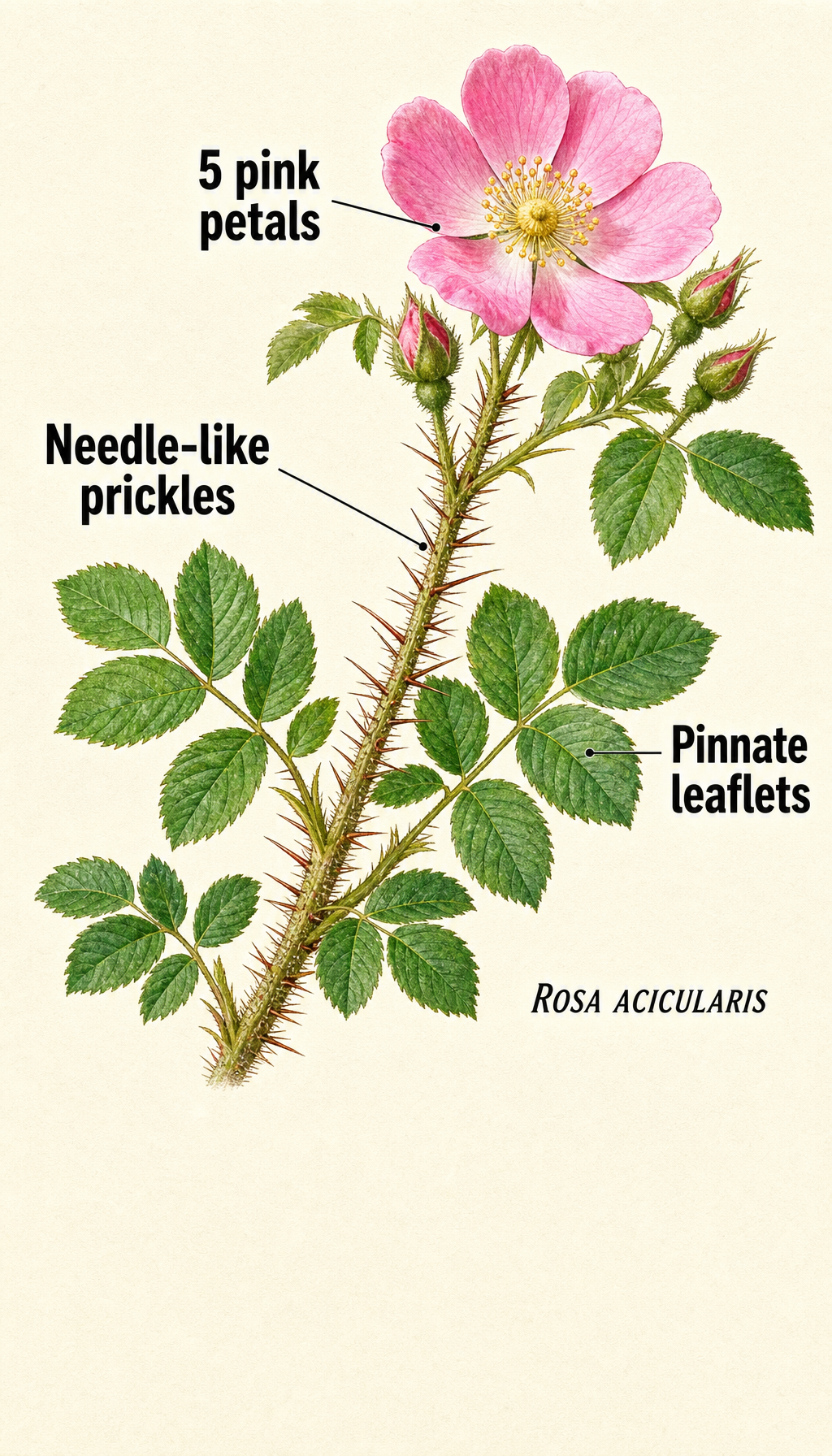
Stems and prickles: stems bear numerous straight, sharp prickles (needle-like or bristle-like); these are true prickles (outgrowths of the epidermis), not botanical thorns.
Leaves: alternate, pinnately compound leaves with commonly 5–7 leaflets; leaflets are ovate to elliptic with serrated margins and a green to slightly bluish-green hue.
Flowers: single, five-petaled flowers (a classic wild-rose look) usually pink in color (shades range from pale to deeper pink) and borne singly or in small clusters. Flowers have conspicuous yellow stamens at the center.
Fruit (hip): after flowering the plant develops fleshy hips that tend to be globose to ovoid and commonly red to orange when mature; hips contain the achenes (seeds) within.
Habitat & Range
R. acicularis has a Holarctic distribution and is a species of northern regions in Asia, Europe, and North America. It typically occurs in northern temperate to subarctic landscapes. Preferred conditions and habitats often include:
Open or semi-open sites such as meadows, forest edges, riverbanks, and disturbed ground. - Sunny to partly shaded situations with well-drained soils; it tolerates a range of soils and climatic conditions typical of boreal and cool-temperate zones. Because local forms vary, exact habitat preferences and abundance differ regionally.
Ecological Role
This species plays several useful roles in northern ecosystems:
Pollination: flowers provide pollen and nectar that attract generalist pollinators — solitary and social bees, flies, and other insect visitors (typical of single-petaled wild roses).
Food for wildlife: the fleshy hips are consumed by birds and mammals, which helps disperse seeds; hips also provide a source of energy in autumn and winter for wildlife.
Structural habitat: thickets and canes offer shelter, nesting sites, and protective cover for small birds and mammals.
Successional role: as a shrubby colonizer, it can be part of natural succession on disturbed sites, helping stabilize soils and create conditions for other plants.
Interesting Facts
Classic wild-rose architecture: the single five-petaled flower with a halo of yellow stamens is the archetypal "rose" form — simple, elegant, and unmistakable once you learn it.
Name clue: the species epithet acicularis hints at the needle-like (acicular) prickles that give the plant its bristly reputation.
Wildlife pantry: hips persist into autumn and sometimes winter, serving as an important late-season food resource for birds and mammals in northern landscapes.
Tough northerner: being Holarctic, this rose tolerates cold climates better than many ornamental roses — a useful reminder that "rose" doesn’t always equal tender garden cultivar.
Botanical note: prickles (what we commonly call “thorns” on roses) are different from true thorns — prickles are outgrowths of the stem’s surface and are relatively easy to remove compared with true thorns, which are modified stems. acicularis apart from other similar wild roses in your region — say which region and I’ll keep to information well-supported for that area.