Lapland rosebay
Rhododendron lapponicum
BloomEDU
Identify it today. Know it next time.
Add Lapland rosebay to BloomEDU and a short quiz tomorrow will check if the name stuck.
Get BloomEDU — add Lapland rosebayFree · iOS · Android
Identity & Classification
Scientific name: Rhododendron lapponicum. Verified common name: Lapland rosebay (also called Lapland rhododendron). Family: Ericaceae. Genus: Rhododendron. Taxonomically it is one of the small-leaved, cold-adapted rhododendrons associated with arctic–alpine floras and is generally treated as a distinct species within the genus.
Visual Description
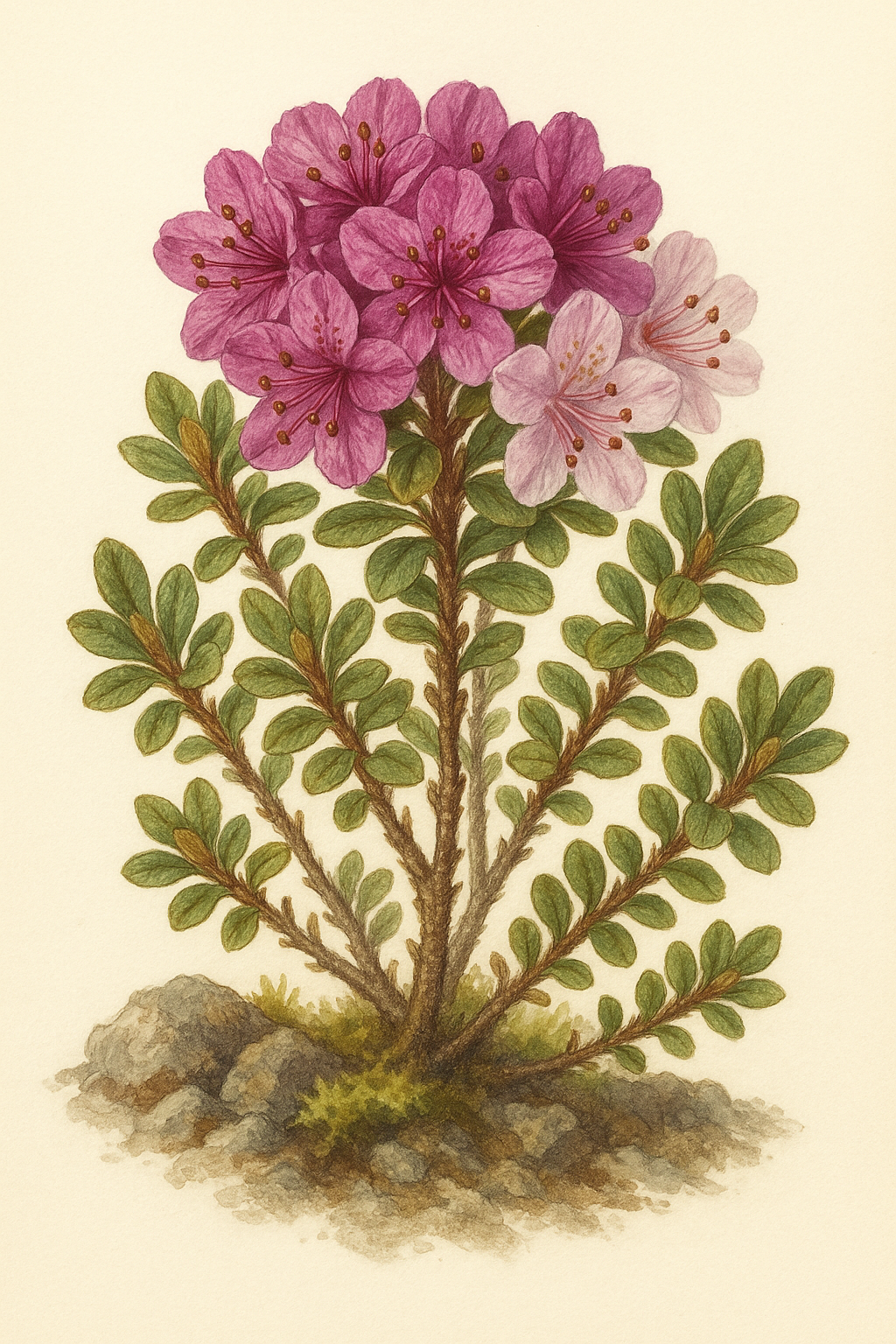
Lapland rosebay is a low, evergreen, often prostrate shrub typically forming mats or compact cushions rather than tall stems. Plants are generally low-growing and may appear as dense groundcover in suitable sites. Flowers are bell- to urn-shaped and usually borne singly or in small clusters; corollas are typically 5-lobed and range in color from pink to rose-purple, sometimes paler or nearly white. Leaves are small, leathery, and oblong to elliptic, often clustered along short shoots and retained through the year. New growth and flowering are concentrated at stem tips. Distinctive identifying features include the dwarf, mat-forming habit combined with small evergreen leaves and relatively showy, solitary or few-flowered bell-shaped blooms. Seasonal variation: flowering generally occurs during the brief alpine/arctic growing season, while foliage remains evergreen through harsh winters.
Habitat & Distribution
Rhododendron lapponicum is typically found in cold, open habitats of arctic and alpine regions—commonly on tundra, heath, rocky slopes, fellfields, and bog margins. It generally prefers acidic, well-drained to peaty soils and is often found in full sun to partial shade where exposure is high and growing seasons are short. In the United States it has recorded occurrences in AK, CT, ME, NH, NY and one additional state; globally it is characteristic of circumpolar northern Eurasia and North America in alpine and tundra zones.
Ecological Role
Flowers provide nectar and pollen to a range of insect visitors, often including bees and other cold-tolerant pollinators active in short growing seasons. The dense, mat-forming growth can help stabilize thin soils on rocky slopes and contribute to ground-layer cover in tundra and heath communities. Like many rhododendrons, it produces compounds in foliage and other tissues that reduce palatability, so it is not typically a major browse plant.
Human Uses & Cultural Significance
Occasionally cultivated in specialized alpine and rock gardens for its compact habit and attractive flowers. As with many members of Rhododendron, plant tissues may contain compounds that can be toxic if ingested and should be handled with appropriate caution.
Conservation & Interesting Facts
Rhododendron lapponicum is notable as a circumpolar, cold-adapted species and one of the rhododendrons best suited to true alpine and tundra conditions. Its prostrate, cushionlike habit is an adaptation to reduce wind damage and conserve heat in harsh, exposed sites.
From Instagram