Pallas' buttercup
Ranunculus pallasii
BloomEDU
Identify it today. Know it next time.
Add Pallas' buttercup to BloomEDU and a short quiz tomorrow will check if the name stuck.
Get BloomEDU — add Pallas' buttercupFree · iOS · Android
From Instagram
Identity & Classification
Scientific name: Ranunculus pallasii. Common name: Pallas' buttercup (also cited as Pallas buttercup). Family: Ranunculaceae. Genus: Ranunculus. This species is placed within the buttercup genus and shares the general floral and fruit traits typical of Ranunculus.
Visual Description
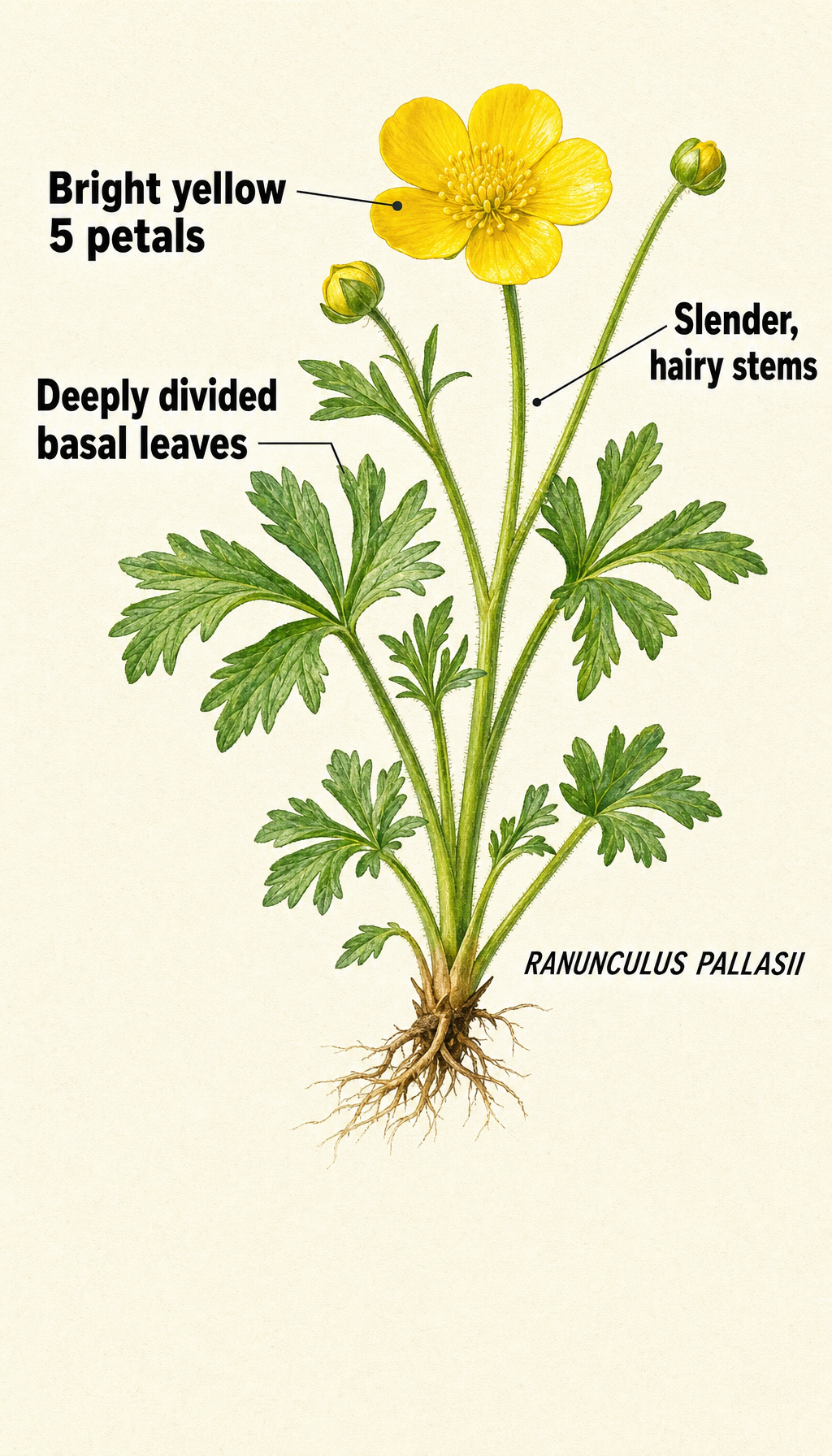
Overall form and size: A low-growing, perennial herbaceous buttercup that typically forms small tufts or short-stemmed individuals adapted to cold, short-season habitats. Plants are generally compact and close to the ground.
Flowers: Solitary or few-flowered stems bearing bright yellow, cup-shaped flowers with glossy petals. Petal number is variable among Ranunculus species; in this group flowers commonly show about 4–6 petals. Each flower typically contains numerous stamens and several pistils clustered at the center. After flowering, fruits are produced as an aggregate of small achenes.
Leaves: Leaves are usually basal and borne on petioles, with the blade often divided or lobed—leaf form can be variable but commonly shows palmate or pinnate segmentation in buttercups from cold regions. Stem leaves, when present, tend to be reduced.
Distinctive features: Small, low habit combined with glossy yellow, cup-shaped flowers and an aggregate of achenes help distinguish it from taller or more lush Ranunculus species. The glossy petal surface is characteristic of many buttercups.
Seasonal variation: Plants typically emerge and flower during the short Arctic/alpine growing season and then set seed quickly; foliage may die back or persist at low stature outside the growing season.
Habitat & Distribution
Ranunculus pallasii is typically associated with arctic and subarctic environments and is reported from Alaska. It is often found in tundra and alpine settings—moist gravelly meadows, snowbeds, stream margins and other sites where soils remain cool and often moist during the brief growing season. It generally prefers open, sunny to partly shaded locations with cold-tolerant soils.
Ecological Role
Flowers are often visited by a variety of insects, including small bees and flies, which act as pollinators in the short growing season. As a low-statured arctic/alpine herb, it occupies the early-season flowering niche, providing nectar and pollen when few other plants are in bloom. Like many Ranunculus, it contains compounds that deter herbivory and thus plays a role in plant–herbivore interactions by being less palatable to some grazers.
Conservation & Interesting Facts
The species bears the name of the naturalist Peter Pallas. A well-documented trait of buttercups is their glossy petals, which can reflect sunlight and may help warm floral tissues—an advantage in cold habitats with brief growing seasons. Ranunculus pallasii’s low, compact form and rapid seasonal development are adaptations to life in cold, short-season environments.