pink buttercup
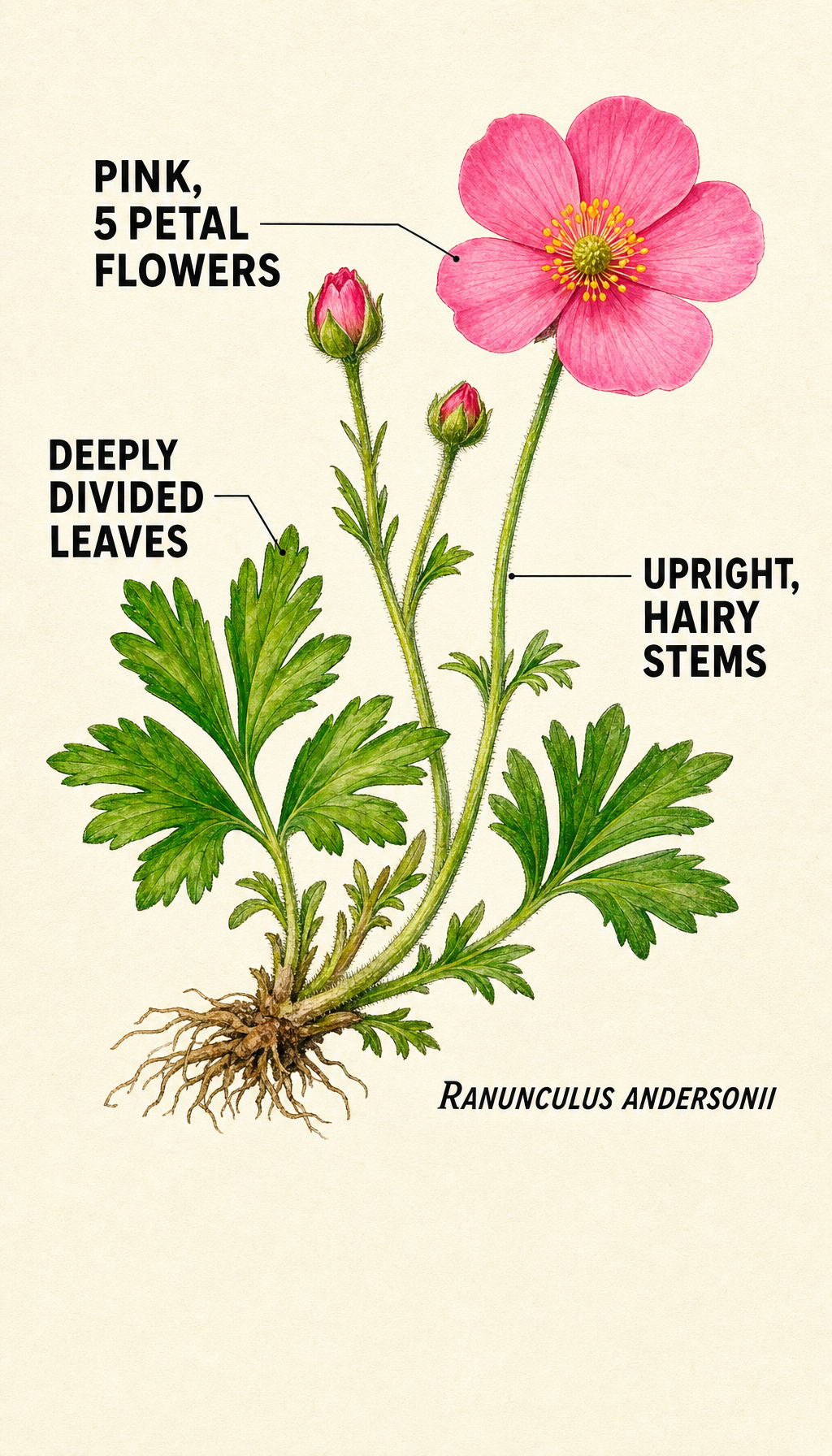
Ranunculus andersonii
BloomEDU
Identify it today. Know it next time.
Add pink buttercup to BloomEDU and a short quiz tomorrow will check if the name stuck.
Get BloomEDU — add pink buttercupFree · iOS · Android
From Instagram
Identity & Classification
Scientific name: Ranunculus andersonii. Common names: pink buttercup, Anderson’s buttercup. Family: Ranunculaceae; genus: Ranunculus (the buttercup genus). It is closely related to other buttercups and shares the family's characteristic floral structure.
Visual Description
A perennial herbaceous buttercup typically forming low clumps or small tufts with one or more erect flowering stems. Plants generally arise from a short rootstock and may appear more compact in drier sites. Flowers are showy and characteristically pink to reddish-pink rather than the yellow more typical of many buttercups. Floral heads typically have 4–6 petal-like petals (often 4–5) surrounding a conspicuous cluster of many stamens and pistils. Petals are usually glossy or satiny in appearance. Leaves are often basal or borne on the lower stem, frequently lobed or divided into segments; stem leaves tend to be smaller and may be alternately arranged. Fruits develop as a tight cluster of dry achenes (one-seeded fruits), a common trait in Ranunculus. Seasonal variation: most conspicuous in spring through early summer when plants are in bloom; foliage and flower size can be reduced during drier periods.
Habitat & Distribution
Often found in open, well-drained sites such as rocky slopes, dry meadows, sagebrush or pine-oak woodland edges, and other montane to foothill habitats where soils are coarse or rocky. Typically occurs in sunny to partly shaded conditions and is commonly associated with dry to mesic sites rather than permanently wet habitats. Geographic distribution includes recorded occurrences in Arizona, California, Idaho, Nevada, Oregon and one additional nearby western state.
Ecological Role
Flowers attract a variety of insect pollinators; small native bees, flies and other generalist insects commonly visit buttercup blooms for pollen and nectar. The clustered achenes serve as the seed stage for regeneration; dispersal is generally local. Like other Ranunculus species, it occupies a spring-flowering niche in western herbaceous plant communities, providing early-season resources for pollinators.
Conservation & Interesting Facts
Conservation status is not specified here; local abundance can vary by site. A notable botanical point: the pink coloration of R. andersonii sets it apart from the common yellow buttercups, illustrating the color diversity possible within Ranunculus and aiding field identification during the bloom period.