European dwarf cherry
Prunus fruticosa
BloomEDU
Identify it today. Know it next time.
Add European dwarf cherry to BloomEDU and a short quiz tomorrow will check if the name stuck.
Get BloomEDU — add European dwarf cherryFree · iOS · Android
From Instagram
Identity & Classification
Scientific name: Prunus fruticosa. Verified common names: European dwarf cherry, dwarf cherry, bush cherry. Family: Rosaceae. Genus: Prunus. Taxonomic relationships: closely related to other true cherries (e.g., Prunus avium and Prunus cerasus) and has contributed genetically to the cultivated sour cherry through natural hybridization.
Visual Description
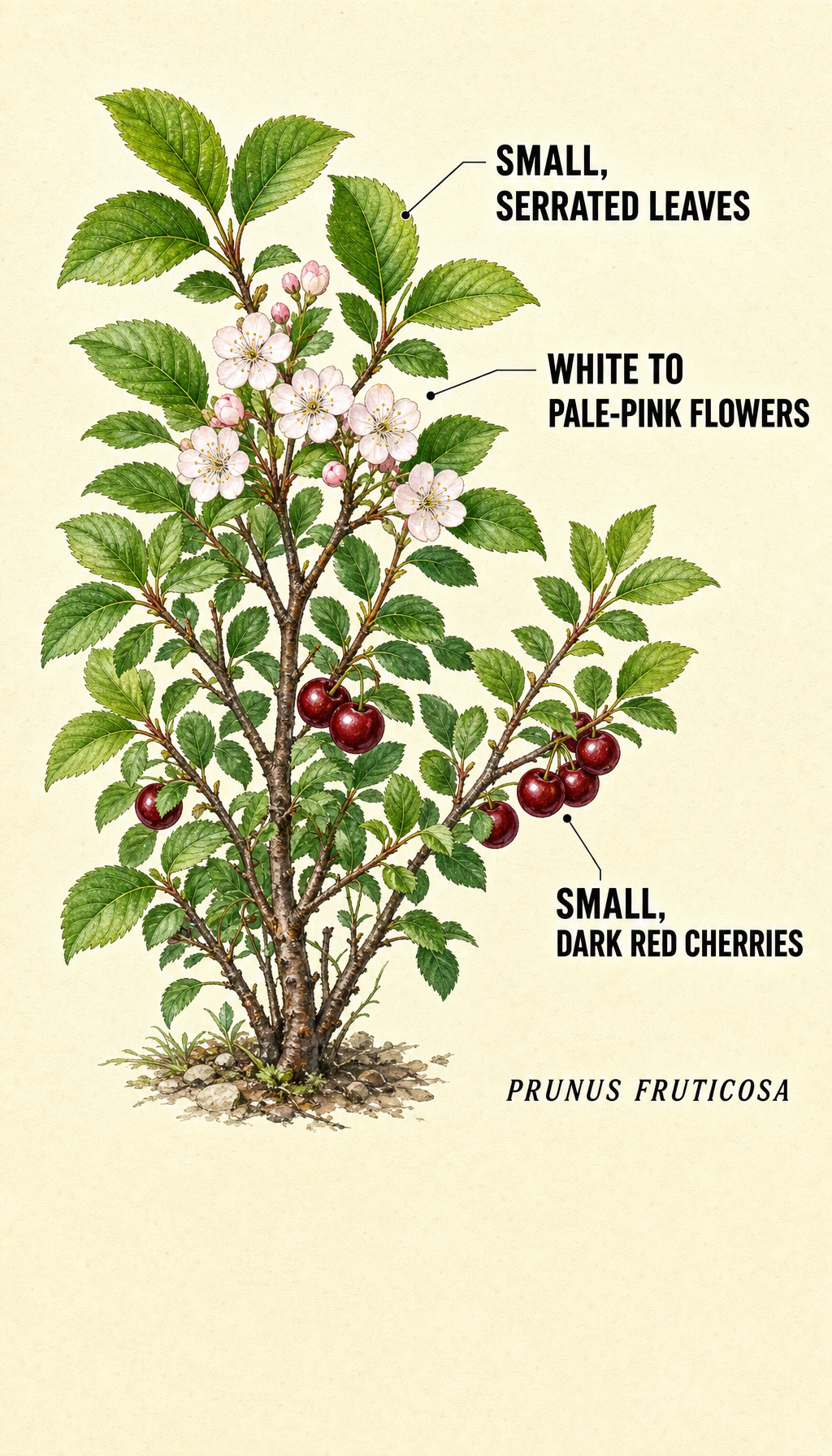
Overall form: A low, deciduous, multi-stemmed shrub with a spreading, often suckering habit that can form dense thickets. Plants are typically low-growing and bushy, generally under about 2 m in height.
Flowers: Spring-blooming, showy white to pale-pink blossoms arranged singly or in small clusters. Flower anatomy is typical of cherries, most often with five petals (petal number can vary slightly). Stamens are numerous and conspicuous.
Leaves: Simple, alternate leaves that are ovate to oblong-lanceolate with serrated (toothed) margins. Leaf surfaces are smooth or slightly pubescent depending on age and environmental conditions.
Fruit and bark: Fruits are small, globose drupes that ripen to red or dark red and are typically sour. Bark on younger stems is smooth and may show lenticels; older stems can become more rugged.
Distinctive features: Low, spreading shrub form with abundant spring blossoms and small tart cherries; tendency to sucker and form colonies helps distinguish it from taller tree-form cherries.
Seasonal variation: Spring — profuse white flowers; summer — small red cherries; autumn — foliage may change color before leaf drop; winter — bare, twiggy shrub outline.
Habitat & Distribution
Habitat: Often found in open, sunny sites such as steppes, grassland margins, dry slopes, forest edges, and hedgerows. Typically tolerant of well-drained and often calcareous soils, and commonly occurs in drier, sunlit conditions.
Moisture/light/soil: Prefers full sun to partial shade and well-drained soils; often tolerant of relatively dry, rocky or alkaline substrates.
Geographic distribution: Native to parts of Europe and western Asia; recorded in the United States in Montana and New York, where it is introduced or naturalized in localized sites.
Ecological Role
Pollination: Flowers are visited by a variety of insects, especially bees, and serve as an early nectar and pollen source in spring.
Wildlife interactions: Fruits are eaten by birds and small mammals, which can disperse seeds. Dense thickets provide cover for wildlife.
Ecological niche: A typical component of open shrub-steppe and edge habitats, contributing to structural diversity and early-season floral resources.
Conservation & Interesting Facts
Prunus fruticosa readily hybridizes with other cherry species, a process that has influenced the origin of cultivated sour cherries and can threaten genetic integrity of wild populations through introgression. Its suckering habit and drought tolerance are key adaptations that allow establishment on exposed, dry sites.