eastern white pine
Pinus strobus
BloomEDU
Identify it today. Know it next time.
Add eastern white pine to BloomEDU and a short quiz tomorrow will check if the name stuck.
Get BloomEDU — add eastern white pineFree · iOS · Android
From Instagram
Identity & Classification
Scientific name: Pinus strobus
Common names: eastern white pine, white pine
Family: Pinaceae
Genus: Pinus
Notes: A five-needled “white pine” species within the pines; taxonomic treatments place it among the soft pines characterized by needles in bundles of five.
Visual Description
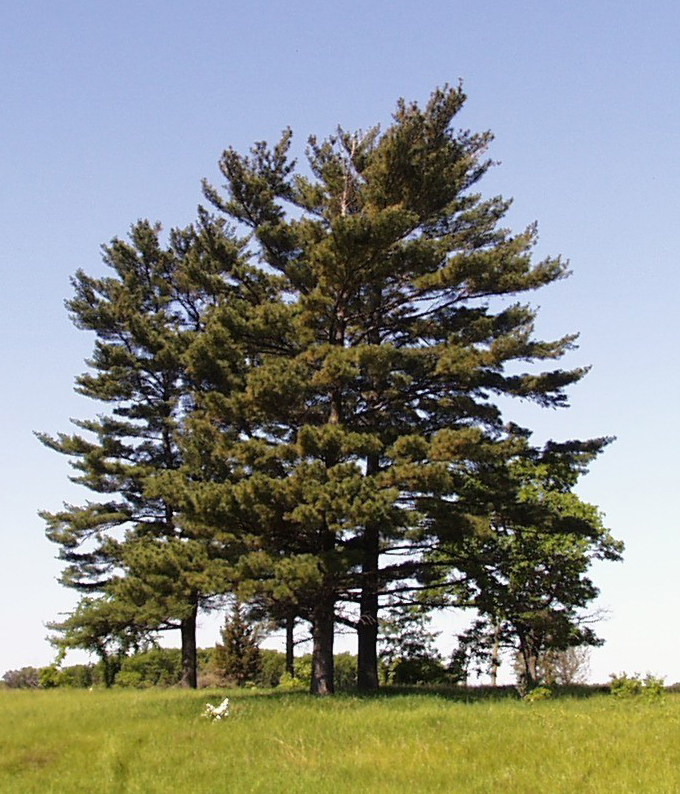
Form: A large, typically tall single-trunked conifer with a straight bole and a conical crown when young that often becomes more rounded or irregular with age. Trees commonly reach substantial heights in favorable sites.
Reproductive structures: As a gymnosperm, it produces cones rather than flowers. Male (pollen) cones are small and occur in clusters; seed (female) cones are elongated and borne singly or in small groups, maturing to release winged seeds.
Leaves: Needles are borne in fascicles (bundles) of five, usually soft, slender and flexible, and often bluish-green to green in color. Needles are evergreen and persist several years.
Bark: Young trees have relatively smooth, thin bark that becomes furrowed and plated or scaly on older trunks.
Distinctive features: The combination of five-needle fascicles, soft flexible needles, and elongated seed cones distinguishes this species from many other pines.
Seasonal variation: Needles remain year-round; new shoot growth is paler green in spring. Cones develop over the growing season and typically mature and open in the months following pollination.
Habitat & Distribution
Growing conditions: Typically found in mixed and coniferous forests, often occupying well-drained upland sites but also occurring in moister coves and sheltered slopes. It generally prefers full sun to partial shade and acidic soils, and can establish on a variety of soil textures.
Ecological settings: Common in forest succession as both a pioneer on disturbed sites and as a component of mature mixed stands in its native range.
Geographic distribution: Native to eastern North America and widely present across the northeastern and north-central United States and adjacent Canada; also planted and established outside its native core (including occurrences in the range of states provided, such as AL, AR, CA, CT, DE and many others).
Ecological Role
Pollination: Wind-pollinated, shedding large amounts of pollen during the reproductive season.
Wildlife interactions: Seeds and buds are a food source for birds and small mammals; the species provides nesting and cover habitat for forest wildlife. Its structure contributes to forest canopy complexity and succession.
Niche: A long-lived canopy tree that can occupy both early- and late-successional roles depending on site conditions, often influencing light and soil conditions beneath its crown.
Conservation & Interesting Facts
Conservation status: Generally not considered threatened across its range and is assessed as of low conservation concern at large scales.
Notable facts: Eastern white pine is among the tallest native pines of eastern North America and is readily recognized by its five-needle bundles and soft foliage. Its combination of rapid early growth and shade tolerance when young has made it an important species in reforestation and landscape plantings.