coastal groundcherry
Physalis angustifolia
BloomEDU
Identify it today. Know it next time.
Add coastal groundcherry to BloomEDU and a short quiz tomorrow will check if the name stuck.
Get BloomEDU — add coastal groundcherryFree · iOS · Android
From Instagram
Identity & Classification
Scientific name: Physalis angustifolia
Common name(s): coastal groundcherry (also sometimes cited as narrowleaf groundcherry)
Family: Solanaceae
Genus: Physalis
Taxonomic relationships: A member of the bladder-cherry/tomatillo group (Physalis), characterized by an inflated calyx enclosing the fruit; relationships within Physalis follow the genus’ established circumscription.
Visual Description
Overall form: Herbaceous, low-growing plant that typically forms spreading, often sprawling stems close to the ground. Plants are generally short in stature and may form loose clumps in suitable sites.
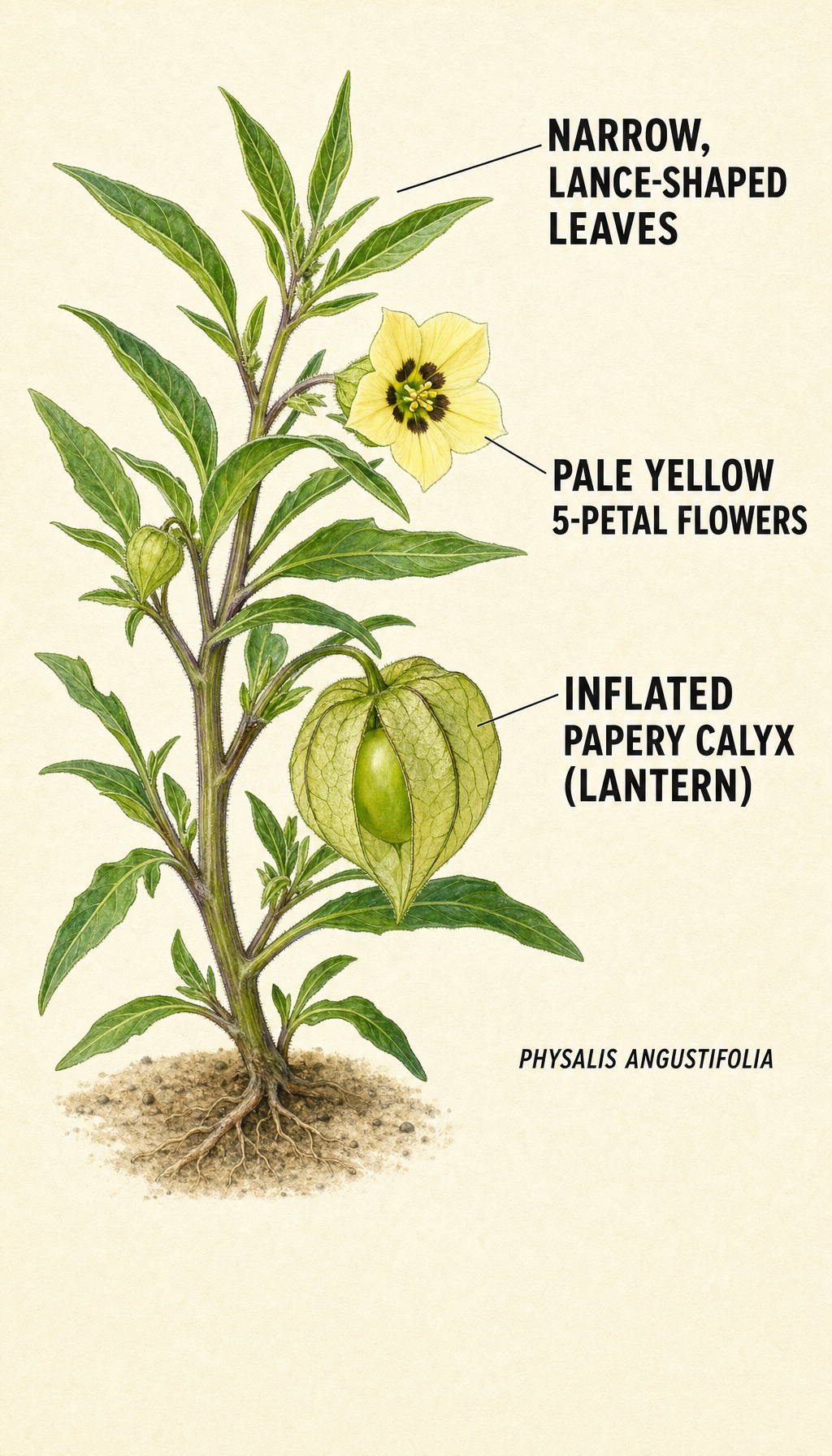
Flowers: Solanaceous, with a campanulate to bell-shaped corolla typically presenting five lobes; corollas are usually yellow to pale yellow and may show a darker central blotch or throat. Flowers commonly occur singly in leaf axils.
Leaves: Alternate, simple leaves that are usually narrow to lanceolate in shape (the specific epithet reflects relatively narrow leaves compared with some other Physalis). Margins may be entire to sparsely toothed; leaf surfaces may be sparsely hairy.
Fruit and calyx: Distinctive inflated, papery calyx (“lantern”) develops after flowering and encloses a round berry. The husk is a key field mark for the genus and remains prominent as the fruit matures.
Distinctive features: Narrow leaves, low-sprawling habit, yellow bell-shaped flowers, and the characteristic papery husk around the fruit that resembles a small lantern.
Seasonal variation: Flowering and subsequent husk-fruit production generally occur in the warmer growing season and may extend through much of the frost-free period in its coastal range.
Habitat & Distribution
Typical ecosystems: Often found in coastal, sandy environments such as dunes, foredunes, barrier island scrub, and other well-drained coastal soils exposed to salt spray and sun.
Moisture, light, soil: Prefers well-drained sandy substrates and full sun to partial sun; tolerant of dry, nutrient-poor sands and periodic salt spray typical of shoreline habitats.
Geographic distribution: Native to the northern Gulf Coast of the United States and recorded in Alabama, Florida, Louisiana, and Mississippi. Occurs commonly in coastal portions of these states.
Ecological Role
Pollinators: Flowers of Physalis species are generally visited by a variety of bees and other insect pollinators; coastal groundcherry is likely visited by generalist bees that forage on open, bell-shaped Solanaceae blossoms.
Wildlife interactions: The enclosed berry is often eaten by wildlife in Physalis species; coastal fruits may be consumed and dispersed by birds and small mammals in coastal ecosystems.
Niche: Occupies a specialized niche on sandy coastal substrates where its growth habit and papery-fruited reproduction fit with dune and scrub community dynamics.
Conservation & Interesting Facts
Conservation: No widely recognized federal conservation listing is associated with this species across its Gulf Coast range, though local population trends can vary with coastal development and habitat change.
Interesting facts: The genus name Physalis comes from a Greek word meaning “bladder,” a reference to the inflated calyx that protects the berry. The papery husk is a clear adaptive feature that shields developing fruit from desiccation, salt spray and some herbivores while aiding seed dispersal when fruits are released.