creeping woodsorrel
Oxalis corniculata
BloomEDU
Identify it today. Know it next time.
Add creeping woodsorrel to BloomEDU and a short quiz tomorrow will check if the name stuck.
Get BloomEDU — add creeping woodsorrelFree · iOS · Android
From Instagram
Identity & Classification
Scientific name: Oxalis corniculata. Verified common names: creeping woodsorrel, creeping oxalis, procumbent yellow-sorrel, dwarf oxalis. Family: Oxalidaceae. Genus: Oxalis (the wood-sorrels). Taxonomically it is a member of the widespread Oxalis clade of small, sour-tasting herbaceous plants.
Visual Description
Habit: Low-growing, prostrate or trailing herb that typically forms mats or loose patches; stems often root at nodes and can spread across soil or mulch. Plants may behave as annuals or persist as perennials depending on climate.
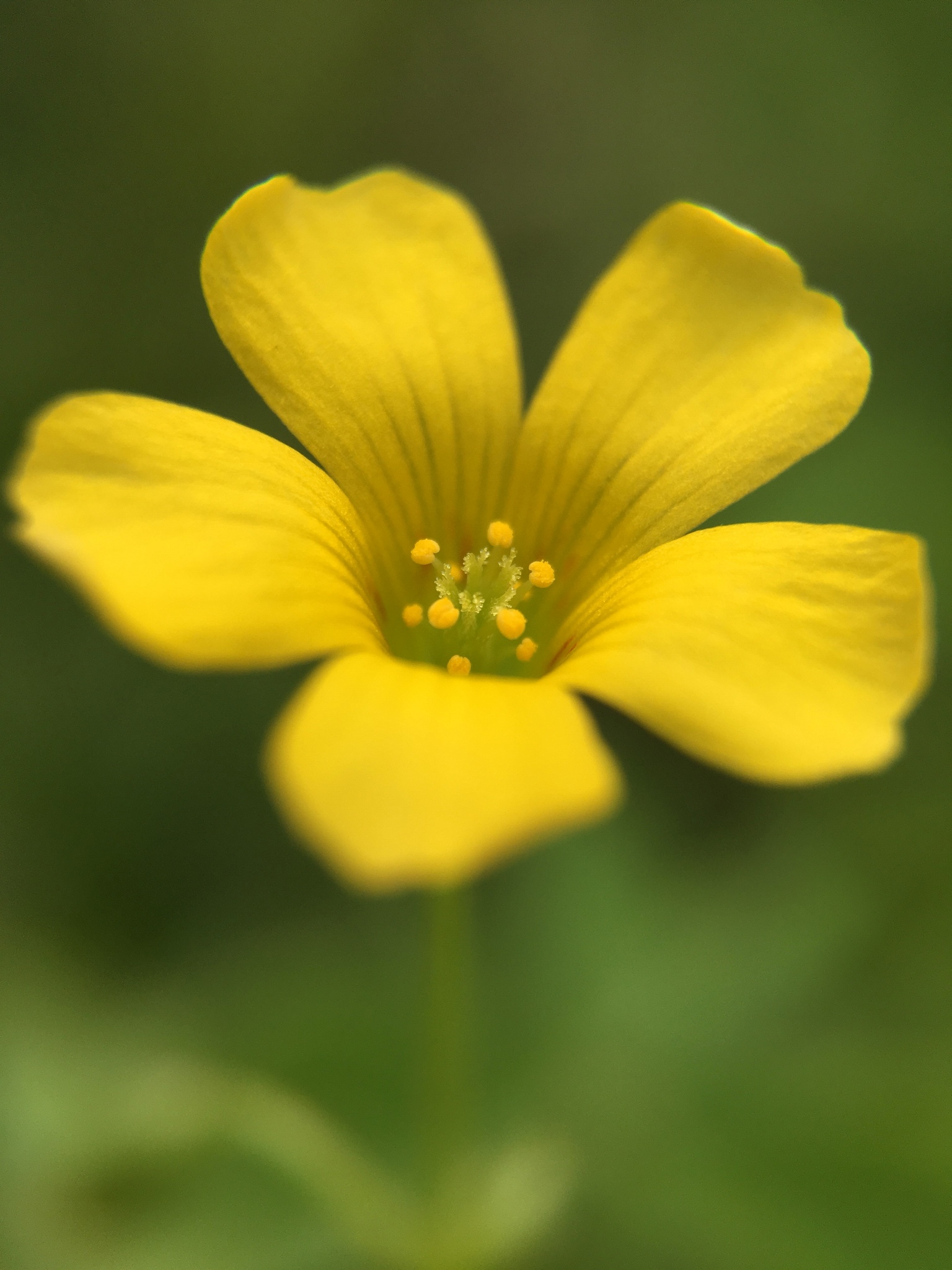
Flowers: Small, usually yellow, appearing singly or few per stem. Petals typically number 4–6 (most often 5) and are broadly obovate to rounded, giving a simple, open appearance. Flowers may open in daylight and close in low light.
Leaves: Trifoliolate (three leaflets) on slender petioles; each leaflet is generally heart-shaped to obcordate with a smooth margin, giving a clover-like look though unrelated to legumes. Leaflets often fold or angle in response to light conditions.
Distinctive features: Very small yellow flowers combined with clover-like three-part leaves and a mat-forming, node-rooting habit make this species recognizable. Fruits are elongated, cylindrical capsules that can release seeds forcefully when mature.
Seasonal variation: Flowers and active growth often occur during warm months and, in mild climates, may continue year-round. Leaves and flowers may close or droop in cold, dark, or drought conditions.
Habitat & Distribution
Growing conditions: Often found in disturbed sites—lawns, garden beds, pavement cracks, open ground, and shaded edges. Tolerates a range of soils from compacted urban soils to richer garden loams and is commonly found in both sun and partial shade. Moisture preference is generalist; plants persist in well-drained to moderately moist conditions.
Geographic distribution: Present across much of the United States, including AL, AR, AZ, CA, CO and many additional states (44 more), and widely naturalized in temperate and tropical regions worldwide.
Ecological Role
Pollination: Flowers are visited by small bees, flies, and other small insects and can self-pollinate; insect visitation contributes to pollen transfer in many populations.
Wildlife interactions: Serves as a nectar and pollen resource for small pollinators. Leaves are eaten by some invertebrates; the plant’s low mats can provide microhabitat for tiny ground arthropods.
Ecological niche: Functions as a rapid-colonizer of open, disturbed microhabitats and as a groundcover that can outcompete seedlings in tight spaces.
Conservation & Interesting Facts
Conservation status: Not generally considered threatened; often treated as a common weed in managed landscapes.
Interesting facts: The plant’s sour taste comes from oxalic acid, a chemical that gives wood-sorrels their characteristic tang. Its seed capsules may eject seeds when disturbed, a form of ballistic dispersal that helps local spread. The prostrate, node-rooting habit is a key adaptation for rapid vegetative spread across soil and mulch.