grizzleybear pricklypear
Opuntia ×columbiana
BloomEDU
Identify it today. Know it next time.
Add grizzleybear pricklypear to BloomEDU and a short quiz tomorrow will check if the name stuck.
Get BloomEDU — add grizzleybear pricklypearFree · iOS · Android
Identity & Classification
Scientific name: Opuntia ×columbiana
Common names: often called Columbian pricklypear and, regionally, grizzleybear pricklypear
Family: Cactaceae
Genus: Opuntia
The multiplication sign (×) in the scientific name indicates a hybrid origin; this reflects its status as a naturally occurring hybrid within the Opuntia complex.
Visual Description
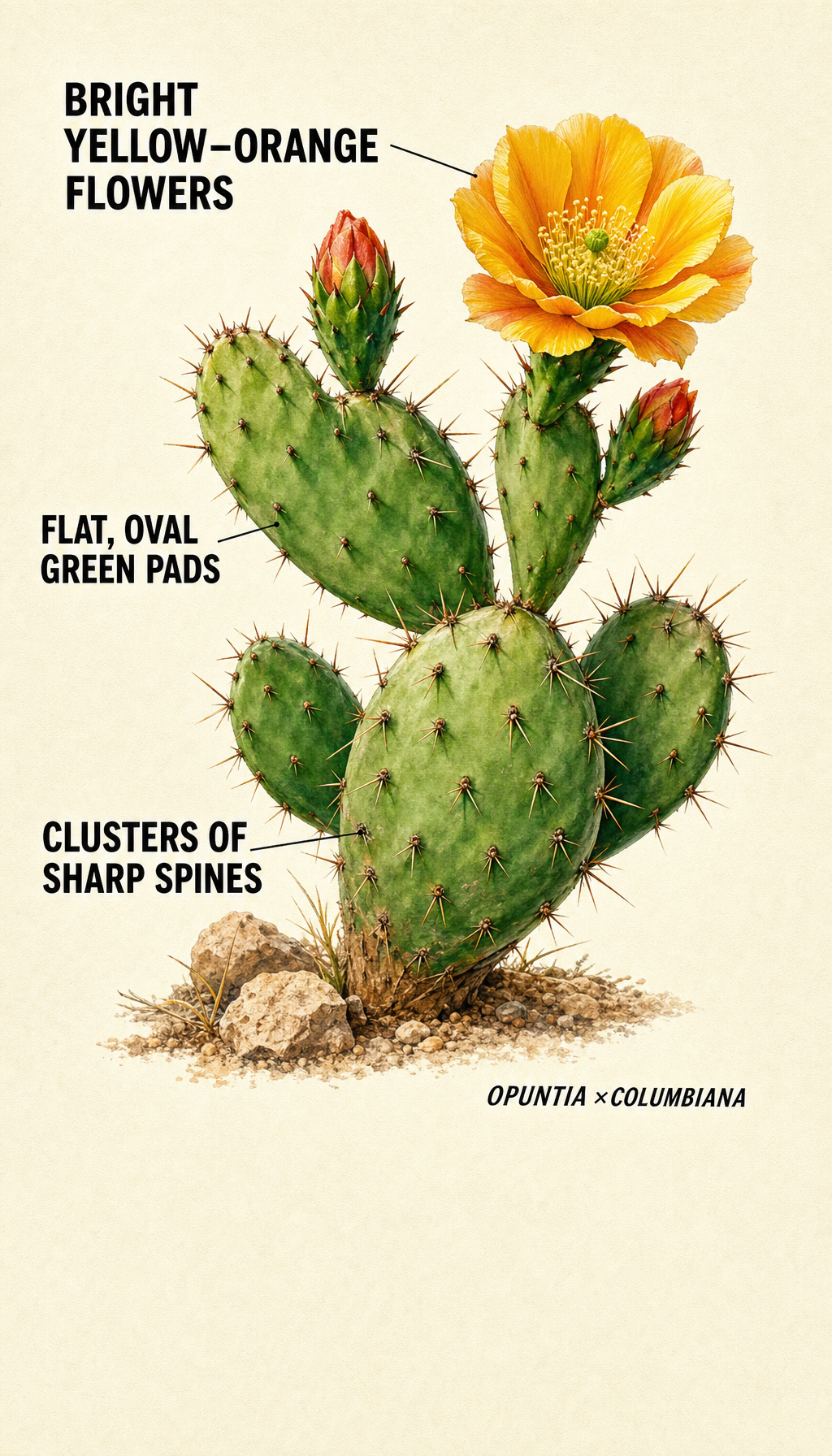
Overall form: A low to medium-height, clumping prickly pear that typically forms mats or small, spreading shrubs of jointed, flattened stems (pads or cladodes). Plants often present a compact, layered habit in exposed sites.
Size: Typically forms low clumps rather than tall columnar stems; individual pads are flattened and succulent.
Flowers: Bowl-shaped, showy blooms with numerous petal-like tepals; petals commonly number in the range of about 6–12. Flower color is often in the yellow to orange range, producing a conspicuous floral display in season.
Leaves: True leaves are reduced and soon shed; the visible photosynthetic structures are flattened pads (cladodes) arranged in segments. Pads are usually green to blue-green and bear areoles.
Spines and glochids: Areoles bear sharp spines and dense clusters of tiny barbed glochids; glochids are a distinctive feature that can detach and irritate skin.
Fruit: Fleshy, berry-like fruits (tunas) may develop after flowering and often persist into late season.
Distinctive features: Flattened succulent pads, combination of larger spines and minute barbed glochids, and bright yellow-orange bowl-shaped flowers. Seasonal variation: pads remain succulent year-round in suitable climates; flowering typically occurs in late spring to summer with fruit ripening later in the season.
Habitat & Distribution
Growing conditions: Typically found in open, sunny sites with well-drained, rocky or sandy soils. Often associated with dry, exposed slopes, grassland edges, and other xeric microsites.
Moisture/light/soil: Prefers dry to seasonally dry conditions, full sun, and soils that drain rapidly.
Geographic distribution: Recorded in parts of the Pacific Northwest, including Idaho, Oregon, and Washington. Occurrence is often patchy and associated with suitable dry microsites within these states.
Ecological Role
Pollination: Flowers are primarily pollinated by insects, especially bees and other generalist pollinators attracted to open, bowl-shaped cactus blooms.
Wildlife interactions: Fruits may be consumed by birds and mammals, and pads can provide shelter or cover for small animals. Spines and dense growth deter many herbivores while offering microhabitats for insects and small vertebrates.
Ecological niche: Occupies xeric, well-drained niches where its water-storage pads, spines, and drought-adapted physiology give it a competitive advantage.
Human Uses & Cultural Significance
Physical hazard: The small barbed glochids and larger spines can lodge in skin and cause irritation; handling requires caution. Specific traditional or culinary uses for this hybrid are not documented here.
Conservation & Interesting Facts
The "×" denotes hybrid origin, reflecting genetic interchange within Opuntia. Like other Opuntia, this plant uses CAM photosynthesis and water-storing pads to survive dry periods, and its barbed glochids are a notable defensive adaptation that readily detach and irritate skin.
From Instagram