pyramid magnolia
Magnolia pyramidata
BloomEDU
Identify it today. Know it next time.
Add pyramid magnolia to BloomEDU and a short quiz tomorrow will check if the name stuck.
Get BloomEDU — add pyramid magnoliaFree · iOS · Android
Identity & Classification
Scientific name: Magnolia pyramidata
Common name(s): pyramid magnolia
Family: Magnoliaceae
Genus: Magnolia
Taxonomic placement: Member of the magnolia lineage within Magnoliaceae; relationships to other North American magnolias are within the same broadly circumscribed genus Magnolia.
Visual Description
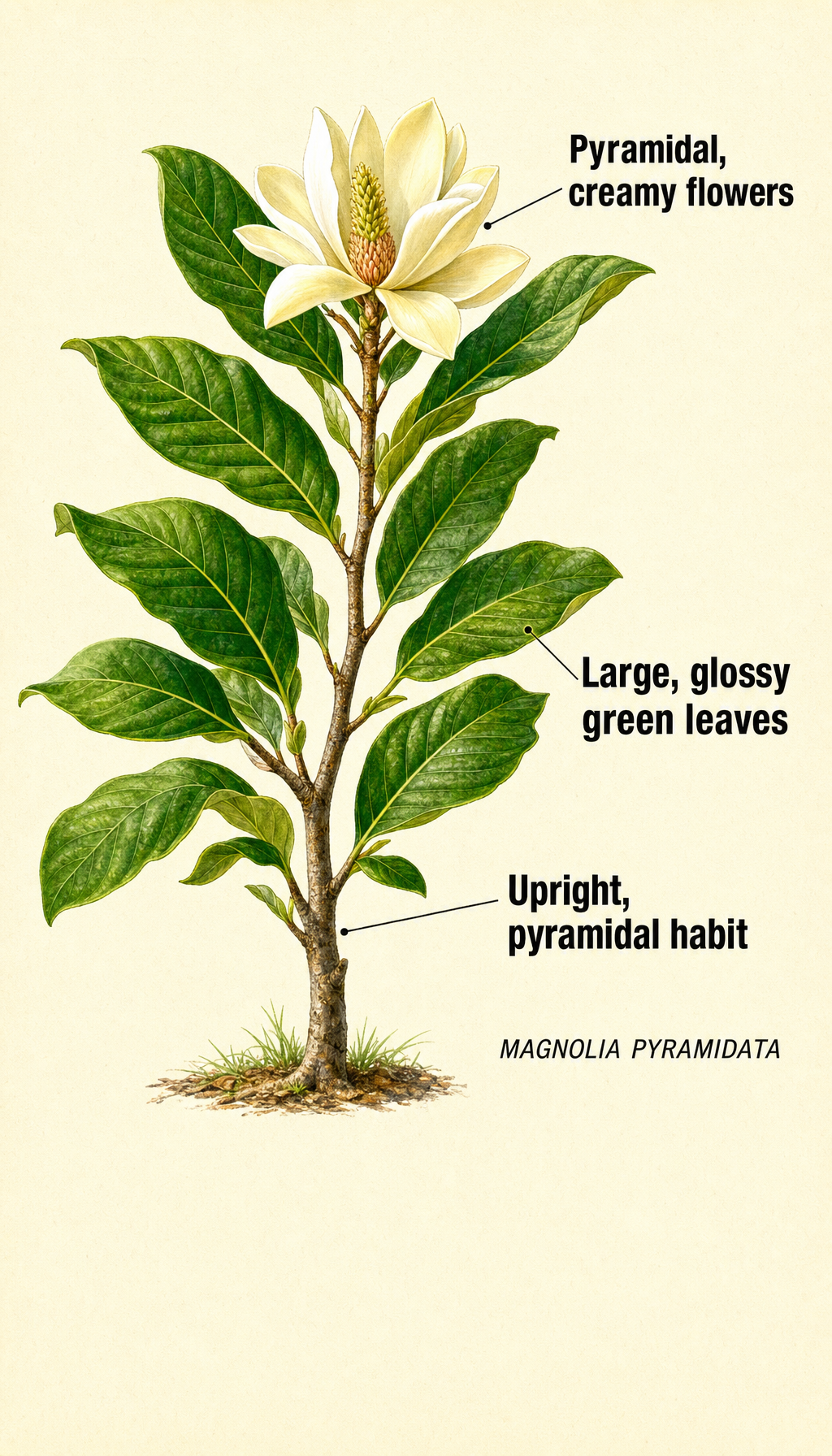
Magnolia pyramidata is typically a small to medium deciduous tree or large multi-stemmed shrub. It often forms a pyramidal or broadly rounded crown and can appear shrub-like in dense understory settings. Flowers are showy, cup- to bowl-shaped and creamy white to pale yellow, produced singly at branch tips in spring; each bloom is composed of multiple tepals (the petal- and sepal-like floral parts) rather than distinct petals and sepals. Flowers are often stout and substantial rather than highly delicate. Leaves are alternate, simple, and generally entire-margined; they tend to be broad, elliptic to obovate in shape with a smooth or slightly glossy upper surface and a paler underside that may be somewhat pubescent. Fruit is an elongated aggregate of follicles that matures into a cone-like cluster bearing bright seeds with fleshy arils in many magnolia species; the developing fruit cluster can be a useful identifying feature. Seasonal variation: deciduous leaves emerge in spring, flowers appear in spring before or with leaf expansion, and fruits persist into summer or early autumn.
Habitat & Distribution
Pyramid magnolia is typically found in mesic hardwood habitats—often in sheltered slopes, ravines, and rich, well-drained forest soils. It commonly grows in partial to full shade in woodland settings, though individual trees may receive more light in openings. Moisture preferences are generally moderate; the species often occurs where soils remain reliably moist but not waterlogged. Geographic distribution includes multiple southeastern and south-central U.S. states; reported occurrences include Alabama, Arkansas, Florida, Georgia, Kentucky and additional nearby states.
Ecological Role
Like many magnolias, pyramid magnolia is adapted to pollination by beetles and other relatively large, generalist pollinators; its sturdy tepals and abundant pollen suit this interaction. The seeds are typically borne with fleshy arils that may attract birds and small mammals, aiding seed dispersal. As an understory to mid-canopy tree, it contributes to forest structure and provides seasonal resources (nectar/pollen, seeds) for wildlife.
Human Uses & Cultural Significance
Pyramid magnolia is occasionally planted as an ornamental native-species specimen for its early spring flowers and attractive form. Uses are primarily horticultural rather than commercial.
Conservation & Interesting Facts
Magnolias represent an ancient lineage of flowering plants with floral traits that predate bee pollination; pyramid magnolia shares those ancestral features (robust tepals and beetle pollination). Specific conservation status should be checked with regional conservation resources for up-to-date assessments.
From Instagram