Lemmon lupine
Lupinus lemmonii
BloomEDU
Identify it today. Know it next time.
Add Lemmon lupine to BloomEDU and a short quiz tomorrow will check if the name stuck.
Get BloomEDU — add Lemmon lupineFree · iOS · Android
From Instagram
Identity & Classification
Scientific name: Lupinus lemmonii
Common names: Lemmon lupine, Lemmon's lupine
Family: Fabaceae
Genus: Lupinus
Taxonomic note: A member of the lupine group within Fabaceae; shares the characteristic papilionaceous (pea-type) flowers and palmately compound leaves typical of the genus.
Visual Description
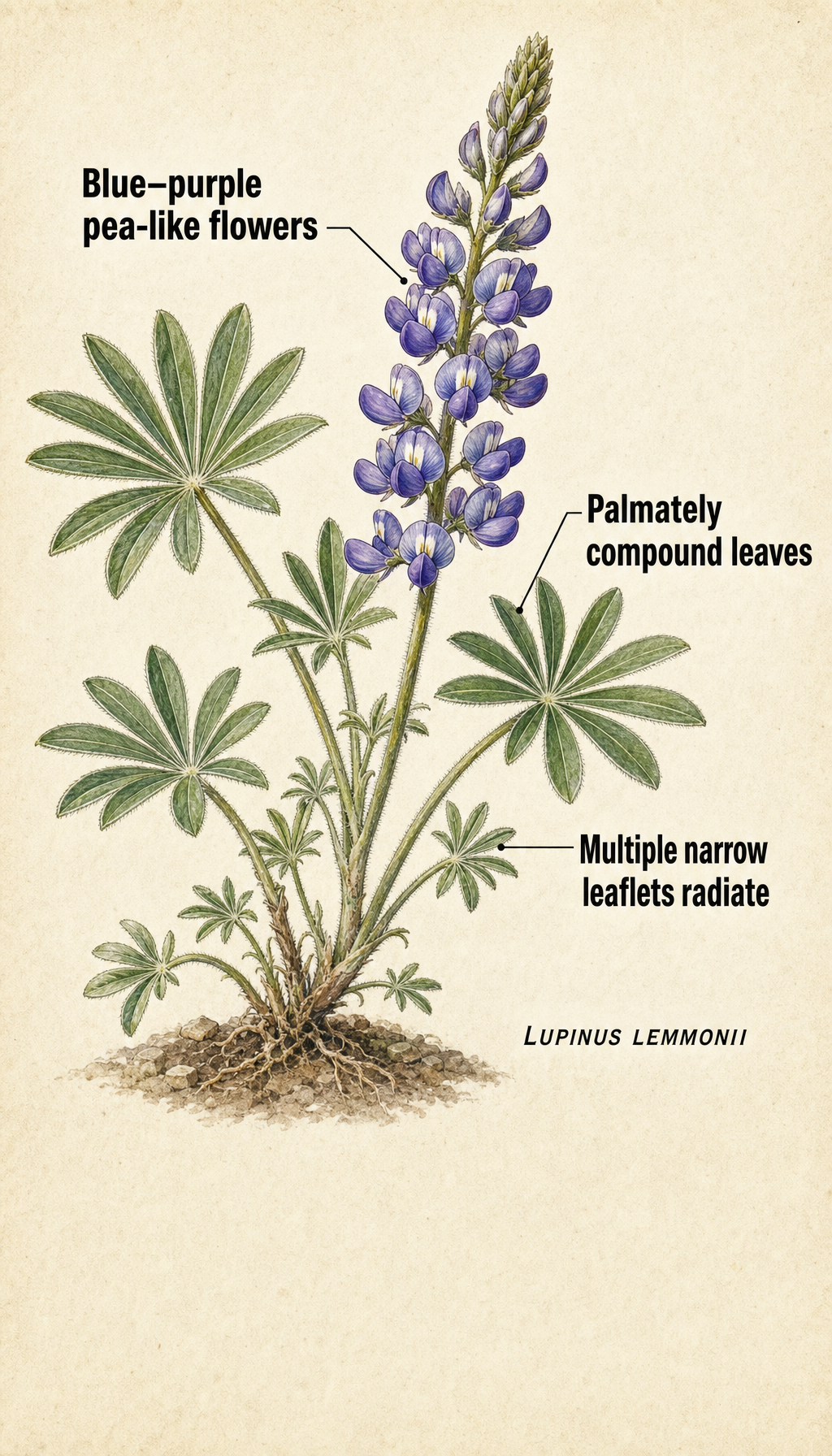
Lupinus lemmonii is an herbaceous lupine that typically forms low to medium-height clumps with erect to ascending flowering stems. Flowers are arranged in racemes or compact spikes and are pea-type (papilionaceous), each flower having five petals organized as a banner (standard), two wings, and a fused keel. Flower color is often in the blue–purple range, though variation can occur. Leaves are palmately compound, with several narrow to lanceolate leaflets radiating from a central point; surfaces may be sparsely to densely hairy depending on individual plants. Fruit is a typical legume pod containing several seeds. Seasonal appearance can vary with elevation and moisture; plants generally produce conspicuous flowering displays during the local growing season and revert to vegetative foliage outside of bloom.
Habitat & Distribution
Lupinus lemmonii is known from Arizona and is typically found in open, well-drained sites. It often occurs in habitats such as montane and foothill slopes, open woodlands, and rocky or sandy soils where drainage is good and sunlight is abundant to partly shaded. The species generally favors soils with lower fertility where lupines’ nitrogen-fixing ability gives them a competitive advantage.
Ecological Role
As a member of Fabaceae, L. lemmonii commonly forms symbiotic associations with nitrogen-fixing bacteria in root nodules and can contribute to local soil nitrogen levels. The papilionaceous flowers are adapted for bee pollination; native bees, including bumblebees and solitary bees, are typical pollinators of lupines. Flowering lupines provide nectar and pollen resources for native pollinators and can be an important component of local pollinator-supporting plant communities.
Conservation & Interesting Facts
Conservation status for L. lemmonii is not widely reported in major national lists. Interesting facts: lupines’ characteristic palmately divided leaves and showy racemes make them relatively easy to recognize in the field, and their nitrogen-fixing habit allows them to colonize and improve poor soils, often facilitating succession by other plants.