little flowered lupine
Lupinus holosericeus
BloomEDU
Identify it today. Know it next time.
Add little flowered lupine to BloomEDU and a short quiz tomorrow will check if the name stuck.
Get BloomEDU — add little flowered lupineFree · iOS · Android
Identity & Classification
- Scientific name: Lupinus holosericeus
- Verified common name: little flowered lupine
- Family: Fabaceae
- Genus: Lupinus
- Taxonomic note: a member of the lupine genus (Lupinus) within the pea family; broader relationships are those typical of other North American lupines.
Visual Description
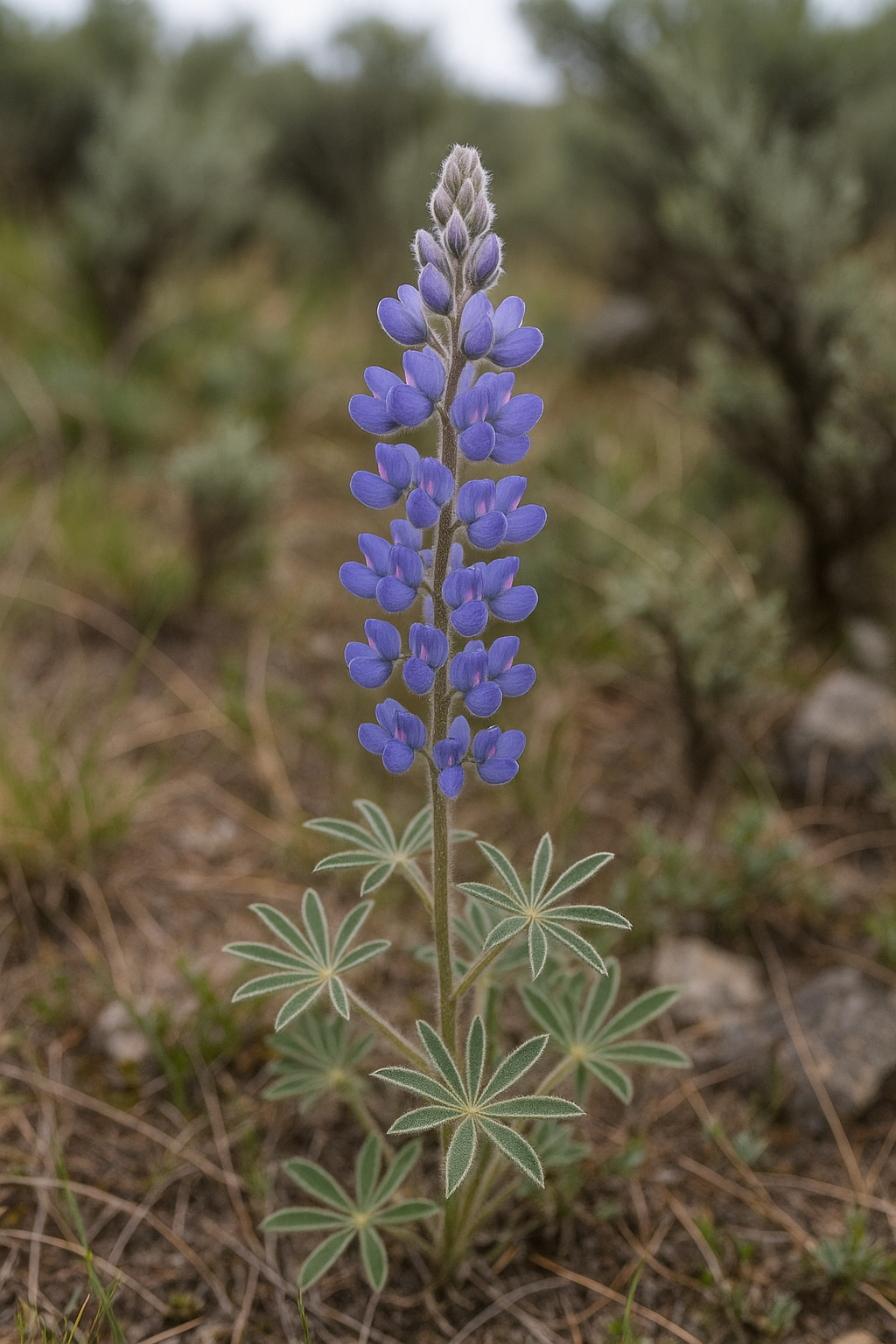
- Overall form: an herbaceous lupine, generally forming erect to slightly spreading stems arising from a basal or short-lived perennial rootstock; typically a low- to medium-height wildflower in habit.
- Flowers: papilionaceous (pea-shaped) inflorescences in upright racemes bearing numerous small individual flowers. Each flower has the typical banner, two wings and a fused keel (five petals total), often small and delicate compared with some larger lupine species. Flower colors can vary among lupines; this species is characterized by relatively small blossoms.
- Leaves: palmately compound leaves with several leaflets radiating from a central point; leaflets often narrow to moderately broad and may be covered with fine hairs.
- Distinctive features: noticeably silky or hairy foliage and stems (the species epithet refers to a “silky” covering), small pea-type flowers in dense racemes, and the characteristic lupine seed pods that develop after flowering.
- Seasonal variation: foliage and flowering follow a seasonal growth cycle typical of temperate lupines, with fresh leaves and blooms appearing in the growing season and pods/seed set developing later; foliage hairs may be more apparent when leaves are young or in dry conditions.
Habitat & Distribution
- Typical habitats: often found in open, well-drained sites such as grasslands, sagebrush steppe, rocky slopes and open woodland margins; commonly associated with sunny to partly shaded exposures.
- Moisture, light, and soil preferences: generally prefers full sun to partial shade and well-drained soils; tends to tolerate relatively dry conditions compared with moisture-loving meadow species.
- Geographic distribution: occurs in multiple western U.S. states, including Arizona, California, Colorado, Idaho and Montana among others; generally a western interior and Pacific-region lupine.
Ecological Role
- Pollination: attracts native bees, including bumblebees and other bee species adapted to the pea-type flower morphology; these bees commonly serve as the primary pollinators.
- Nitrogen fixation: like other Fabaceae members, forms root associations with nitrogen‑fixing bacteria and can contribute to soil nitrogen enrichment in its habitat.
- Wildlife interactions: provides nectar and pollen resources for pollinators; seed pods are typical legume fruits that may be used by seed‑eating animals in some systems.
Human Uses & Cultural Significance
- General caution: many lupines contain alkaloids and related compounds; some lupine species are known to be toxic to livestock or humans if ingested. Avoid consumption of plant parts unless a species’ safety is documented.
Conservation & Interesting Facts
- The species epithet “holosericeus” refers to the plant’s overall silky hairiness, a visible trait that helps distinguish it from less-hairy lupines.
- Adaptations such as dense leaf hairs likely help reduce water loss and protect tissues from strong sunlight in exposed western habitats.
From Instagram