Fendler's waterleaf
Hydrophyllum fendleri
BloomEDU
Identify it today. Know it next time.
Add Fendler's waterleaf to BloomEDU and a short quiz tomorrow will check if the name stuck.
Get BloomEDU — add Fendler's waterleafFree · iOS · Android
**Identity & Classification**
Hydrophyllum fendleri — common name Fendler’s waterleaf — is an herbaceous flowering plant placed in the genus Hydrophyllum. Historically this group has been treated as the family Hydrophyllaceae; many modern classifications instead include Hydrophyllaceae within Boraginaceae as the subfamily Hydrophylloideae. The specific epithet fendleri honors Augustus Fendler, who collected specimens for the botanist Asa Gray. - Family: traditionally Hydrophyllaceae (often treated in Boraginaceae sensu lato)
- Genus: Hydrophyllum
- Species: fendleri
- Common name: Fendler’s waterleaf
**Physical Description**
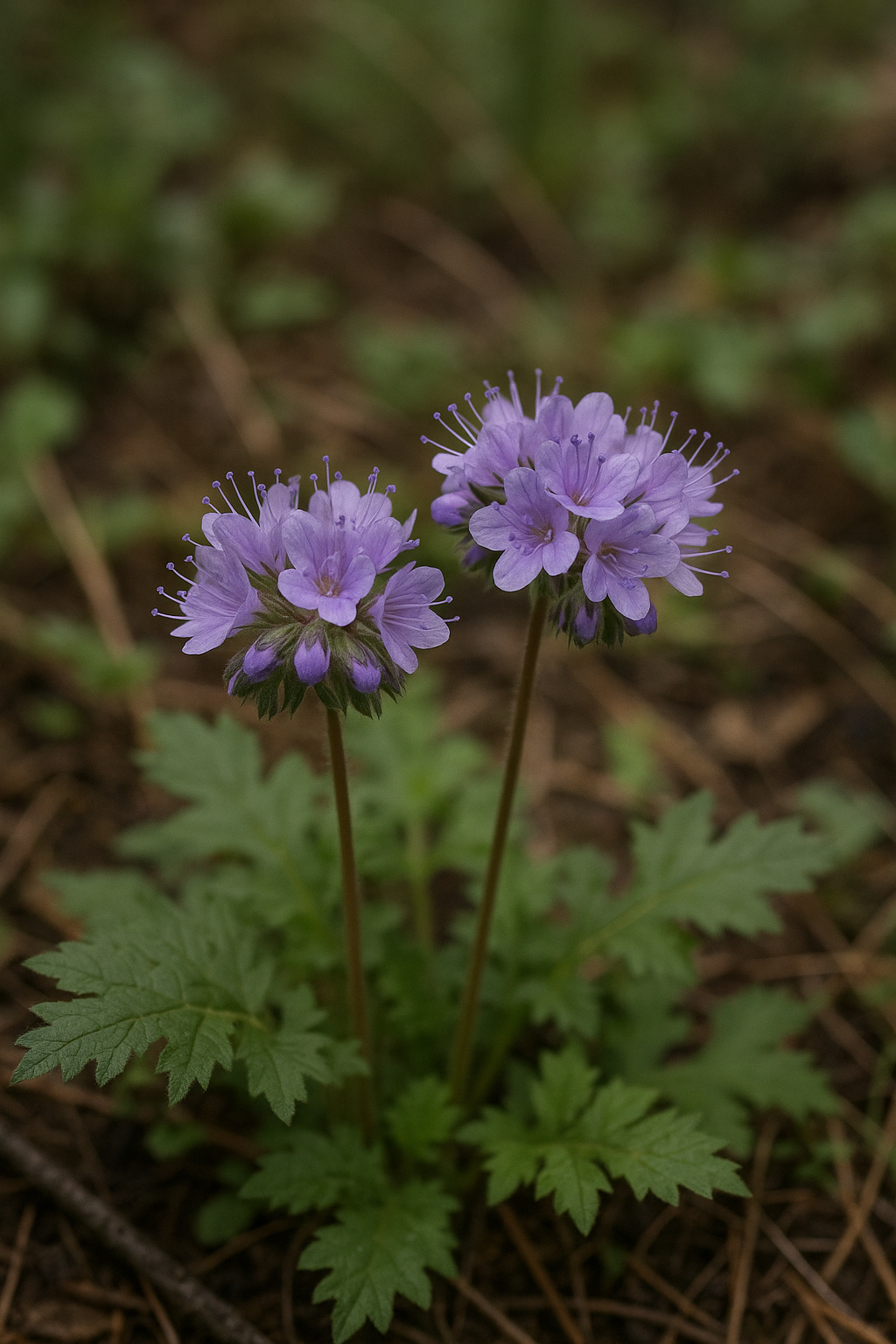
A concise, field-friendly portrait — written with botanical precision but no unnecessary jargon. - Life form: a perennial, herbaceous wildflower (non-woody plant that returns each year). - Habit: typically grows as a low to medium-height clump of stems arising from a perennial rootstock (exact growth form can vary by site). - Leaves: generally alternate, often with a noticeable petiole and a somewhat coarse toothed or lobed margin; leaves may be hairy (pubescent) — lending a slightly rough texture. Many Hydrophyllum species bear conspicuous basal leaves as well as stem leaves. - Flowers: borne in clusters (inflorescences) of tubular to bell-shaped flowers; flower color in this species is typically in the violet–lavender range (flower color can vary with population and growing conditions). Flowers have a fused corolla typical of the genus. - Other features: plants often show visible hairiness on stems and foliage (a common trait in Hydrophyllum), and inflorescences may be nodding or loosely arranged. (If you need measurements such as exact plant height, leaf length, or petal size for a field guide, I can add them — I avoided exact numbers here because reported sizes vary among sources and populations.)
**Habitat & Range**
- General range: reported from the U.S. Pacific states — Washington through California — with occurrences extending into eastern Idaho. - Typical habitats: often found in moister, shadier microsites compared with surrounding landscape — places such as shady forest understories, riparian edges, and mesic montane meadows are commonly cited habitats for Hydrophyllum species. Local populations may favor cooler, seasonally moist soils. - Site conditions: typically favors partial to full shade and soils that retain some moisture during the growing season; exact elevational limits and microhabitat preferences can vary by locality. Note: I relied on the range summary you provided (Washington to California, into eastern Idaho). For precise county-level distribution or elevation bands, consult local floras or herbarium records for confirmation. **Ecological Role**
- Pollination: flowers of Hydrophyllum species commonly attract a variety of insect visitors; bees (including bumble bees and solitary bees) are frequent visitors to tubular, nectar-producing flowers. Hydrophyllum fendleri likely plays a role as a nectar and pollen source for native pollinators in its habitats. - Seasonal role: as a spring–early-summer bloomer in many populations, it helps provide resources during a period when forest understory flowers are important for emerging pollinators. - Plant community: typically a component of shady, mesic understory plant communities; it contributes to herb-layer diversity and local habitat structure. Specific interspecific relationships (specialist pollinators, herbivores, mycorrhizal partners) are not well-documented for H. fendleri in the sources I have; when such details are needed, regional ecological studies or pollinator surveys are the best references. **Human Uses & Cultural Significance**
- Documented uses: Specific traditional medicinal, culinary, or cultural uses for Hydrophyllum fendleri are not well-documented in the literature I can reliably cite. - Horticulture: some Hydrophyllum species are used in native-plant and shade gardens for their attractive foliage and clusters of flowers; whether H. fendleri is commonly cultivated is not clearly documented across sources. - Caution: because authoritative records of ethnobotanical or medicinal use for this species are lacking in my sources, I do not present any medicinal or toxic properties. fendleri is appropriate for cultivation in a particular garden setting, I can summarize cultivation notes from related Hydrophyllum species with clear caveats. **Interesting Facts**
- Name origin: “waterleaf” (Hydrophyllum) alludes to the watery-looking blotches or the translucent appearance that leaves of some species in the genus sometimes show — a neat little visual trick that inspired a common name. - A botanical homage: the species name fendleri honors Augustus Fendler, a 19th‑century plant collector who supplied specimens to Asa Gray — a reminder that many plant names carry human history. - Taxonomic twist: Hydrophyllum’s family placement has shifted in modern classification schemes — it’s a nice example of how molecular systematics can reshape traditional botanical groupings. - Pollinator-friendly: the bell‑tubed flowers typical of this genus are well-suited to bee visitors, making these plants small but sincere contributors to pollinator-supporting understory flora. fendleri from similar Hydrophyllum species), photos/illustrations, or a short seasonal phenology calendar tailored to one or two representative locations within its range.
From Instagram