giant sunflower
Helianthus giganteus
BloomEDU
Identify it today. Know it next time.
Add giant sunflower to BloomEDU and a short quiz tomorrow will check if the name stuck.
Get BloomEDU — add giant sunflowerFree · iOS · Android
From Instagram
Identity & Classification
Scientific name: Helianthus giganteus
Common names: giant sunflower, tall sunflower
Family: Asteraceae
Genus: Helianthus
Taxonomic note: A member of the sunflower genus Helianthus and the composite-flower family Asteraceae; closely aligned with other perennial eastern North American sunflowers.
Visual Description
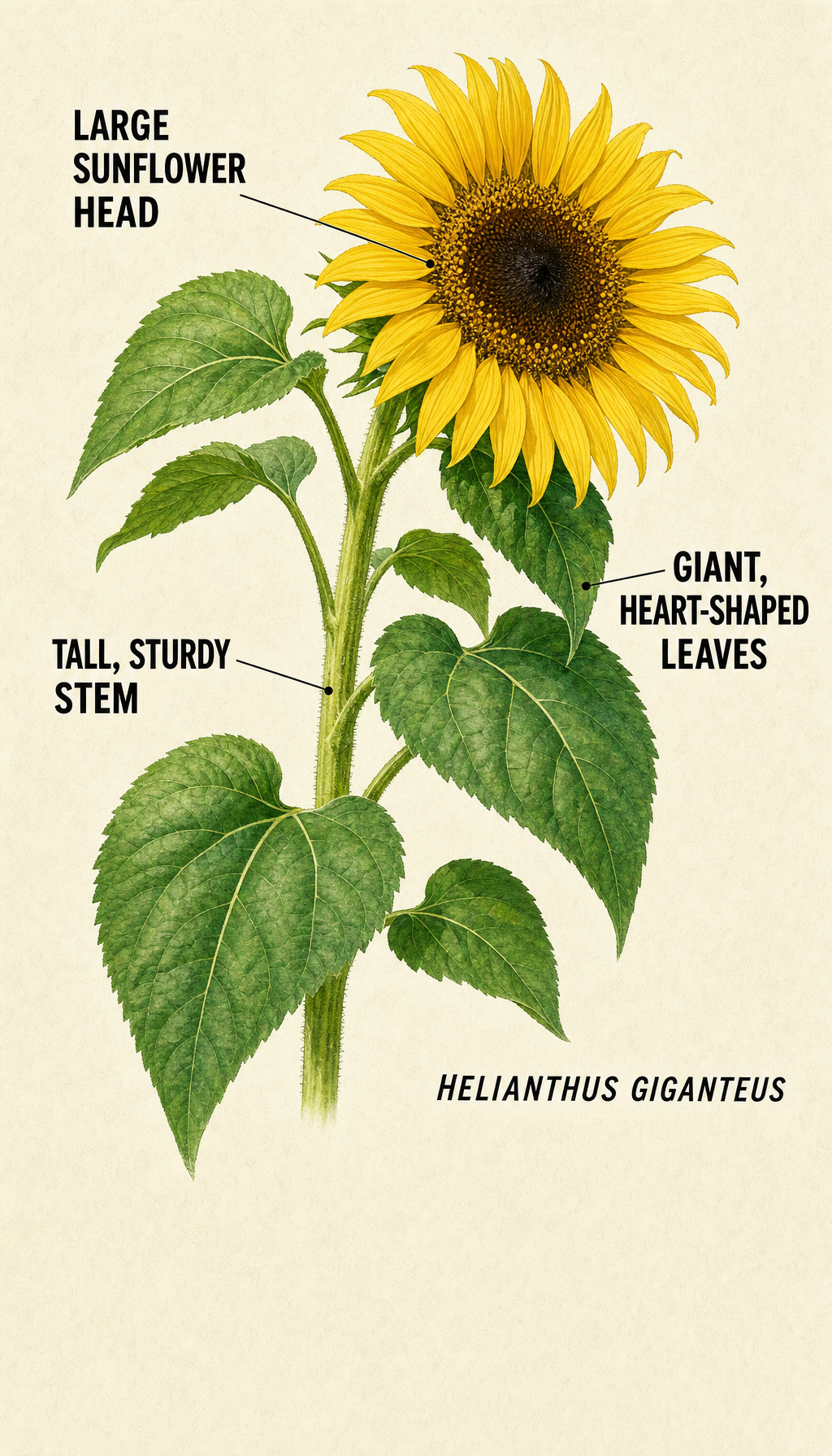
Helianthus giganteus is a tall, erect perennial herb that typically forms upright clumps of coarse stems arising from a persistent rootstock. Stems are often single or sparsely branched and covered with coarse hairs. Flower heads are typical of the sunflower group: each head has a ring of bright yellow, petal-like ray florets surrounding a central disk of tubular disc florets that age to brown or dark yellow. Flowering is generally abundant, with many heads borne in loose, branching arrays toward stem tips. Leaves are simple, typically lanceolate to ovate with serrated margins, rough to the touch, and arranged oppositely on the stem; lower leaves may be larger with short petioles while upper leaves are progressively smaller and more sessile. Distinctive features include the plant’s tall stature, rough-haired stems and leaves, opposite leaf arrangement, and showy yellow composite flower heads produced late in the growing season. Seasonal variation: foliage and flowers appear in spring and mature to bloom in late summer into fall, with stems often persisting until frost.
Habitat & Distribution
Helianthus giganteus typically occurs in wet to mesic habitats such as wet meadows, marsh edges, swamps, streambanks, roadside ditches, and other moist, open sites. It commonly prefers full sun to partial shade and soils that remain reliably moist, often tolerating heavy or loamy soils. Geographic distribution covers much of eastern and central North America; documented occurrence includes states such as Alabama, Connecticut, Delaware, Georgia, Iowa, and many additional states across the eastern and midwestern United States.
Ecological Role
Flowers provide accessible nectar and pollen that are often visited by a variety of insects, particularly native bees and butterflies, making the species an important late-season nectar source. Seed production can supply food for birds and small mammals. As a clump-forming perennial in wet habitats, it can contribute to bank stabilization and local plant community structure.
Conservation & Interesting Facts
Helianthus giganteus is generally not regarded as rare across its range and is often common in suitable wetland and meadow habitats. One notable trait is its adaptation to persist in seasonally wet soils while providing late-season floral resources for pollinators.