American witchhazel
Hamamelis virginiana
BloomEDU
Identify it today. Know it next time.
Add American witchhazel to BloomEDU and a short quiz tomorrow will check if the name stuck.
Get BloomEDU — add American witchhazelFree · iOS · Android
From Instagram
Identity & Classification
Scientific name: Hamamelis virginiana
Common names: American witch-hazel, witch hazel
Family: Hamamelidaceae
Genus: Hamamelis (one of several witch-hazel species, including H. vernalis and H. japonica)
Visual Description
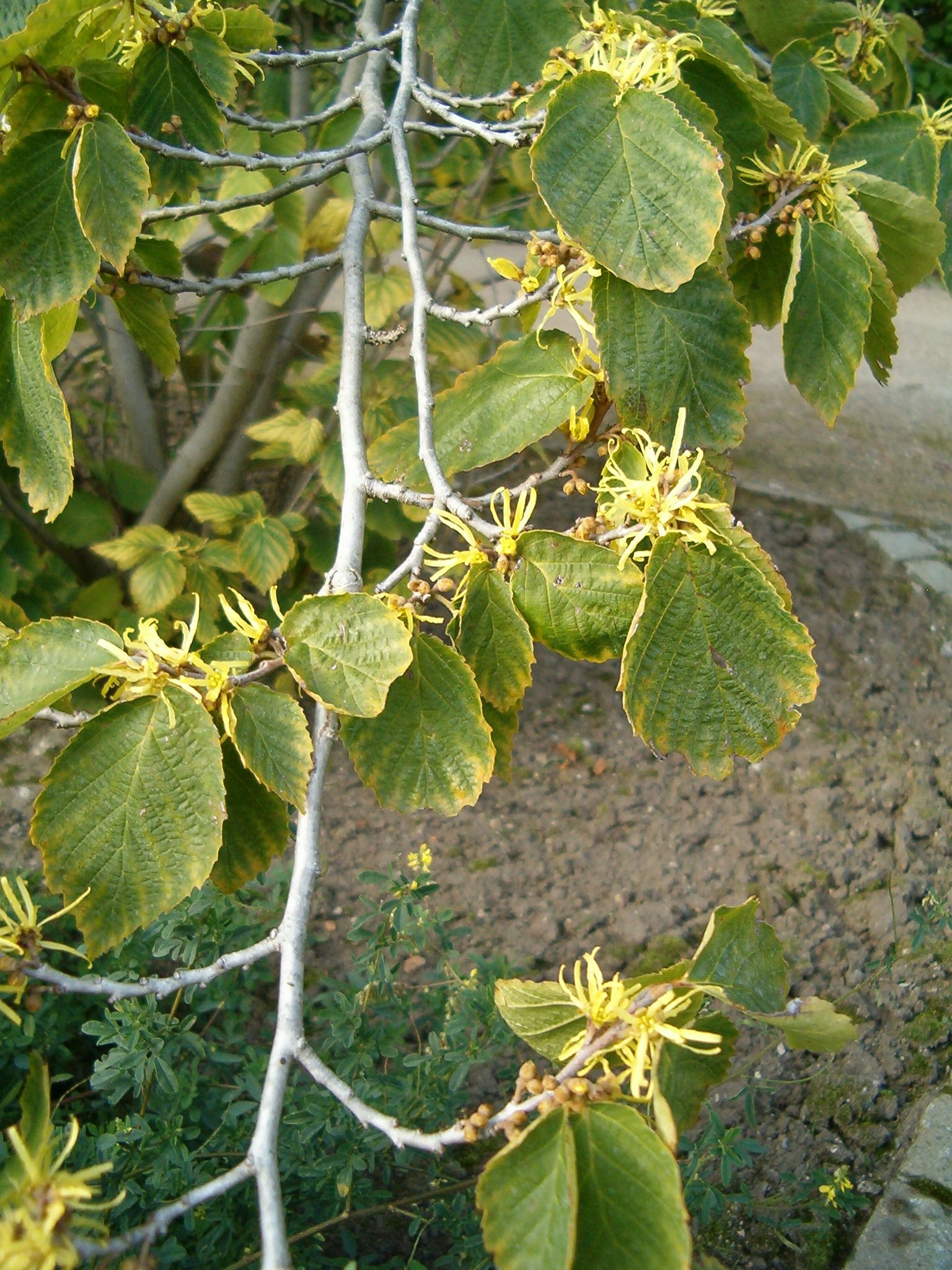
American witch-hazel is a deciduous, often multi-stemmed shrub or small tree that typically reaches several meters in height. Branching is irregular, producing a somewhat open crown. Flowers are notable for their narrow, ribbon-like petals — usually 4 — that are yellow to orange (occasionally tinged with red or brown). The flowers are fragrant and typically appear in autumn. Leaves are alternate, simple, broadly ovate to obovate with a rounded to slightly tapering tip and coarsely toothed or crenate margins; venation is pinnate and often conspicuous. Fruit are woody capsules that later split explosively to eject shiny seeds. Seasonal variation includes autumn flowering (often while leaves are still on the plant) and fall leaf color ranging to yellow or orange before leaf drop.
Habitat & Distribution
American witch-hazel is native to eastern North America and is commonly found in the understory of mixed hardwood forests, forest edges, streambanks, and shaded slopes. It typically grows in moist, well-drained soils but is adaptable to a range of moisture conditions and soil types. It often occurs in partial to full shade but can tolerate some sun in open sites. The species’ range includes the eastern United States (states such as AL, AR, CT, DE, FL and many others) and extends into southeastern Canada; it is generally considered an eastern North American species.
Ecological Role
Autumn-blooming flowers provide a nectar and pollen resource for late-season and autumn-active insects; late-season flies and moths are among documented visitors, and bees may visit when active. The plant’s ballistic seed dispersal is an effective strategy for local seed movement: woody capsules split to fling seeds a short distance from the parent. Small mammals and birds may interact with seeds or seedlings, contributing to ecological dynamics in the understory.
Conservation & Interesting Facts
American witch-hazel is generally common across much of its range and is not widely considered threatened. Two notable, verifiable features are its unusual autumn flowering habit (few temperate woody plants bloom in fall) and its explosive seed capsules, which actively eject seeds rather than relying solely on passive dispersal.