maidenhair tree
Ginkgo biloba
BloomEDU
Identify it today. Know it next time.
BloomEDU can suggest a name from a plant photo, and later ask if you still know it.
Get BloomEDUiOS · Android
From Instagram
Do you know maidenhair tree?
Three questions from BloomEDU's question library for this plant. Pick an answer, or open Show the answer, to see why.
What distinctive feature helps identify a maidenhair tree in the field?
Show the answer
Answer: Fan-shaped leaves with dichotomous (forking) veins
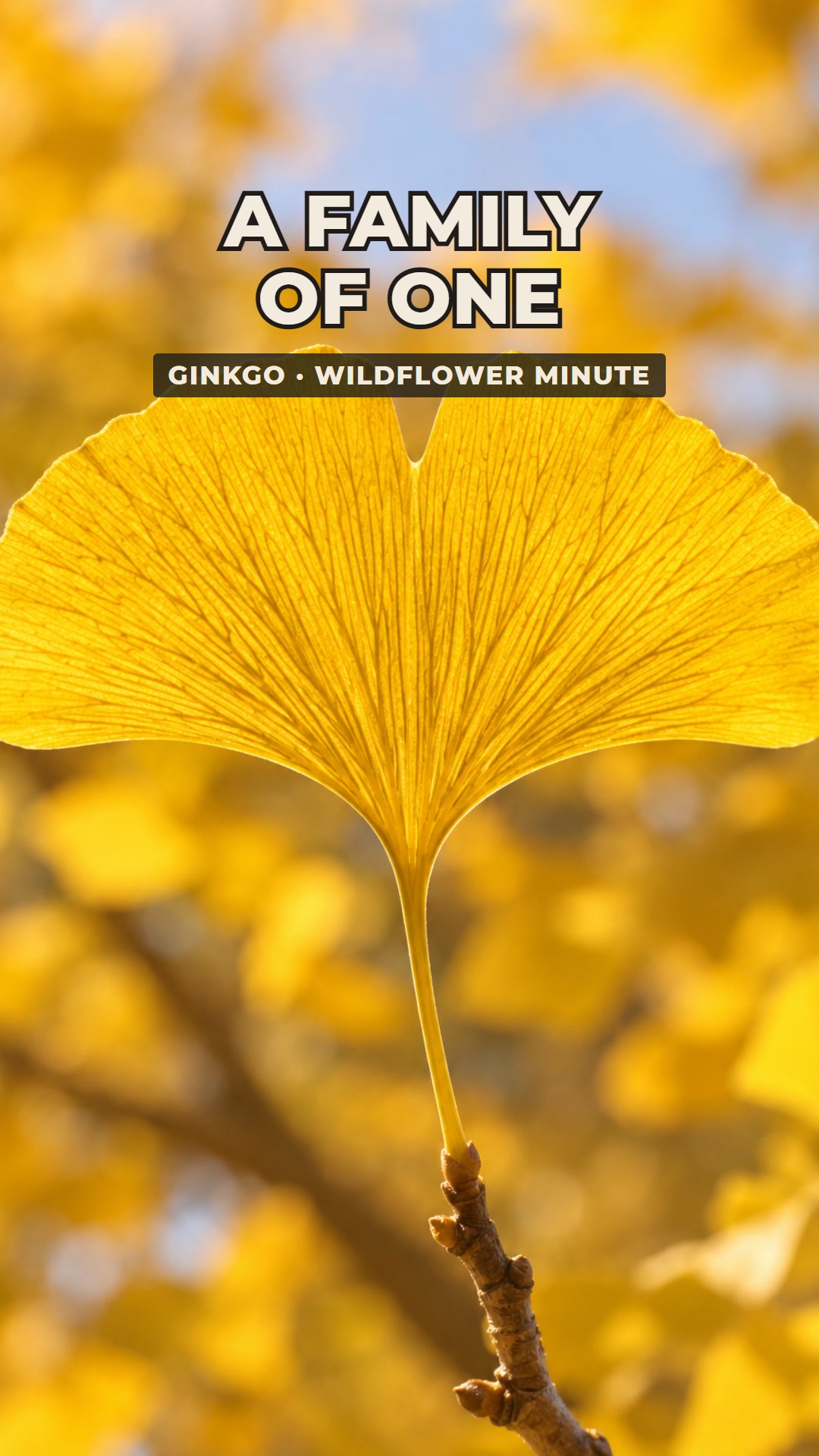
Why: Its leaves look like tiny fans, and the veins split repeatedly in pairs instead of forming a net—an easy clue when you are identifying the tree.
During which season does a maidenhair tree typically turn vivid yellow before dropping its leaves?
Show the answer
Answer: Fall, before leaf drop
Why: In fall, the leaves turn a striking golden yellow all at once, then often drop within a short time.
What's unusual about how the maidenhair tree reproduces compared with many garden trees?
Show the answer
Answer: Male and female trees are separate; males release pollen and females produce odorous fleshy seeds
Why: Maidenhair trees come in male and female individuals: males shed pollen, while females produce fleshy seeds that can smell unpleasant when ripe.
Identity & Classification
Scientific name: Ginkgo biloba
Common names: maidenhair tree, ginkgo
Family: Ginkgoaceae; Genus: Ginkgo
Taxonomic note: Ginkgo biloba is the sole living species in the genus Ginkgo and the family Ginkgoaceae, a relict lineage of gymnosperms placed in its own order (Ginkgoales).
Visual Description
Overall form: A deciduous, long-lived tree that typically develops a single trunk with a broadly spreading, often irregular crown; in cultivation it may also appear multi-stemmed. It is generally considered a medium-to-large tree in landscape contexts.
Flowers/reproduction: Not a flowering angiosperm—no petals. Ginkgo is dioecious: male trees produce small pollen-bearing catkinlike structures (microstrobili); female trees produce ovules on stalks that develop into fleshy-coated seeds (sarcotesta) after fertilization. The seed coats have a characteristic strong, often unpleasant odor when ripe.
Leaves: Simple, fan-shaped leaves with distinctive dichotomous (forking) venation; many leaves are bilobed or have a shallow central notch. Leaves are borne on both long shoots and short spur shoots, creating a layered texture on branches.
Distinctive features: Fan-shaped leaves with forked veins, dioecious reproduction with odorous fleshy seeds on female trees, and the unusual leaf-bearing spur shoots. Fall foliage typically turns vivid yellow before leaf drop.
Habitat & Distribution
Growing conditions: Often planted and commonly tolerant of urban conditions—pollution, compacted soils and a range of pH. Prefers full sun to light shade and generally well-drained soils; adaptable to a variety of soil types.
Typical ecosystems: Common in cultivated landscapes, parks, streets, and institutional plantings; not generally a component of native forest communities outside its native range.
Geographic distribution: Native to parts of eastern Asia (China) and widely cultivated worldwide. In the United States it is recorded in KY, MS, NC, NJ, NY and three other states, where it is most often found as planted specimens rather than widespread wild populations.
Ecological Role
Pollination is by wind (anemophilous). Seeds produced by female trees can be used by some animals as a food source despite the odorous fleshy coat; the species is otherwise a minor resource for wildlife in nonnative settings. As a long-lived, disturbance-tolerant tree it often occupies an urban/ornamental niche rather than a primary forest niche outside its native range.
Conservation & Interesting Facts
Ginkgo is famed as a “living fossil,” representing an ancient lineage that predates many modern plant groups. It is notably resistant to pests, diseases and urban pollution—qualities that have made it a popular street and ornamental tree worldwide. Its distinctive dichotomous leaf venation and fan-shaped leaves make it easy to identify.