yellow avens
Geum aleppicum
BloomEDU
Identify it today. Know it next time.
Add yellow avens to BloomEDU and a short quiz tomorrow will check if the name stuck.
Get BloomEDU — add yellow avensFree · iOS · Android
**Identity & Classification**
Geum aleppicum — common name: yellow avens (also called common avens). - Family: Rosaceae (the rose family). - Genus: Geum. - Species: G. aleppicum. - Taxonomic notes: Two subspecies are commonly recognized:
- Geum aleppicum subsp. aleppicum — Europe and Asia. - Geum aleppicum subsp. strictum — North America. - Note: Geum is a genus of herbaceous perennials in Rosaceae; G. aleppicum fits that general habit but shows regional variation reflected in the subspecies above. **Physical Description**
A modest but unmistakable member of the rose family — here are the key field characters:
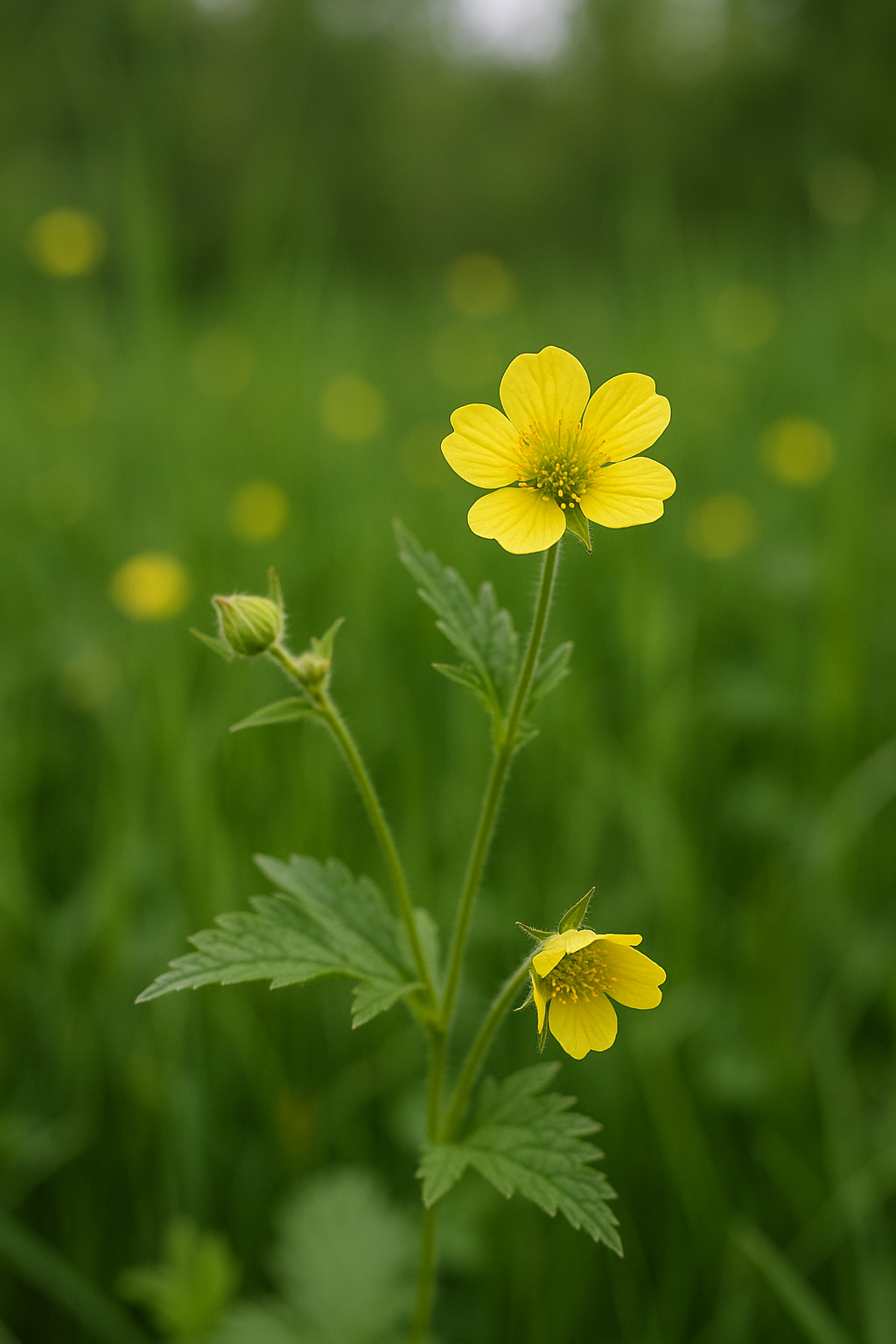
- Habit: Herbaceous perennial, typically reaching up to about 1 m tall. - Leaves: Pinnate leaves (leaflets arranged along a central axis). Leaf shape and sizing may vary with plant age and position on the stem. - Flowers:
- Color: Yellow. - Size: About 2 cm (roughly ¾ inch) in diameter. - Petals: Five to seven toothed petals (the “toothed” margin is a handy ID trait). - Floral structure: As with many Rosaceae, flowers have multiple stamens; the conspicuous yellow petals make the blossoms easy to spot at close range. - Fruit: Produces the dry, one-seeded units typical of the genus (achenes). In many Geum species these achenes are borne in clusters and have elongated styles/beaks; specific fruit details for G. aleppicum conform to the Geum pattern of small achenes, though exact beak shape and dispersal mechanics can vary. **Habitat & Range**
- Broad picture: Native across temperate regions of the Northern Hemisphere — from eastern Europe across Asia and into North America (the two subspecies above reflect the Eurasian vs. North American portions of that range). - Typical settings: G. aleppicum is usually found in temperate habitats; it often occurs in open or semi-open places. Commonly reported habitats include meadows, open woods or woodland edges, riverbanks, and other moderately disturbed or grassy sites. (Language here is intentionally cautious: habitat descriptions are generalized across the species’ range and local occurrences can vary.)
**Ecological Role**
- Pollinators: The yellow flowers attract insect pollinators — bees and other flower-visiting insects often visit Geum species for pollen and nectar. - Seed dispersal: The species produces achenes typical of Geum; many Geum achenes have beaklike styles that can facilitate attachment to animal fur (epizoochory) or other mechanical dispersal — G. aleppicum’s fruits follow the general Geum pattern, and such dispersal may occur. - Ecosystem function: As a native perennial in temperate plant communities, it contributes seasonal floral resources (pollen/nectar) and adds to understory/herb-layer diversity. Specific, documented mutualisms or specialist relationships for G. aleppicum are not well‑established in the literature I can reliably cite here. **Human Uses & Cultural Significance**
- Specific cultural, culinary, or medicinal uses for Geum aleppicum are not well-documented. - General note of caution: Some other Geum species have histories of traditional medicinal or flavor uses in various regions, but those uses should not be assumed for G. aleppicum without reliable, species-specific sources. **Interesting Facts**
- Family surprise: Although it’s in the rose family (Rosaceae), G. aleppicum looks nothing like a garden rose — Rosaceae is a large family that includes roses, fruit trees, and many small herbaceous plants. - Petal count flex: Many rosaceous flowers have five petals; G. aleppicum often shows 5–7 toothed petals, so counting petals is a useful little trait for ID. - Two-continent story: The species’ recognized subspecies reflect its wide temperate distribution — a Eurasian subspecies and a North American subspecies — a neat example of a single species adapting across a broad northern belt. - Botanical vocabulary: Its fruits are achenes — dry, one-seeded fruits that don’t open at maturity. In Geum, achenes are clustered and often bear elongated styles (sometimes called “beaks”).
From Instagram