hairy umbrella-sedge
Fuirena squarrosa
BloomEDU
Identify it today. Know it next time.
Add hairy umbrella-sedge to BloomEDU and a short quiz tomorrow will check if the name stuck.
Get BloomEDU — add hairy umbrella-sedgeFree · iOS · Android
Identity & Classification
Scientific name: Fuirena squarrosa
Common name(s): hairy umbrella-sedge; umbrella-sedge (genus common name)
Family: Cyperaceae
Genus: Fuirena
Taxonomic note: Fuirena squarrosa is a member of the sedge family (Cyperaceae) and is thus related to other sedges such as Cyperus and Scirpus.
Visual Description
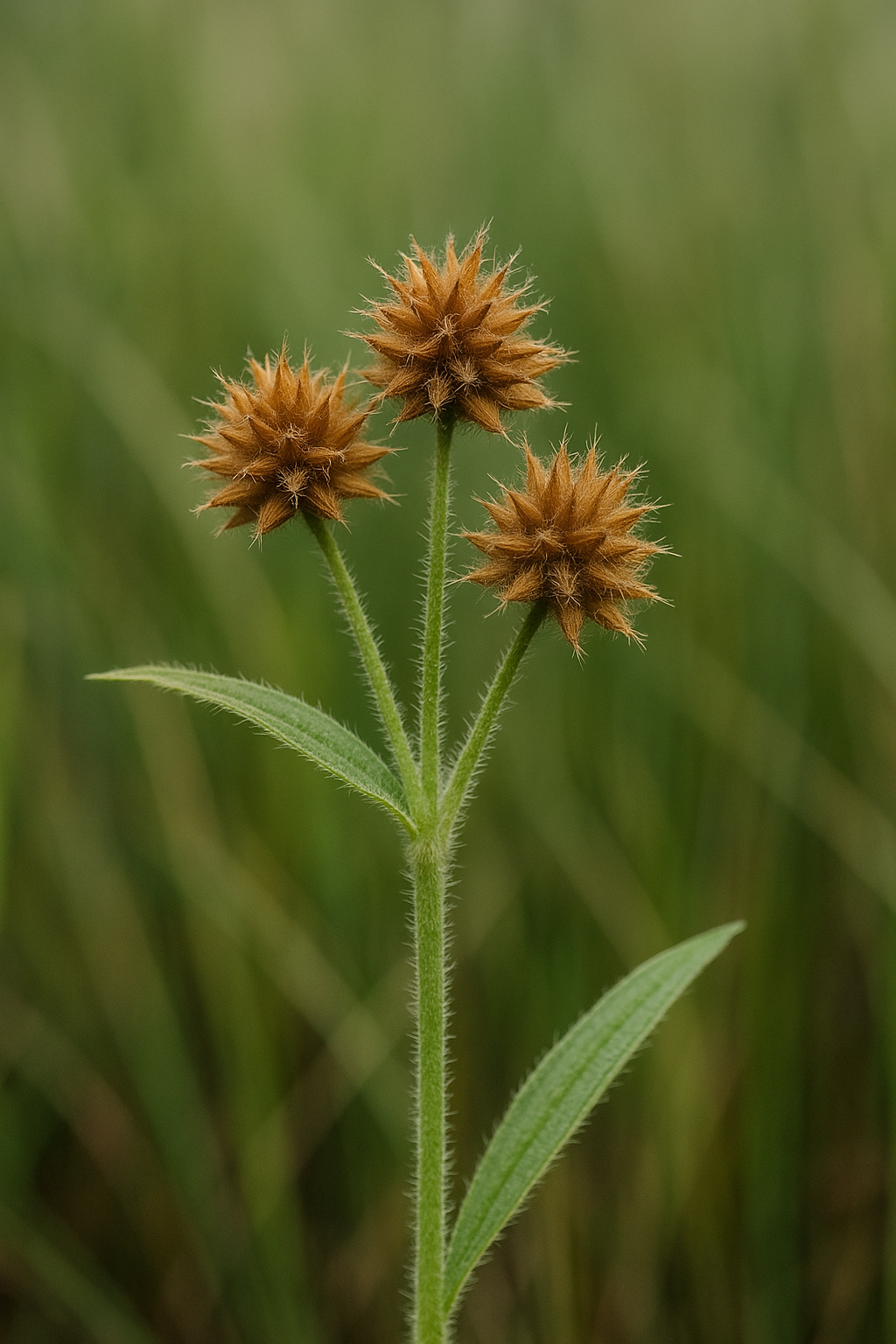
Overall form: A tufted perennial sedge with erect, grasslike habit. Plants typically form dense clumps of stems and basal leaves and present a loose, umbrella-like cluster of flowering structures at stem tips.
Size: Typically a moderate-sized sedge (forms noticeable clumps but not tree-sized), with stems and inflorescences rising above the leaf tuft; size can vary with site conditions.
Flower characteristics: Inflorescences are composed of several lateral or terminal clusters of spikelets subtended by one or more prominent, leaflike bracts that give an umbrella-like appearance. Individual spikelets contain multiple small florets; the tiny flowers lack showy petals and are subtended by scale-like glumes that are often tawny to brownish. The species epithet and common name reflect a hairy or bristly aspect to the inflorescence or glumes in many specimens.
Leaves: Leaves are narrow, grasslike, and arranged in basal and lower stem positions; blades are generally linear with parallel venation typical of sedges. Sheaths may clasp the stem at the base.
Distinctive features: Umbrella-like arrangement of bracts beneath clustered spikelets, and a hairy or bristly aspect of the spikelet glumes or subtending bracts distinguish this species from many other wetland sedges. Stems are typically sedge-like (often triangular in cross-section) and arise in tufts.
Seasonal variation: Flowering and conspicuous seedset often occur in the warmer part of the growing season; plants may be most noticeable when inflorescences are mature.
Habitat & Distribution
Habitat: Typically found in wetland and seasonally wet habitats — marshes, wet meadows, pond margins, ditches, and along slow-moving streams. Often occurs where soils are saturated or periodically flooded.
Light and soil: Commonly occurs in full to partial sun on organic or mineral soils that remain moist to wet for much of the growing season.
Geographic distribution: Present in many U.S. states, including AL, AR, CT, DE, FL and 24 additional states, and generally occurs across much of the eastern and central United States.
Ecological Role
Reproduction and pollination: Like most sedges, flowers are inconspicuous and typically wind-pollinated rather than insect-pollinated.
Wildlife interactions: As a wetland sedge, it often contributes structure to vegetation communities and may provide cover for small wildlife; its seeds and standing vegetation can be part of wetland food and habitat networks.
Human Uses & Cultural Significance
No well-documented, widely known traditional or modern uses are commonly cited for this species in standard botanical literature.
Conservation & Interesting Facts
Conservation status: Notation of specific conservation status should be consulted from regional or national sources; this species is generally associated with wetland habitats that are sensitive to drainage and development.
Interesting fact: The common name “umbrella-sedge” refers to the prominent bracts that spread beneath the clusters of spikelets, creating an umbrella-like silhouette that helps distinguish Fuirena from many other sedges.
From Instagram