California fawnlily
Erythronium californicum
BloomEDU
Identify it today. Know it next time.
Add California fawnlily to BloomEDU and a short quiz tomorrow will check if the name stuck.
Get BloomEDU — add California fawnlilyFree · iOS · Android
From Instagram
Identity & Classification
Scientific name: Erythronium californicum
Verified common names: California fawnlily, California trout-lily
Family: Liliaceae
Genus: Erythronium
Taxonomic notes: Member of the dogtooth violet group (genus Erythronium); relationships to other Erythronium species are consistent with standard treatments of temperate Liliaceae.
Visual Description
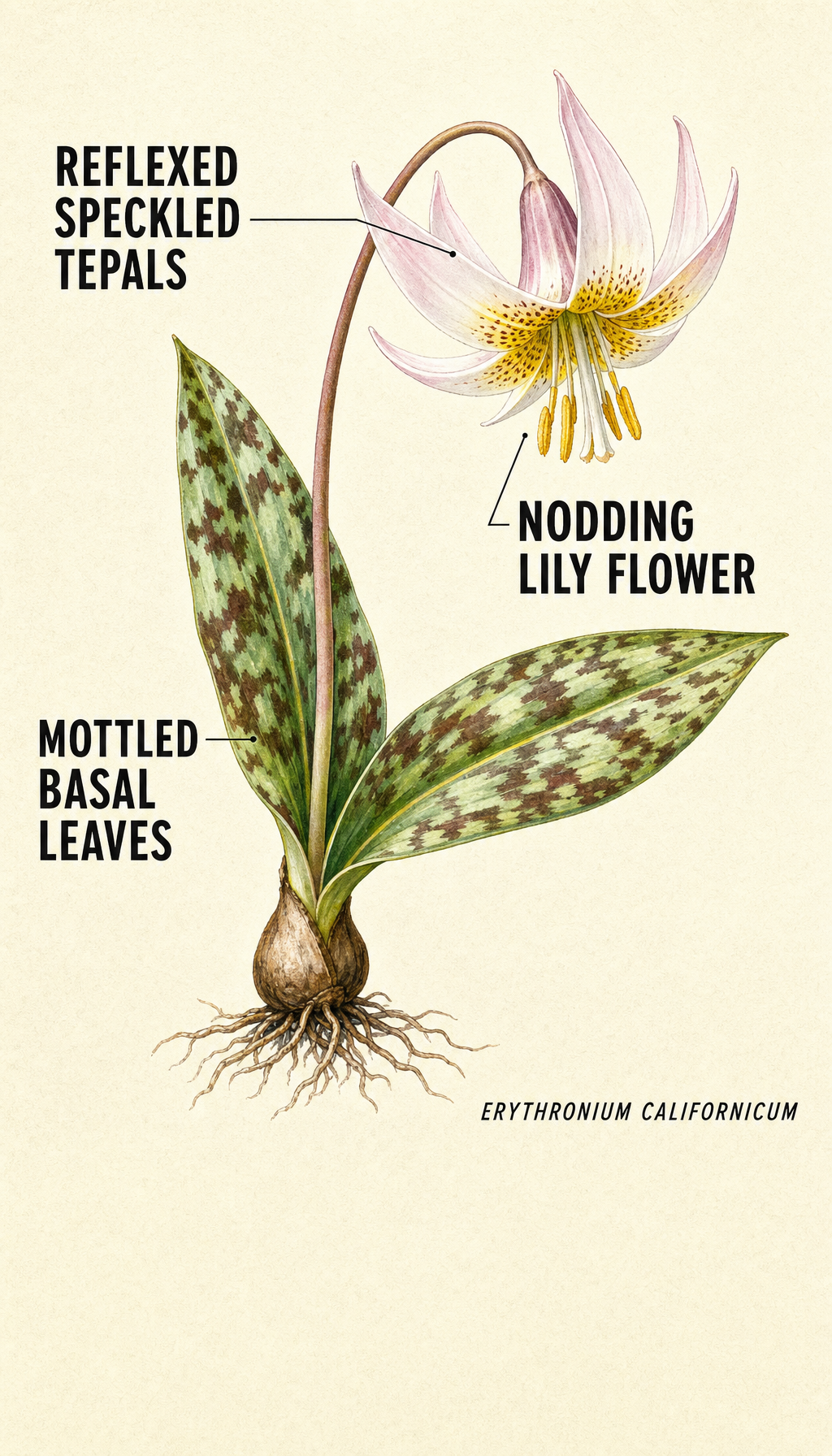
Overall form: A spring-blooming, bulbous perennial that emerges as a low, basal rosette of leaves with one or a few nodding flowers on a slender scape. Plants are generally short-lived aboveground, retreating to a bulb after the growing season.
Size: Typically a low-growing wildflower; scapes arise just above the leaves (plants are generally compact).
Flowers: Nodding, turkey‑cap style blossoms with six tepals (often appearing petal-like) that are recurved. Tepal color is usually white to pale pink with a contrasting yellow throat or center; anthers and pollen are commonly yellow. Flowers are typically solitary to a few per scape and present a drooping habit when open.
Leaves: Usually two basal leaves per plant, often broad and elliptic to ovate. Leaves commonly show mottling or blotching (darker spots or patches) on a green background, a distinctive trait in many trout‑lily species.
Distinctive features: Combination of two mottled basal leaves, a nodding recurved six‑tepal flower with a yellow throat, and spring ephemeral habit. The mottled foliage often gives plants a “trout‑skin” appearance, aiding recognition.
Seasonal variation: Emerges and flowers in spring; foliage and aboveground parts typically senesce by summer as the bulb returns to dormancy.
Habitat & Distribution
Growing conditions: Typically found in shaded to partly shaded sites with cool, moist soils during the growing season. Often associated with woodland understories and shaded slopes where spring moisture persists.
Soil and moisture: Prefers humus-rich, well-drained to seasonally moist soils; generally benefits from leaf litter and organic matter.
Geographic distribution: Native to and found in California.
Ecological Role
Pollination: Flowers are insect-pollinated; bumblebees and other bees are commonly reported as effective pollinators of Erythronium species, visiting for nectar and pollen.
Seed dispersal: Seeds of many Erythronium species possess elaiosomes and are dispersed by ants (myrmecochory), a well-documented mutualism that aids local seed movement and establishment.
Niche: Acts as a spring ephemeral, taking advantage of early-season light and moisture in woodland ecosystems before canopy closure.
Conservation & Interesting Facts
Conservation status: Not presented here; consult regional conservation lists for local status.
Interesting facts: The common name “trout‑lily” refers to the characteristic mottled leaves resembling trout skin. Erythronium species store energy in a subterranean bulb and are adapted to a brief spring growth window, an effective strategy for woodland understory plants that minimizes competition for light and resources.