Venus flytrap
Dionaea muscipula
BloomEDU
Identify it today. Know it next time.
Add Venus flytrap to BloomEDU and a short quiz tomorrow will check if the name stuck.
Get BloomEDU — add Venus flytrapFree · iOS · Android
From Instagram
Identity & Classification
Scientific name: Dionaea muscipula
Common names: Venus flytrap, flytrap
Family: Droseraceae
Genus: Dionaea
Taxonomic notes: Dionaea is a monotypic genus (containing this single species) closely related to other carnivorous genera in Droseraceae such as Drosera (sundews).
Visual Description
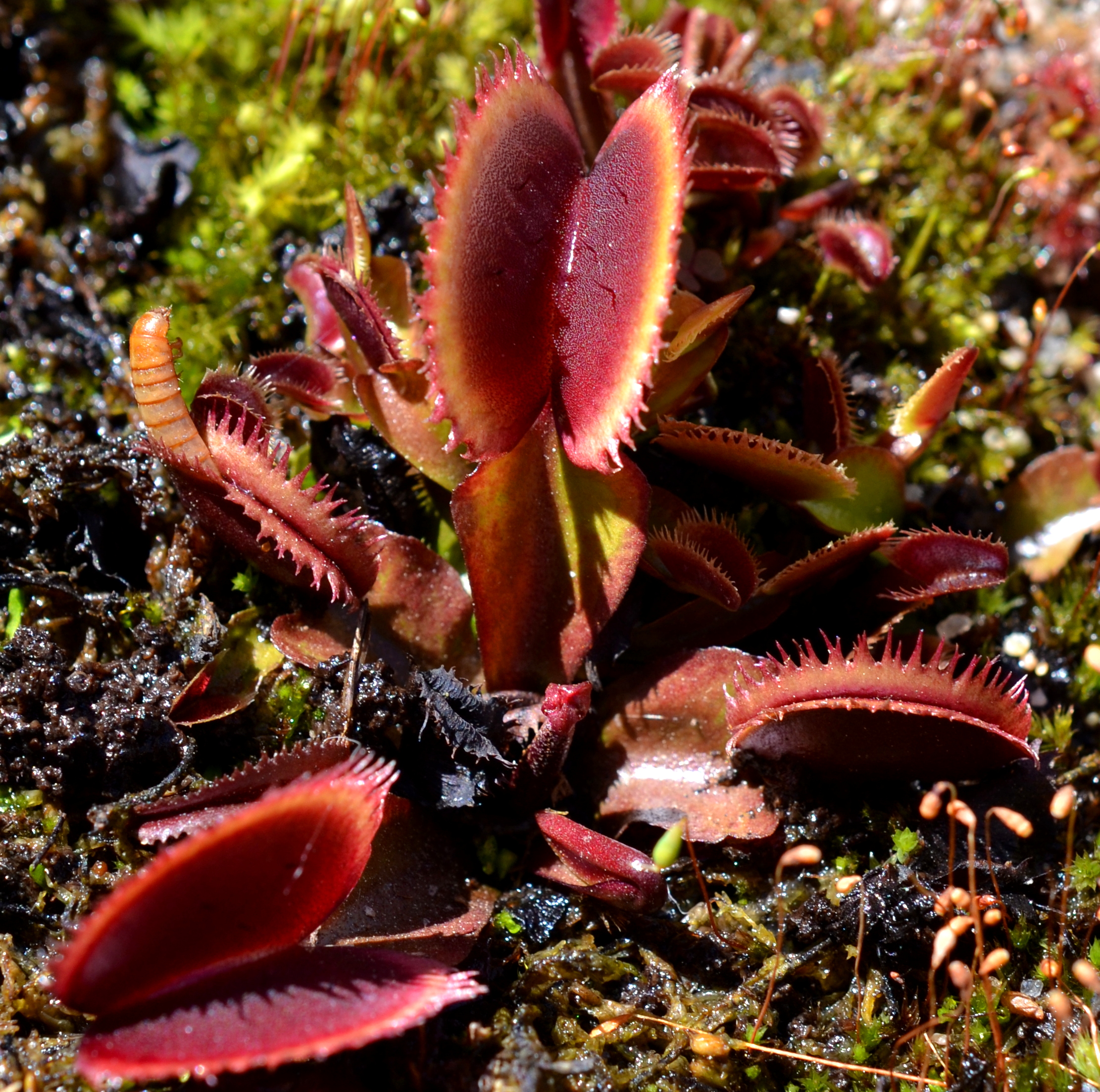
Overall form: A perennial herb forming a low basal rosette of leaves. Individual plants typically produce several leaves radiating from a central crown; overall height is low except when flowering scapes rise above the rosette.
Leaf structure and arrangement: Leaves are divided into a photosynthetic petiole and a terminal snap-trap (two lobed leaf blade). Traps often measure a few centimeters across and arise directly from the crown in a circular or spiraled rosette.
Distinctive identifying features: Each trap edge bears stiff marginal cilia that interlock when closed; the inner surfaces of traps bear sensitive trigger hairs. Trap closure is rapid and is triggered when hairs are stimulated, generally by two touches within a short interval. Traps secrete digestive enzymes after closure and reopen after digestion or may blacken and die after several feedings.
Flower characteristics: Flowers are borne on tall leafless scapes that elevate the inflorescence well above the traps. Flowers are generally small and white, often with a simple radial symmetry and commonly showing about 4–6 petals.
Seasonal variation: Plants typically enter a winter dormancy with reduced growth; traps and leaf size may diminish in cooler months and resprout or expand in the growing season.
Habitat & Distribution
Typical ecosystems: Often found in open, sunny, seasonally wet habitats such as acidic peat bogs, pine savannas, wet pocosins, and other nutrient-poor wetlands.
Moisture, light, and soil preferences: Prefers consistently moist but not permanently waterlogged, acidic, sandy or peaty soils with low nutrient availability; typically grows in full sun to partial sun.
Geographic distribution: Occurs in the United States in Florida, North Carolina, South Carolina, with recorded occurrences in New Jersey; wild populations are concentrated in coastal plain wetlands.
Ecological Role
Carnivory and prey: Captures and digests small invertebrates (insects and other arthropods) to supplement nutrients lacking in the substrate; this is a primary nutritional adaptation rather than a pollination strategy.
Pollination and wildlife interactions: Flowers are held well above traps to reduce capture of pollinators; they are typically pollinated by flying insects such as bees and flies. The species occupies a niche in nutrient-poor wetlands where carnivory provides access to nitrogen and phosphorus.
Conservation & Interesting Facts
Wild populations have declined in parts of the native range due to habitat loss, altered fire regimes, drainage, and collection; conservation concern for wild populations is well documented.
Unique adaptations: The snap-trap mechanism involves rapid leaf movement and electrical signaling—one of the fastest movements in the plant kingdom—and the separation of floral and carnivorous structures reduces conflict between feeding and pollination.