Cycladenia
Cycladenia Benth.
BloomEDU
Identify it today. Know it next time.
Add Cycladenia to BloomEDU and a short quiz tomorrow will check if the name stuck.
Get BloomEDU — add CycladeniaFree · iOS · Android
Identity & Classification
- Scientific name: Cycladenia Benth. (genus level)
- Common name: cycladenia (the genus name is commonly used as the vernacular)
- Family: Apocynaceae (dogbane family)
- Taxonomic notes: Cycladenia is often treated as a small, narrowly distributed genus within Apocynaceae and is sometimes treated as monotypic in floras; taxonomic placement within the broader dogbane/milkweed clade is well established.
Visual Description
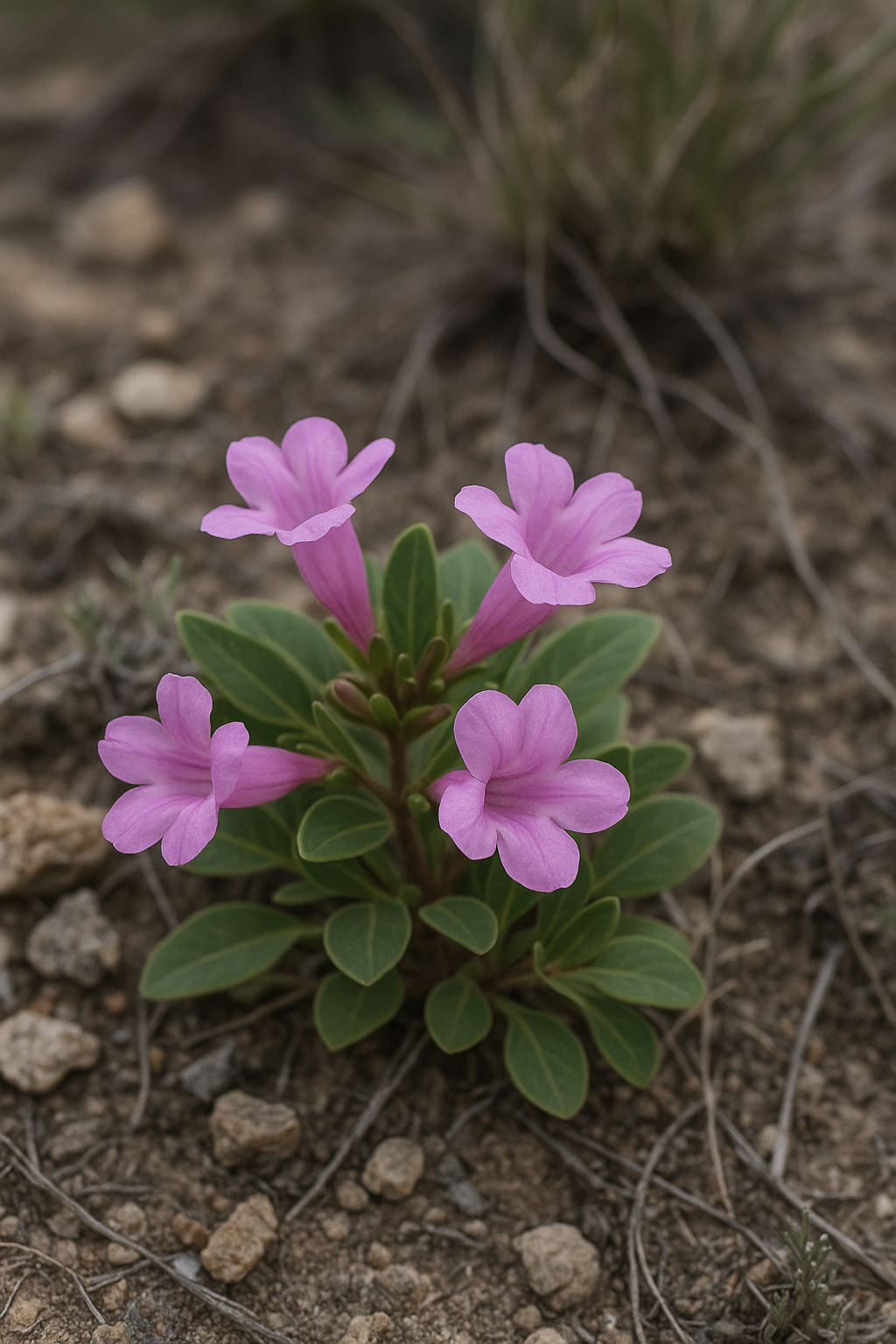
- Overall form: A low, compact perennial herb or subshrub habit is typical, often forming small clumps or loose mats in open sites. Plants are generally modest in stature compared with shrubs.
- Flowers: Corolla typically tubular to funnel-shaped with a five-lobed (5-lobed) appearance at the mouth; petals form a showy, bell-like bloom. Flower color is often in the pink to purple range, sometimes paler toward the throat. Flowers may appear somewhat waxy or glossy.
- Leaves: Leaves are simple and usually arranged oppositely along stems, with entire margins. Leaves are often relatively small and may be somewhat fleshy or firm, an adaptation to dry conditions.
- Distinctive features: The combination of compact habit, opposite simple leaves, and conspicuous tubular, five-lobed pink–purple flowers distinguishes Cycladenia from many co-occurring desert and scrub plants. Corolla shape and texture can be diagnostic in the field.
- Seasonal variation: Plants exhibit seasonal leafing and flowering, with aboveground growth and blooms typically concentrated in the local growing season; foliage and floral display can decline during the hottest, driest periods.
Habitat & Distribution
- Typical ecosystems: Cycladenia is typically found in dry, open habitats such as desert shrublands and other arid to semi-arid communities with well-drained, rocky or sandy substrates.
- Moisture, light, and soil preferences: Often occurs in sunny, exposed sites with low to moderate soil fertility and excellent drainage. Plants are adapted to xeric conditions and are commonly associated with coarse, shallow soils.
- Geographic distribution: Native occurrences are recorded in parts of the southwestern United States, including Arizona (AZ), California (CA), and Utah (UT). Populations are generally regional and associated with appropriate dry habitats within those states.
Ecological Role
- Pollination: Flowers are structured to attract insect visitors; bees and other native insects are commonly involved in pollination of tubular, nectar-producing blossoms in this family.
- Seed dispersal and interactions: Like many members of the broader dogbane/milkweed group, Cycladenia may produce dry fruiting structures that release seeds adapted for dispersal, though local dispersal mechanisms can vary with species and habitat.
- Niche: Cycladenia occupies a niche as a drought-tolerant flowering herb in open, rocky sites, contributing to floral diversity and serving as a nectar source for native pollinators.
Human Uses & Cultural Significance
- There are no widely documented or broadly recognized traditional or modern uses for Cycladenia in the botanical literature. It is not widely cultivated and does not have prominent documented ethnobotanical roles.
Conservation & Interesting Facts
- Populations are often localized because the plants favor specific dry, rocky microsites; some local populations may be of conservation interest due to restricted habitat. Conservation status can vary regionally.
- Notable adaptation: Cycladenia’s compact form, reduced leaf surface, and often firm or fleshy foliage reflect adaptations to conserve water in arid environments, allowing it to persist on exposed rocky slopes and desert benches.
From Instagram