hardy swamplily
Crinum bulbispermum
BloomEDU
Identify it today. Know it next time.
Add hardy swamplily to BloomEDU and a short quiz tomorrow will check if the name stuck.
Get BloomEDU — add hardy swamplilyFree · iOS · Android
Identity & Classification
- Scientific name: Crinum bulbispermum
- Common names: hardy swamplily, hardy crinum
- Family: Liliaceae
- Genus: Crinum
- Taxonomic note: Member of the bulbous Crinum genus within Liliaceae; taxonomic placement in this family and genus is well established.
Visual Description
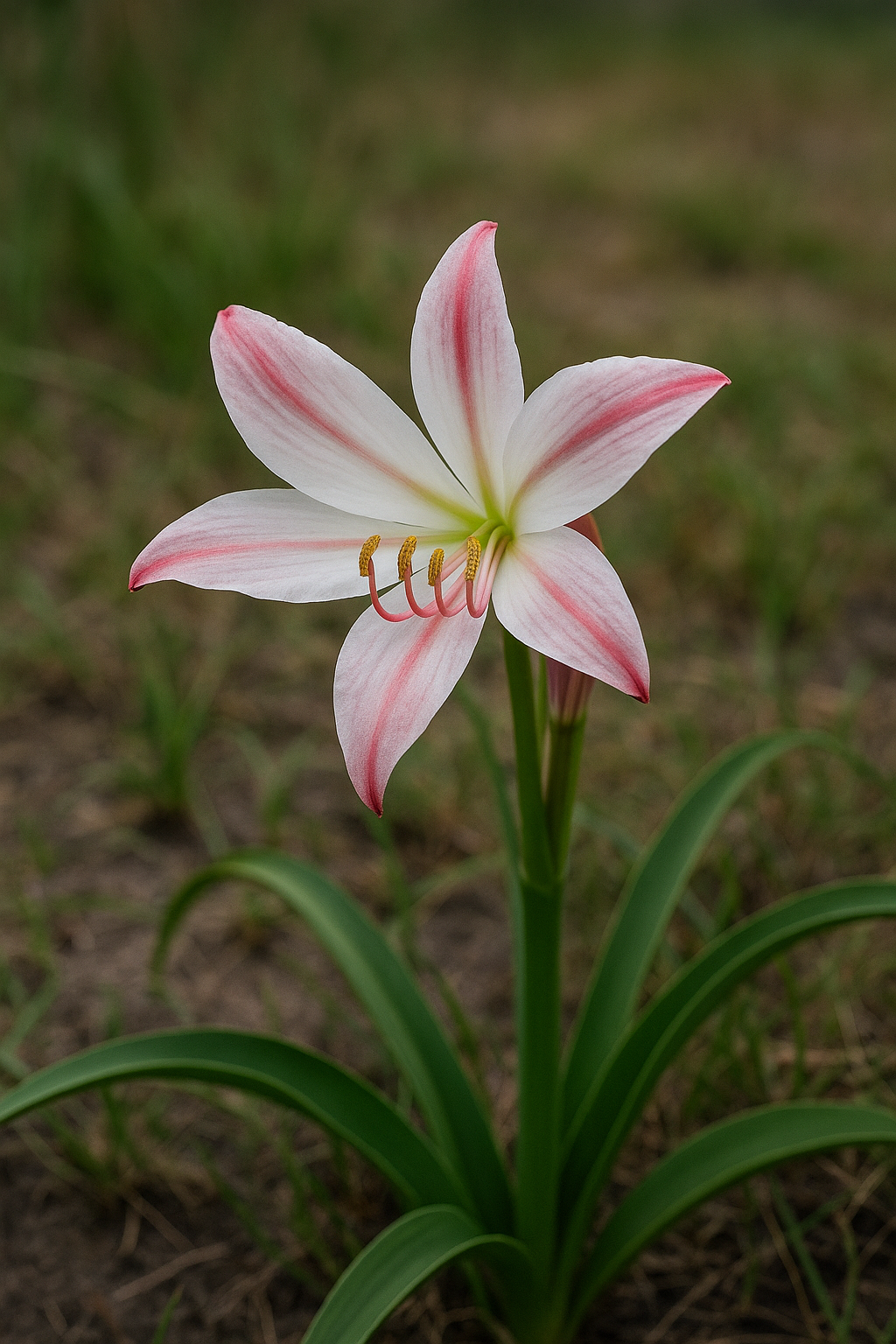
- Form: A perennial, bulb-forming plant that typically produces a substantial basal clump of leaves and upright flower stalks (scapes).
- Size: Often forms conspicuous clumps in the garden or wild, with leaves and scapes reaching well above the bulb; size can vary with growing conditions.
- Flowers: Inflorescences are borne on leafless scapes and typically present as an umbel of several to many trumpet-shaped, funnel-like flowers. Petals (tepals) form a tubular throat opening to flaring segments; flower color may include shades of white, pink, or reddish tones depending on cultivar and growing conditions. Flowers often have a prominent central tube and showy appearance.
- Leaves: Leaves are basal, straplike, and typically long and arching with entire margins, arising in a fan or rosette from the bulb.
- Distinctive features: Large, showy, trumpet-shaped flowers on tall scapes and a clumping habit from large bulbs are characteristic; the species is noted for relative cold tolerance compared with many other Crinum species.
- Seasonal variation: Typically flowers in the warmer season (late spring to summer in many temperate locations), with vegetative growth before and after flowering; foliage may persist through milder winters and die back or reduce in colder periods.
Habitat & Distribution
- Growing conditions: Often found or cultivated in moist to seasonally wet sites such as pond margins, marshy ground, or bog gardens; also commonly grown in well-amended garden soils. Prefers full sun to part shade and soils that are fertile and can remain moist, though established bulbs tolerate a range of soil textures.
- Moisture/light/soil: Typically favors consistently moist conditions but is adaptable to garden conditions once established; benefits from rich, well-drained to seasonally saturated soils and adequate sunlight.
- Geographic distribution: Reported from parts of the southeastern United States, including AL, FL, LA, NC, SC and one additional state; widely cultivated beyond these areas in suitable temperate-to-subtropical climates.
Ecological Role
- Pollinators: Flowers are nectar-producing and are often visited by insect pollinators; a range of diurnal and nocturnal insects may visit the large, showy flowers.
- Wildlife interactions: The bulbs and other tissues contain compounds characteristic of Crinum species and may be unpalatable or toxic to some animals if ingested.
- Niche: Often occupies a marginal-wetland or garden-ornamental niche where its bulbs and showy flowers provide seasonal structure and nectar resources.
Human Uses & Cultural Significance
- Ornamental: Widely cultivated as an ornamental for pond edges, bog gardens, and mixed borders because of its dramatic flowers and clumping habit.
- Toxicity: Like many Crinum species, it contains alkaloid compounds and may be toxic if ingested; caution is advised around pets and livestock.
Conservation & Interesting Facts
- Conservation: No widely recognized global conservation concern for cultivated populations; local status may vary.
- Interesting facts: The common name “hardy” reflects this species’ greater tolerance of cooler climates compared with many tropical Crinum. Bulbs readily multiply to form colonies, making it useful for stabilizing moist garden sites and creating long-lived displays.
From Instagram