Cotoneaster mucronatus
Cotoneaster mucronatus
BloomEDU
Identify it today. Know it next time.
Add Cotoneaster mucronatus to BloomEDU and a short quiz tomorrow will check if the name stuck.
Get BloomEDU — add Cotoneaster mucronatusFree · iOS · Android
Identity & Classification
Scientific name: Cotoneaster mucronatus
Common names: mucronate cotoneaster (common name usage may vary)
Family: Rosaceae
Genus: Cotoneaster
Taxonomic note: Cotoneaster is a well-defined genus within Rosaceae; relationships to other cotoneasters are complex but this species is recognized by its mucronate (pointed) leaf tips.
Visual Description
Overall form: A woody shrub with a typically low to medium, spreading or arching habit. Plants may form mounds or loosely branched shrubs depending on site and pruning.
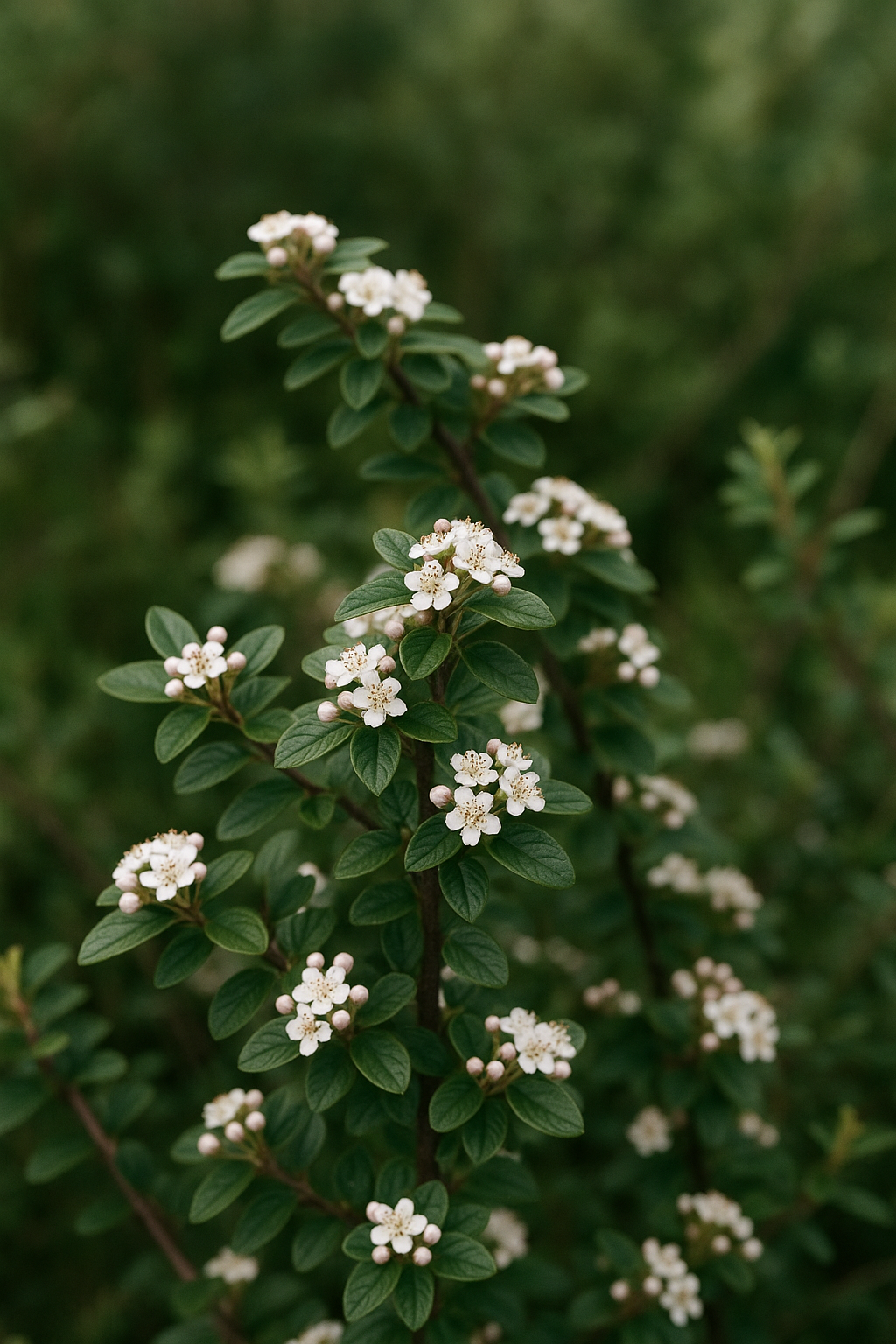
Leaves: Simple, alternate, usually small and oval to elliptic. Leaf margins are generally entire or finely toothed and often end in a tiny sharp tip (a mucro), the feature reflected in the species name.
Flowers: Produced in clusters in spring; flowers are small and typically have five white to pale-pink petals and a central cluster of stamens. Flowers are borne in short cymes or clusters along shoots.
Fruit: Spring flowers give way to small pome fruits that ripen in late summer to autumn and are often red to orange-red; fruits commonly persist into fall or winter.
Distinctive features: Small, alternate leaves with a characteristic mucronate tip, clustered small white/pink flowers, and persistent bright pomes. Habit of spreading branches and dense fruiting are useful field characters.
Seasonal variation: Leaves may be deciduous to semi-evergreen depending on climate; floral display in spring and fruiting in late summer–autumn provide seasonal interest.
Habitat & Distribution
Growing conditions: Typically planted in cultivation and often tolerant of a range of soils, including well-drained, moderately dry sites. Often found in full sun to partial shade and generally tolerant of urban conditions and drought once established.
Typical ecosystems: Commonly occurs in garden plantings, hedgerows, rock gardens, slopes, and occasionally in disturbed or naturalized sites where it escapes cultivation.
Geographic distribution: Recorded in Oregon (introduced/cultivated and sometimes found naturalized). Presence elsewhere should be confirmed from regional floras.
Ecological Role
Pollination: Flowers are visited by generalist insect pollinators, including bees and flies, which forage on nectar and pollen.
Wildlife interactions: Fruits are attractive to birds and can be an important winter food source; birds also help disperse seeds. Dense branching can provide cover for small birds and mammals.
Niche: Functions as a flowering/fruiting shrub in human-modified and edge habitats, contributing nectar in spring and fleshy fruits in autumn–winter.
Human Uses & Cultural Significance
Modern uses: Widely used as an ornamental shrub for hedging, massing, groundcover on slopes, and for seasonal fruiting interest in temperate gardens.
Conservation & Interesting Facts
Etymology: The species epithet mucronatus refers to the small, sharp point (mucro) at the leaf apex—a handy identification feature.
Adaptations: Small, relatively thick leaves and a spreading habit contribute to drought tolerance and suitability on exposed sites.
Note: Often cultivated and sometimes naturalized outside its native range; local abundance and conservation status should be checked against regional resources for current information.
From Instagram