sensitive partridge pea
Chamaecrista nictitans
BloomEDU
Identify it today. Know it next time.
Add sensitive partridge pea to BloomEDU and a short quiz tomorrow will check if the name stuck.
Get BloomEDU — add sensitive partridge peaFree · iOS · Android
From Instagram
Identity & Classification
Scientific name: Chamaecrista nictitans. Verified common names: sensitive partridge pea, sensitive cassia, small partridge pea. Family: Fabaceae. Genus: Chamaecrista. This species was historically placed in the genus Cassia and is closely related to other partridge peas such as Chamaecrista fasciculata.
Visual Description
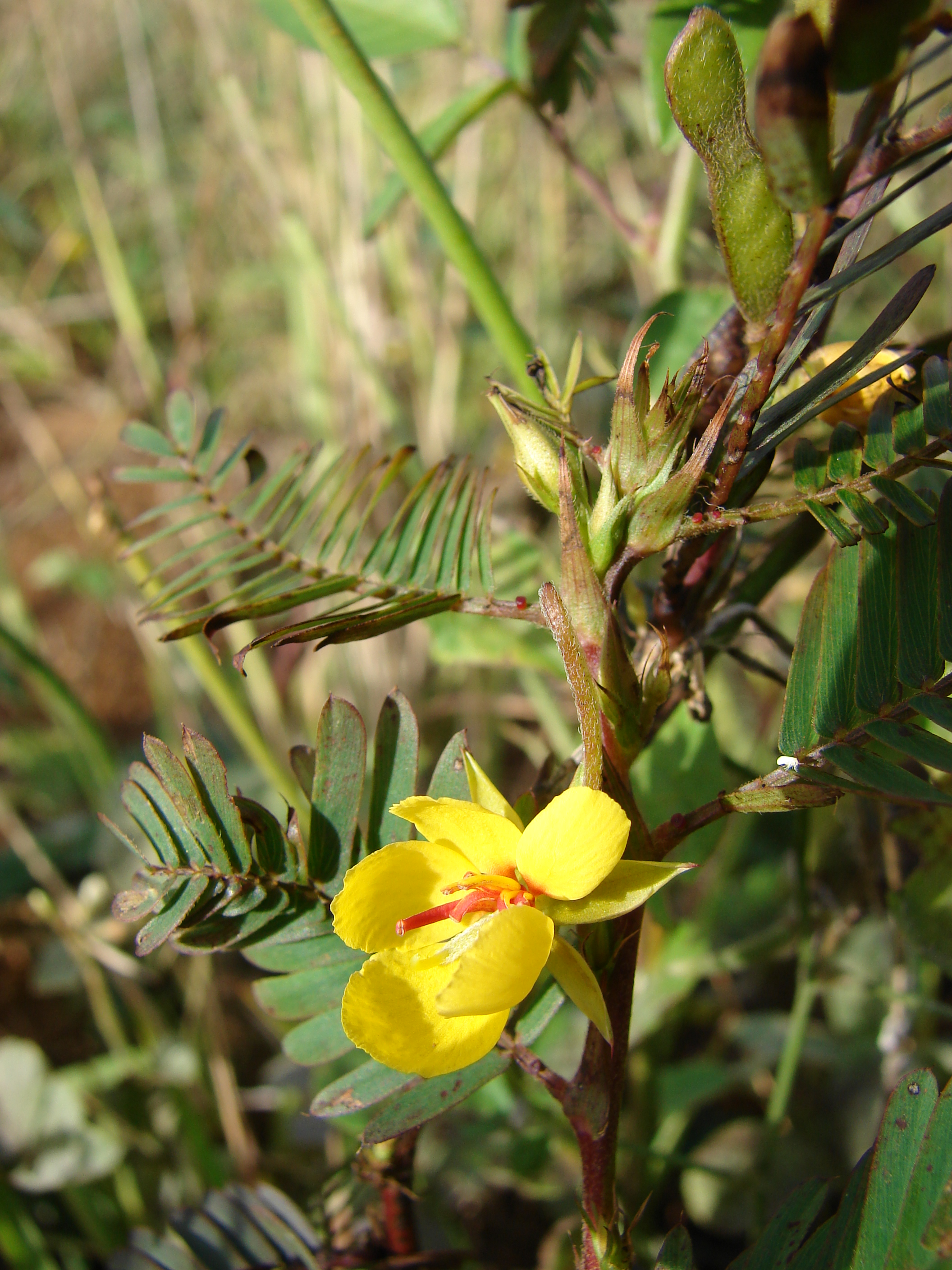
Overall form: An herbaceous, often low-growing annual or short-lived perennial with erect to spreading, branched stems. Plants are typically low to about knee height but can vary with site conditions. Stems and foliage are often softly hairy.
Flowers: Small, bright yellow to golden pea-type flowers borne singly or in small clusters along stems. Each flower typically has several petals (commonly 4–6 visible petals in similar legumes) and a conspicuous central banner and wings characteristic of many fabaceous flowers. Flowers are produced in succession through the growing season and often give a peppered appearance of yellow along the stems.
Leaves: Alternate, pinnately compound with many small, oblong to obovate leaflets arranged along a central rachis. Leaflets fold or close in response to touch or heat (a rapid seismonastic/nyctinastic movement), giving the plant its “sensitive” common name.
Distinctive features: Small pinnate leaves that rapidly fold when disturbed, bright yellow pea-like flowers, and slender cylindrical legume pods that mature along the stem. Hairy stems and the touch-sensitive leaflet closure are useful field marks distinguishing it from similar species.
Seasonal variation: Often flowers from summer into fall in many parts of its range; leaf sensitivity is most noticeable during warm, active growth periods.
Habitat & Distribution
General conditions: Typically found in open, sunny places including prairies, dry meadows, disturbed sites, roadsides, and sandy or well-drained soils. Often tolerant of dry, poor soils and drought.
Light, moisture, soil: Prefers full sun to light shade and well-drained soils; commonly found in dry to mesic sites rather than persistently wet ground.
Geographic distribution: Recorded from a broad portion of the United States, including Alabama, Arkansas, Arizona, Connecticut, Delaware and many additional states across eastern, central, and parts of the southwestern U.S.
Ecological Role
Pollination: Flowers are often visited by a variety of bees and other insect pollinators attracted to nectar and pollen. Native solitary bees may be important visitors.
Wildlife interactions: As a legume that produces seeds in pods, it may provide seeds for ground-feeding birds and seed-eating insects; its foliage and flowers support insect communities.
Ecological niche: Functions as a native annual/short-lived perennial in open, early-successional habitats where it contributes to floral diversity and supports pollinators.
Conservation & Interesting Facts
Conservation status is not generally regarded as threatened across its broad range. Notable fact: the species displays rapid leaflet folding in response to touch or heat (seismonasty), a striking behavioral adaptation shared with a few other legumes and often visible in the field. It was formerly classified in Cassia before taxonomic revision placed it in Chamaecrista.