woolly chaffhead
Carphephorus tomentosus
BloomEDU
Identify it today. Know it next time.
Add woolly chaffhead to BloomEDU and a short quiz tomorrow will check if the name stuck.
Get BloomEDU — add woolly chaffheadFree · iOS · Android
Identity & Classification
Scientific name: Carphephorus tomentosus
Common name(s): woolly chaffhead
Family: Asteraceae
Genus: Carphephorus
Taxonomic note: Carphephorus is a genus of southeastern North American asters; Carphephorus tomentosus is placed within the aster family (Asteraceae).
Visual Description
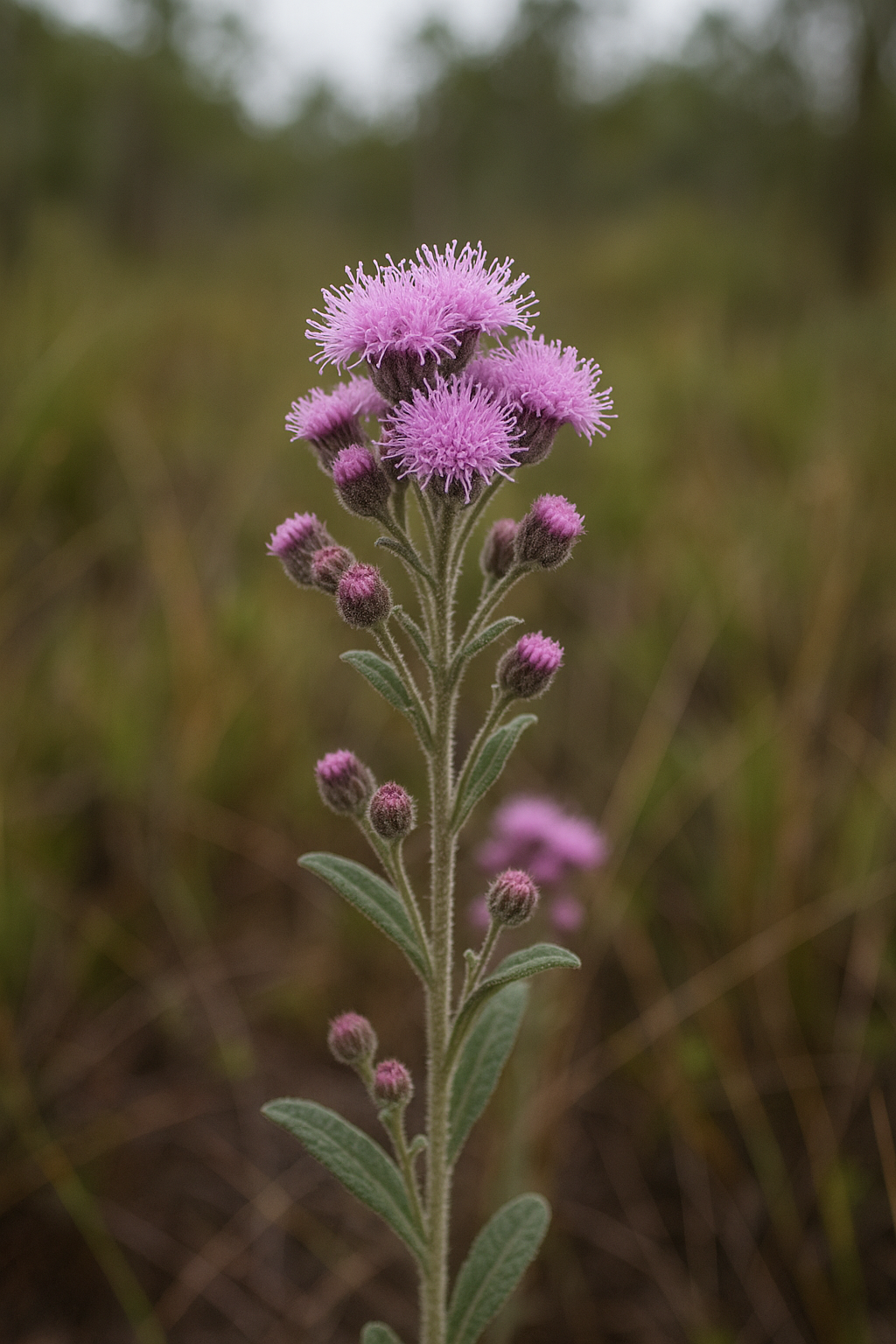
Overall form: A herbaceous, upright plant with branching stems that form a loose, often rounded cluster of flower heads near the stem tips. The species is typically a medium-sized perennial herb with a distinctly woolly (tomentose) appearance on stems and leaf surfaces.
Flowers: Inflorescences are composed of many small composite heads arranged into loose, flat-topped to rounded clusters. Each head lacks showy ray florets and instead contains tubular disk florets; the florets are typically lavender to pinkish-purple in color. Flowering is often conspicuous because of the massed clusters rather than individual blooms.
Leaves: Leaves are generally opposite on the stem, lance-shaped to narrowly elliptic, and may be sessile or shortly petiolate. Leaf surfaces and stem regions are often covered with dense, woolly hairs (tomentum), giving the plant a soft, gray-green cast.
Distinctive features: Dense woolly hairs on stems and leaves (the source of the epithet tomentosus), chaffy bracts subtending each composite head, and inflorescences made up only of tubular disk florets (no ray florets) distinguish this species from many other asters.
Seasonal variation: Plants typically develop vegetative growth through spring and produce showy clusters of florets in the bloom season, with foliage and hairiness remaining evident throughout the growing season.
Habitat & Distribution
Growing conditions: Carphephorus tomentosus is typically found in well-drained, sandy soils and often occurs in open, sunny to partly shaded settings. It is commonly associated with dry to mesic pine woodlands, sandhills, savannas, and disturbed sandy sites such as roadsides.
Geographic distribution: Recorded from Georgia, North Carolina, South Carolina, and Virginia. Within this range it is most often encountered in coastal plain and nearby inland habitats.
Light, moisture, soil: Prefers full sun to partial shade and generally tolerates dry, infertile sandy soils rather than heavy, waterlogged substrates.
Ecological Role
Pollination: The rounded clusters of tubular florets provide nectar and pollen resources and are often visited by bees and butterflies, serving as a late-season nectar source in some localities.
Dispersal and wildlife interactions: As with many asters, fruits are small achenes often bearing a pappus that facilitates wind dispersal. Dense floral displays can contribute to pollinator support in open sandy ecosystems.
Human Uses & Cultural Significance
No widely documented traditional or modern uses are established in general botanical literature for this species; no specific toxicity concerns are commonly reported.
Conservation & Interesting Facts
The species name tomentosus refers to the dense woolly hairs that characterize the plant. The tomentose surface likely helps reduce water loss and reflect sunlight in exposed, sandy habitats. Carphephorus tomentosus is a representative component of southeastern sandy pine-savanna and sandhill plant communities, where its understated, clustered flowers contribute to late-season nectar resources.
From Instagram