Calochortus douglasianus
Calochortus douglasianus
BloomEDU
Identify it today. Know it next time.
Add Calochortus douglasianus to BloomEDU and a short quiz tomorrow will check if the name stuck.
Get BloomEDU — add Calochortus douglasianusFree · iOS · Android
Identity & Classification
Scientific name: Calochortus douglasianus
Common names: Douglas' mariposa lily (also referred to generally as a mariposa lily)
Family: Liliaceae
Genus: Calochortus
Taxonomic relationships: Member of the Calochortus genus, a group of bulbous monocots known as mariposa lilies or star‑tulips; relationships to other species in the genus follow standard morphological and molecular groupings used in Calochortus systematics.
Visual Description
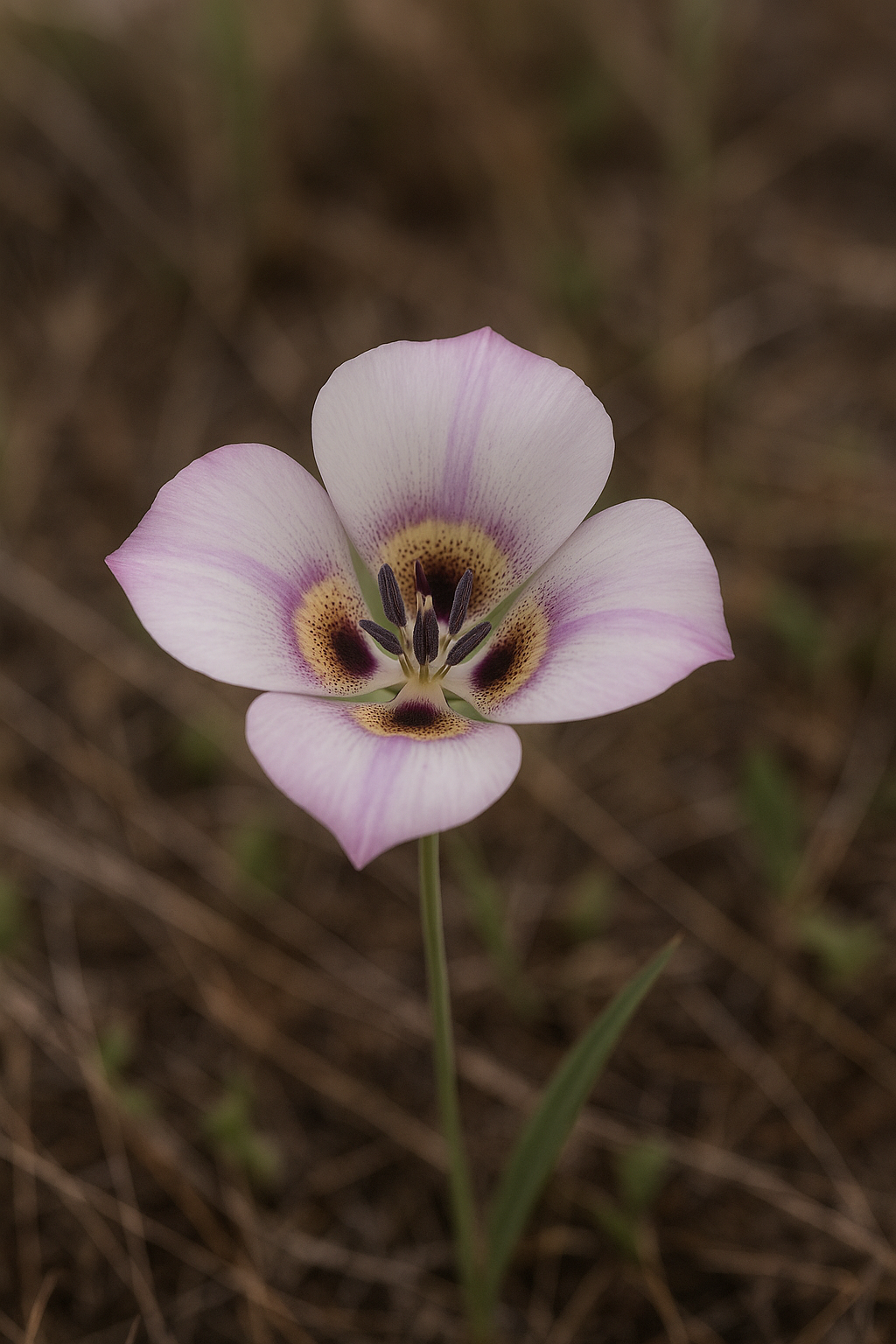
Calochortus douglasianus is a bulb‑forming perennial that produces one or a few erect flowering stems arising from an underground bulb. Plants are typically modest in stature and often form solitary to small clumps. Flowers are trimerous (three sepals and three petals) and are commonly cup‑shaped to broadly open; petal number is 3 (with 3 sepals). Petal color is typically in the pale range—white to cream, sometimes with pinkish or lavender tones—and often bears a contrasting basal blotch or band and a darker nectar area. Many individuals display a small tuft or patch of hairs or textured tissue in the petal throat near the nectary, a feature often seen in Calochortus. Leaves are generally basal and linear to narrowly lanceolate, sometimes with a single cauline leaf; basal leaves may wither by the time flowers open. Seasonal variation: foliage and flowering typically occur in spring, with the aboveground parts dying back to the bulb during the dry season.
Distinctive identifying features: bulbous habit; trimerous, pale mariposa‑type flowers with a basal contrasting blotch and frequently a central hairy or glandular patch; solitary basal leaf that often withers at bloom.
Habitat & Distribution
C. douglasianus is typically found in open, well‑drained habitats such as grassy slopes, open woodlands, and rocky or brushy sites. It commonly occurs where seasonal moisture in spring is followed by dry summer conditions, favoring soils that drain freely. Light conditions range from full sun to partial shade. Geographically it is documented from California, Oregon, Nevada, Idaho, Montana and at least one other nearby western U.S. state, occurring across a variety of low- to mid‑elevation sites within that regional range.
Ecological Role
Flowers are generally adapted to insect pollination and are often visited by native bees and other flower‑visiting insects that forage for nectar or pollen; the petal blotches and nectar patch help attract and guide these visitors. As a spring‑flowering bulb, it contributes to early season floral resources in its habitats. Underground bulbs can be a food source for small mammals and other ground foragers.
Human Uses & Cultural Significance
There are no widely documented traditional or modern uses for C. douglasianus in standard botanical references; it is primarily appreciated for its ornamental and ecological value.
Conservation & Interesting Facts
Conservation status can vary regionally; local populations may be vulnerable to habitat loss, grazing pressure, and development. The genus name Calochortus means “beautiful grass” (from Greek kalos + chortos), reflecting the delicate grass‑like leaves and attractive flowers. Many Calochortus species are adapted to a spring growth and summer dormancy cycle, surviving dry seasons as underground bulbs.
From Instagram