Avicennia nitida
Avicennia nitida
BloomEDU
Identify it today. Know it next time.
Add Avicennia nitida to BloomEDU and a short quiz tomorrow will check if the name stuck.
Get BloomEDU — add Avicennia nitidaFree · iOS · Android
Identity & Classification
Scientific name: Avicennia nitida
Verified common names: black mangrove (name commonly applied to Avicennia species in the region)
Family: Verbenaceae (historically placed here; some modern classifications treat Avicennia in Acanthaceae or a separate Avicenniaceae)
Genus: Avicennia
Note: Avicennia is a genus of coastal, salt-tolerant trees and shrubs; taxonomic placement has varied among botanical systems.
Visual Description
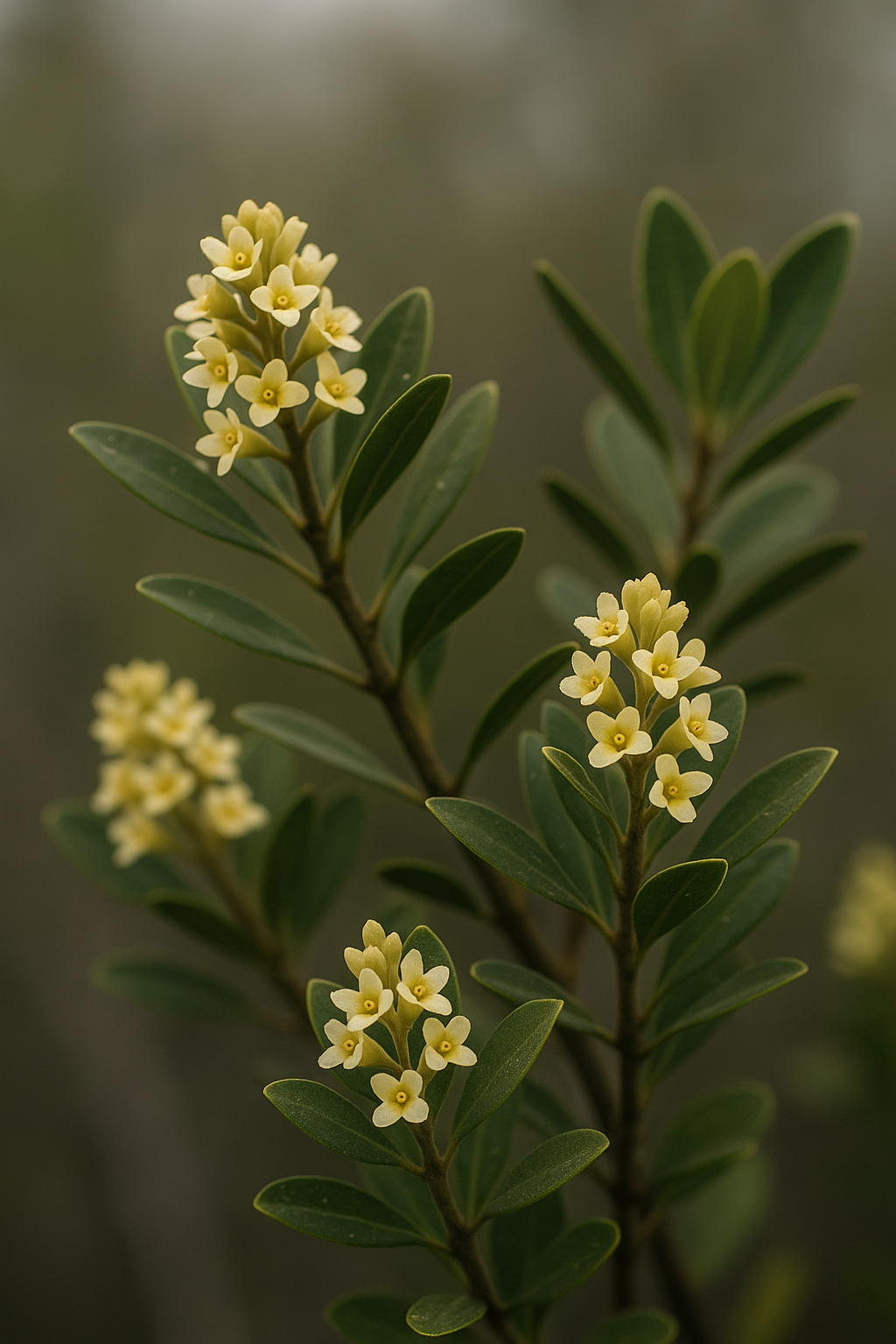
Overall form: A coastal evergreen shrub or small tree, typically forming dense stands or thickets in the intertidal zone. Growth habit may range from multi-stemmed shrub to a single-stemmed small tree depending on site conditions.
Leaves: Simple, opposite, leathery and elliptic to obovate in shape. Upper surfaces are often glossy and may show salt crystals or salt-excreting glands; undersides are often paler, sometimes with a fine felt of hairs.
Flowers: Small, tubular to funnel-shaped flowers arranged in dense clusters or short spikes. Corolla lobes generally number about 4–5 and are pale yellow to creamy in color; flowers bear numerous stamens and are often conspicuous when in bloom.
Fruit and seeds: Fruit is a small capsule or ovoid structure containing a single seed; seeds and fruits may be adapted for water dispersal and can wash away with tides.
Distinctive features: Presence of vertical pneumatophores or breathing roots in waterlogged mud, thick leathery leaves with visible salt-excreting glands, dark scaly bark, and clustered pale-yellow flowers help distinguish Avicennia in coastal stands.
Seasonal variation: Timing of flowering and fruiting can vary with latitude and local climate; foliage generally remains evergreen in the species’ subtropical-tropical range.
Habitat & Distribution
Typical ecosystems: Intertidal mudflats, estuaries, coastal marsh edges and sheltered shorelines where saline or brackish conditions occur. Often occupies slightly higher or better-drained micro-sites than red mangrove species.
Moisture, light, soil: Tolerates frequent tidal inundation, anoxic waterlogged soils, and high salinity; generally grows in full sun to partial shade on muddy or sandy substrates.
Geographic distribution (U.S.): Occurs along Gulf and southern Atlantic-influenced coasts, including the states provided: Florida (FL), Louisiana (LA), Mississippi (MS), and Texas (TX).
Ecological Role
Pollination: Flowers are visited by insects such as bees and other floral visitors that forage for nectar and pollen.
Wildlife interactions: Mangrove stands provide structural habitat and nursery areas for fish, crustaceans and other aquatic life; branches and foliage offer roosting and nesting sites for birds and shelter for invertebrates.
Ecological niche: Functions as a salt-tolerant, shoreline-stabilizing species that helps trap sediment, reduce erosion, and support coastal food webs.
Human Uses & Cultural Significance
Documented modern or traditional uses are variable by region; wood and local uses have been recorded for Avicennia species historically, but specific well-documented uses for A. nitida should be consulted in regional ethnobotanical sources.
Conservation & Interesting Facts
Unique adaptations: Salt-excreting leaf glands and aerial pneumatophores allow survival in saline, oxygen-poor soils. Mangrove stands are important for coastal protection and carbon storage.
Interesting fact: Avicennia species often form clear zonation patterns with other mangroves (for example, red mangrove nearer open water and Avicennia commonly on slightly higher ground), reflecting subtle differences in tidal tolerance and substrate.
From Instagram