Asarum lewisii
Asarum lewisii
BloomEDU
Identify it today. Know it next time.
Add Asarum lewisii to BloomEDU and a short quiz tomorrow will check if the name stuck.
Get BloomEDU — add Asarum lewisiiFree · iOS · Android
Identity & Classification
Scientific name: Asarum lewisii
Common names: (verifiable common names are limited; generally referred to as a wild ginger in the genus Asarum)
Family: Aristolochiaceae
Genus: Asarum
Taxonomic relationships: Member of the wild ginger group (Asarum), a clade of low-growing, rhizomatous herbs in the pipevine family; close relationships within the genus are subject to taxonomic study but placement in Asarum is well established.
Visual Description
Overall form: A low, rhizomatous perennial forming a loose groundcover in the forest understory. Plants typically produce a basal cluster of leaves and remain close to the ground.
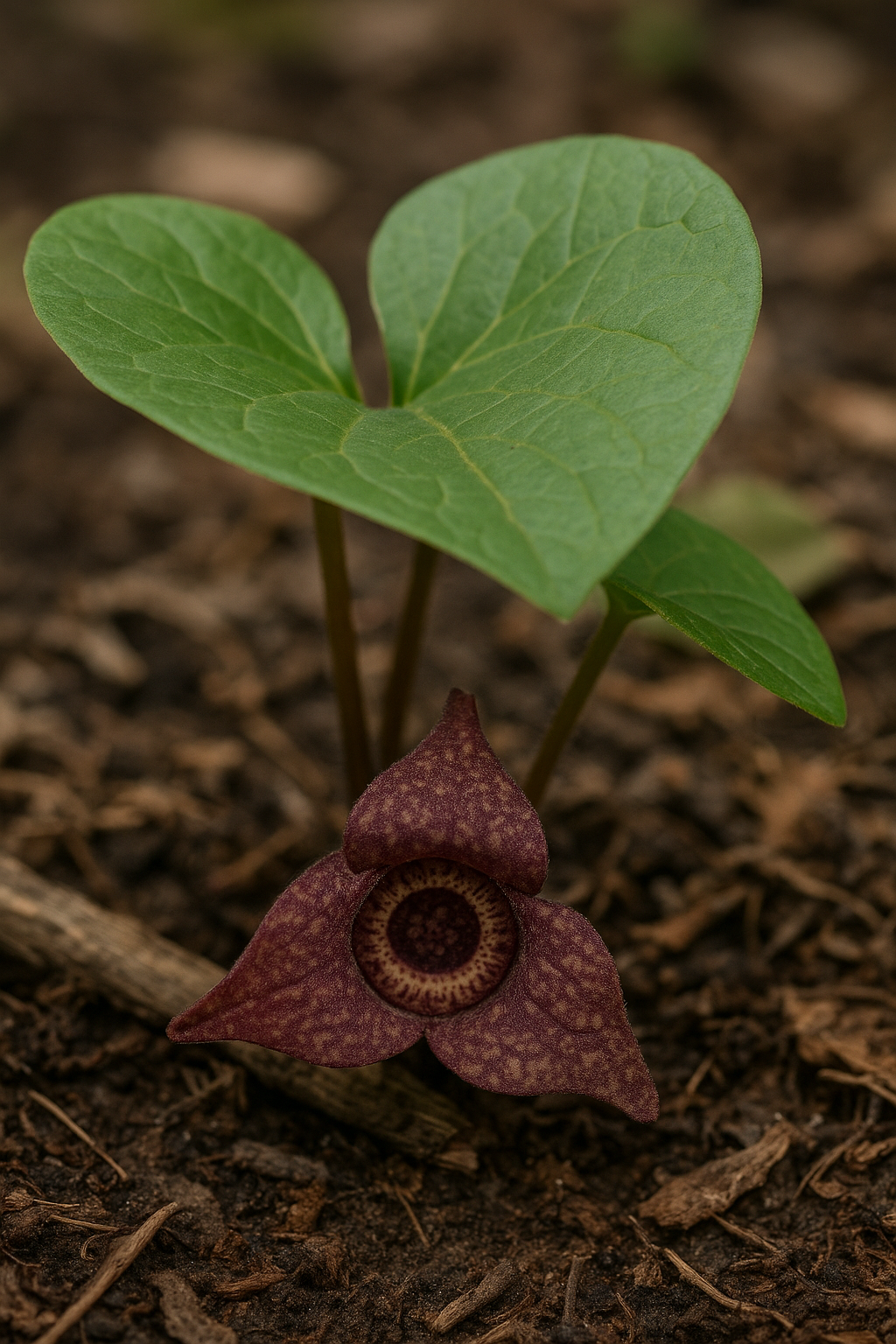
Flower characteristics: Flowers are borne at or just above the soil surface and are composed of three fused perianth lobes (trimerous structure), forming a tubular, cup- or bell-shaped bloom. Flower color in Asarum species often ranges from reddish-brown to purplish or mottled tones; individual flowers are typically solitary and nodding or held horizontally.
Leaf structure and arrangement: Leaves are basal, often appearing in pairs on short stalks arising from the rhizome. Leaves are generally simple and broadly heart-shaped to rounded with a smooth margin; surface may be glossy or slightly textured.
Distinctive identifying features: Ground-level, cup-shaped three-lobed flowers and a low basal rosette of heart-shaped leaves are the most diagnostic features. Rhizomatous habit and solitary subterranean-appearing flowers help separate Asarum from other small woodland herbs.
Seasonal variation: Leaves emerge and persist during the growing season; flowers commonly appear in the spring and are borne near the soil surface, often partially hidden by leaf litter. Foliage may die back or become less conspicuous in late season depending on local conditions.
Habitat & Distribution
Typical growing conditions: Often found in cool, shaded deciduous or mixed hardwood forests. Prefers humus-rich, well-drained to mesic soils and sheltered microhabitats with leaf litter cover.
Moisture, light, soil: Typically occurs in moist to mesic sites with low to moderate light — shady understory environments with organic, loamy soils are common.
Geographic distribution: Documented from parts of the southeastern United States, including North Carolina and Virginia; within those states it is associated with suitable woodland habitats.
Ecological Role
Pollination: Asarum species are generally pollinated by small, ground-dwelling insects such as flies and beetles that visit low-level, often cryptic flowers; similar relationships are often expected for A. lewisii.
Seed dispersal and wildlife interactions: Many wild gingers have seeds with elaiosomes and are commonly dispersed by ants (myrmecochory); seeds and dense groundcover can provide microhabitat for invertebrates.
Human Uses & Cultural Significance
Some species of Asarum have a history of use as a spice or traditional remedy, but members of the Aristolochiaceae are known to contain compounds of concern in certain taxa. Some Asarum or related plants may contain potentially toxic constituents; any historical or folk uses should be considered with caution and are not a recommendation for use.
Conservation & Interesting Facts
Conservation status: Specific conservation assessments for A. lewisii should be consulted from regional or state authorities; status may vary by locality.
Notable facts: Flowers are adapted to be close to the ground, which shelters pollinators and reduces exposure to wind. Many wild gingers reproduce and spread by persistent rhizomes, forming stable understory patches that contribute to soil stabilization and forest floor biodiversity.
From Instagram