pale Indian plantain
Arnoglossum atriplicifolium
BloomEDU
Identify it today. Know it next time.
Add pale Indian plantain to BloomEDU and a short quiz tomorrow will check if the name stuck.
Get BloomEDU — add pale Indian plantainFree · iOS · Android
Identity & Classification
Scientific name: Arnoglossum atriplicifolium. Verified common name: pale Indian plantain. Family: Asteraceae. Genus: Arnoglossum. Taxonomic placement is within the sunflower/daisy family (Asteraceae); relationships to other Arnoglossum species are generally recognized within that genus.
Visual Description
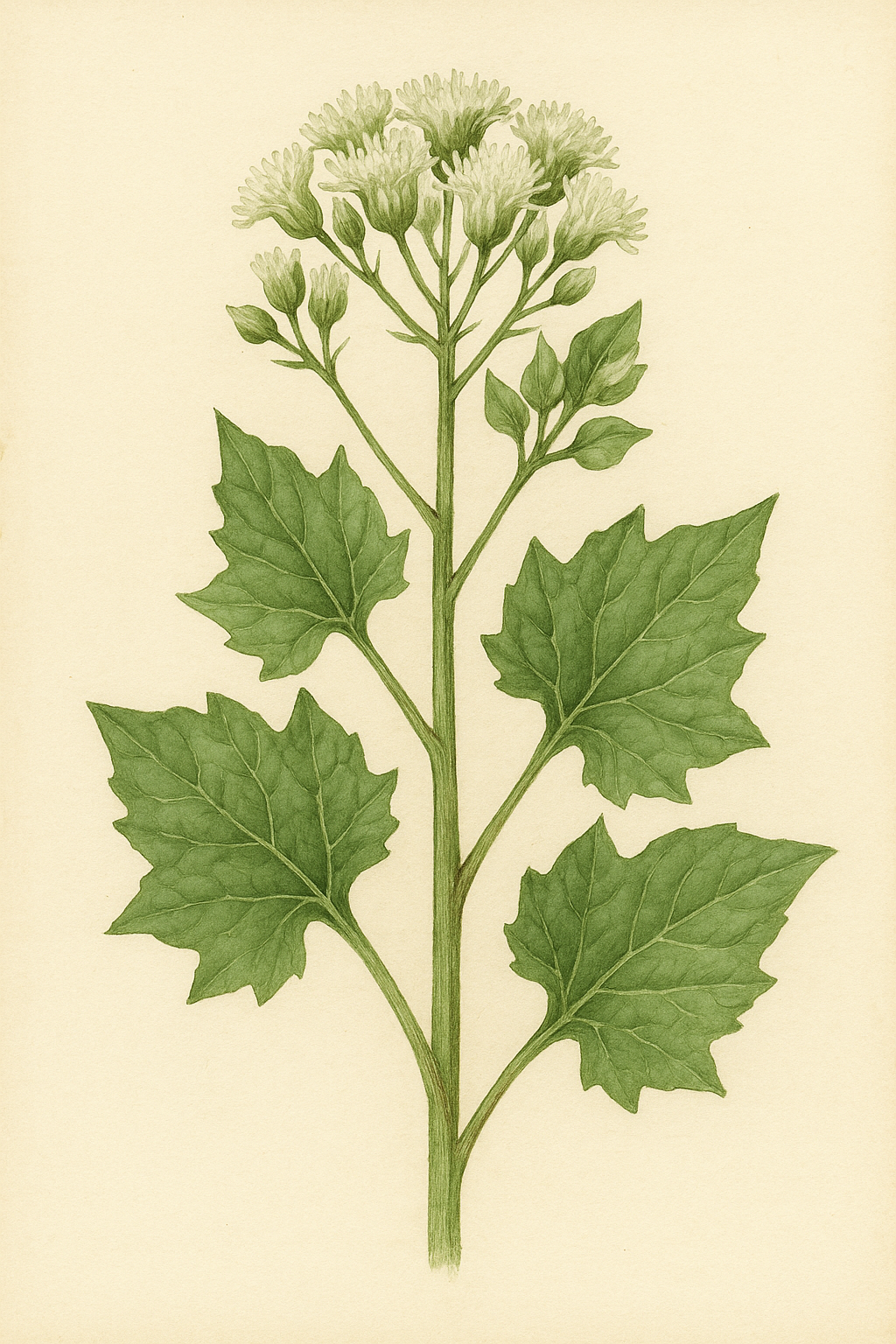
A robust, perennial herb with a single or few erect stems emerging from a perennial rootstock; typically a tall plant, often reaching several feet in height. Flowering stems terminate in loose, corymb-like clusters of many small composite heads. Individual heads are composed mostly of tubular disc florets that are pale white to greenish-white, producing an overall subdued, pale inflorescence rather than showy rays. Leaves are alternate, coarse-textured, and generally broad—ranging from ovate to lanceolate—often larger toward the base and smaller on the upper stem; margins may be entire to toothed. Stems are usually stout and can be grooved; the plant’s overall appearance is coarse and architectural. Seasonal variation: foliage and flowering occur in the growing season, with inflorescences developing later in the season; leaves may decline after flowering and with the onset of dormancy.
Habitat & Distribution
Typically found in open to semi-open habitats such as prairies, meadows, savannas, roadsides, and open woodland edges. Often associated with mesic to moderately moist soils, and commonly occurs in sites receiving full sun to partial shade. Geographic distribution is across the eastern and central United States — recorded in states including Alabama, Arkansas, Delaware, Florida, Georgia and many others (approximately 30 states across its range) — generally favoring temperate lowland and upland habitats in that region.
Ecological Role
Flowers produce nectar and pollen that attract a range of insect visitors; bees and flies are commonly recorded visitors to pale, tubular disc florets in this group, and the plant likely contributes to late-season forage for generalist pollinators. Fruits are achenes with pappus hairs typical of Asteraceae, facilitating wind dispersal. As a tall-forb species, it can contribute to structural diversity in prairie and meadow communities.
Human Uses & Cultural Significance
No widely documented modern or traditional uses are confidently attributed to this species in the primary botanical literature presented here; no specific medicinal or culinary uses are asserted.
Conservation & Interesting Facts
No widespread conservation concern is universally reported for the species across its broad range. The genus name Arnoglossum is derived from Greek elements commonly interpreted as a reference to “lamb’s tongue,” reflecting the broad, tongue-like leaves that help distinguish members of the genus. Another notable trait is the prevalence of only disc florets (no showy rays), which gives the flowers a subtle, pale appearance compared with many other daisy-family members.
From Instagram