Arnica arnoglossa
Arnica arnoglossa
BloomEDU
Identify it today. Know it next time.
Add Arnica arnoglossa to BloomEDU and a short quiz tomorrow will check if the name stuck.
Get BloomEDU — add Arnica arnoglossaFree · iOS · Android
Identity & Classification
Scientific name: Arnica arnoglossa. Family: Asteraceae. Genus: Arnica. Common names: generally referred to as a type of arnica; a widely used specific vernacular name is not well-documented in mainstream floras. Taxonomically it belongs to the same Arnica genus as other North American and Eurasian arnica species, and is therefore closely related to other yellow-flowered Arnica herbs.
Visual Description
Form and size: A perennial, herbaceous plant with a low-to-medium stature, typically forming one to a few erect flowering stems arising from a basal cluster of leaves. Plants are generally shorter than woody shrubs and often occupy a small clump in meadow or slope habitats.
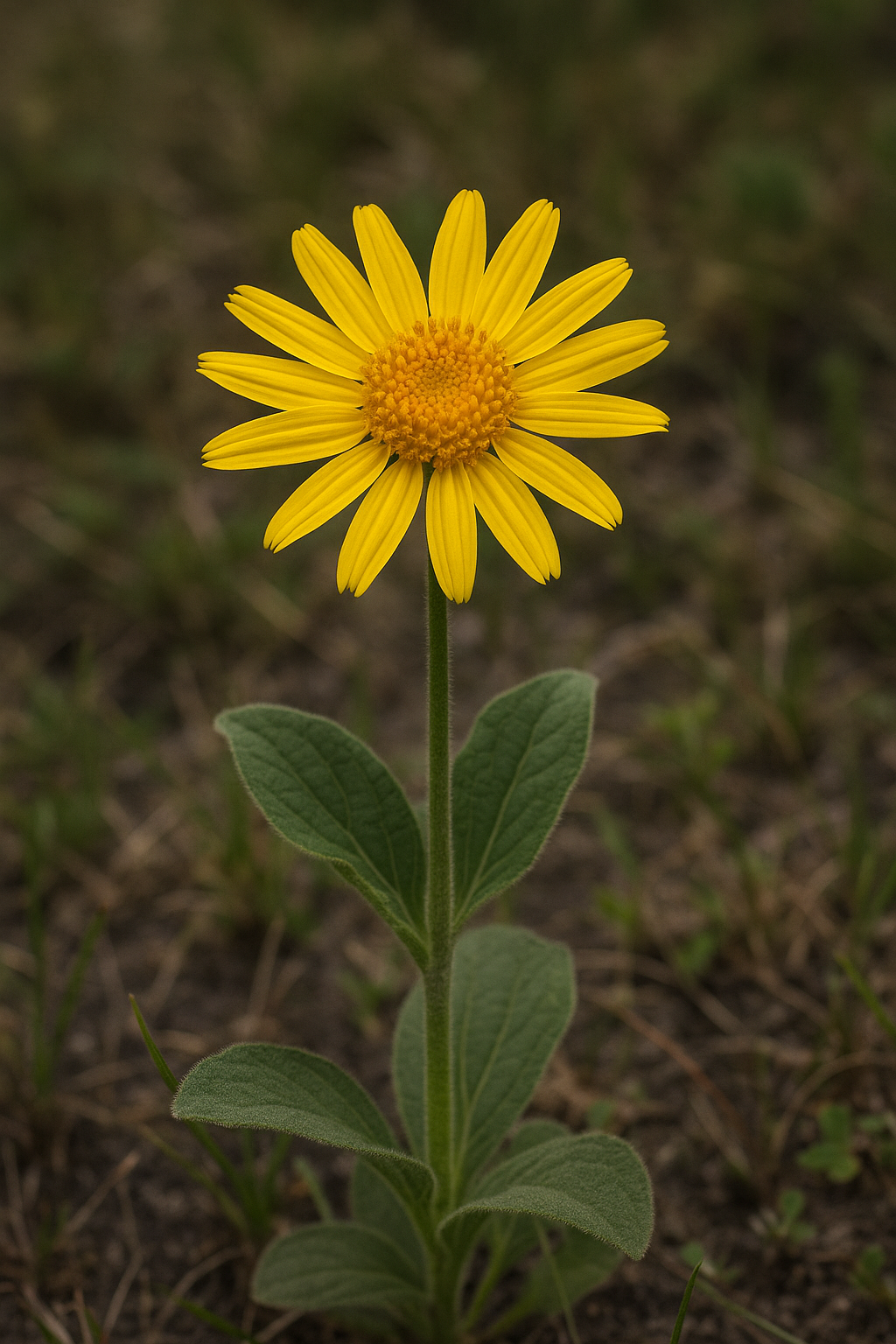
Flowers: Flowerheads are daisy-like composite inflorescences typical of Asteraceae, with conspicuous yellow ray florets surrounding a central disk of tubular florets. Heads are usually solitary or borne in small groups at stem tips; ray florets typically number in the single digits to low double digits and are bright yellow to golden in color.
Leaves: Leaves often include a basal rosette of larger blades and one or more pairs of stem leaves. Blades are typically ovate to lance-shaped, sometimes toothed or slightly lobed, and usually bear hairs or glandular pubescence. Leaves are commonly opposite on the flowering stem.
Distinctive features: Bright yellow, daisy-like flowerheads; glandular or hairy foliage; a low clumping habit with one or a few flowering stems. Plants may be aromatic or resinous to the touch, as seen in other Arnica species.
Seasonal variation: Vegetative growth appears in spring with flowering in the warmer months; flowers and foliage may senesce late in the growing season.
Habitat & Distribution
Growing conditions: Typically found in montane and montane-grassland settings—open meadows, grassy slopes, and clearings—often at higher elevations relative to lowland flora. Prefers well-drained soils and is commonly found in sites receiving full sun to partial shade. Moisture regimes may range from mesic to seasonally dry.
Geographic distribution: Documented in parts of the north-central Rocky Mountain region of the United States, including Montana, South Dakota, and Wyoming.
Ecological Role
Pollination: As with other Arnica species, flowerheads commonly attract a variety of insect visitors such as bees, flies, and butterflies, serving as a nectar and pollen resource.
Wildlife interactions: Provides forage for pollinators; specific herbivore relationships are not extensively documented for this species. Its aromatic and glandular compounds may deter some browsing.
Human Uses & Cultural Significance
Like congeners in the Arnica genus, plants in this group have been associated with topical medicinal uses in herbal traditions; however, internal use of Arnica extracts can be harmful. The genus contains bioactive compounds that can cause skin irritation or toxicity if misused, so any medicinal application should follow established medical guidance. Specific traditional uses for Arnica arnoglossa are not well documented in mainstream botanical literature.
Conservation & Interesting Facts
No widely accepted conservation status is specified here. Fascinating fact: the bright yellow, composite flowerheads of Arnica species are highly attractive to a broad suite of pollinators, making them important components of montane wildflower communities. Many mountain-adapted Arnica show hairy and glandular foliage—an adaptation that can reduce water loss and protect tissues from intense sunlight and cold.
From Instagram