Chiricahua rockcress
Arabis tricornuta
BloomEDU
Identify it today. Know it next time.
Add Chiricahua rockcress to BloomEDU and a short quiz tomorrow will check if the name stuck.
Get BloomEDU — add Chiricahua rockcressFree · iOS · Android
Identity & Classification
Scientific name: Arabis tricornuta
Common name(s): Chiricahua rockcress
Family: Brassicaceae
Genus: Arabis (a group of temperate rockcresses within the mustard family)
Visual Description
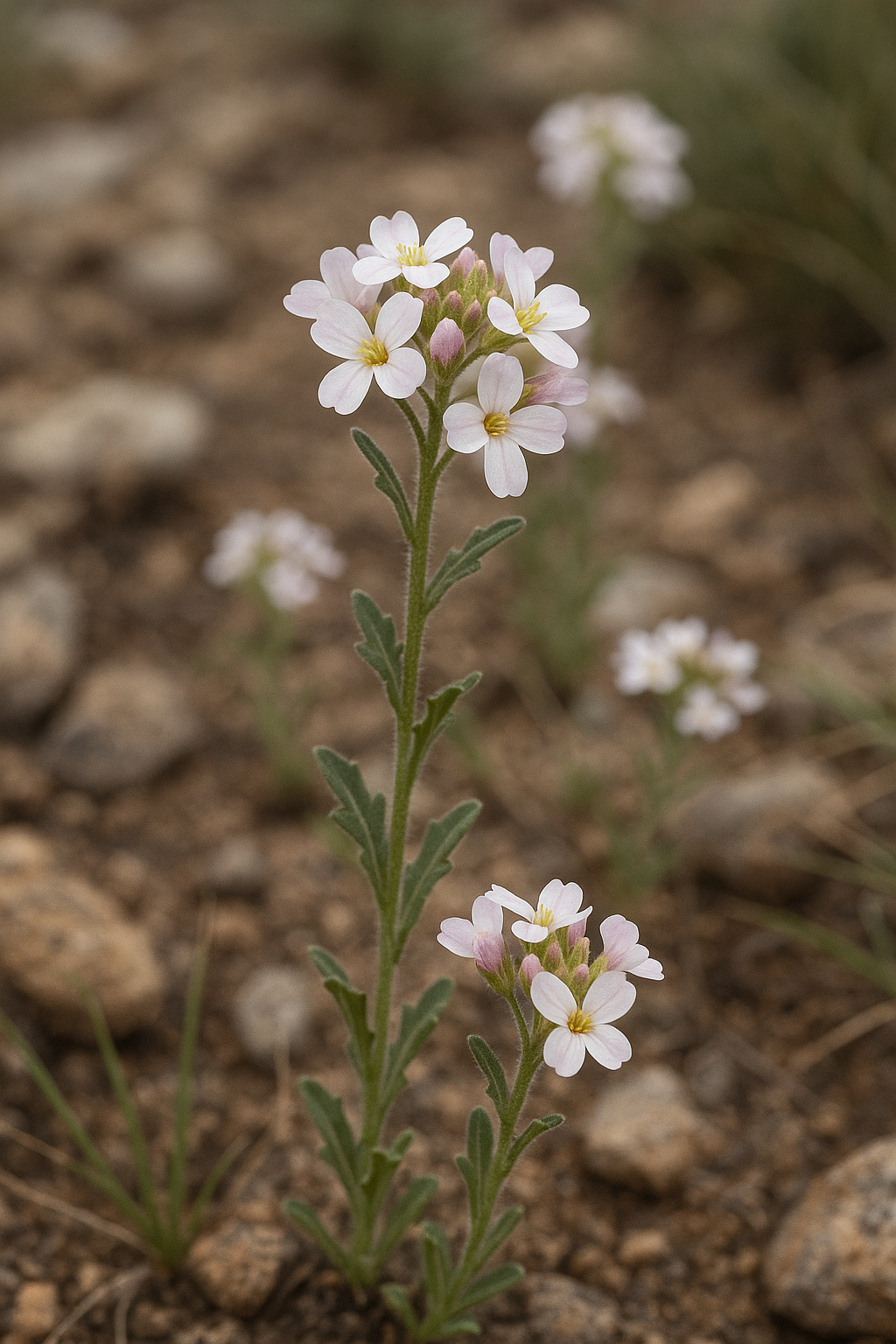
Arabis tricornuta is a perennial herbaceous rockcress that typically forms a low to moderately upright clump or rosette. Plants often produce one or several flowering stems rising above the basal leaves. Flowering stems and leaves are commonly hairy to some degree, reflecting the genus’ generally pubescent habit. Flowers display the characteristic Brassicaceae structure of four petals and four sepals; petal number is therefore typically 4 and petals may be white to pale pink or lightly tinted. Inflorescences are racemes of multiple small flowers that open sequentially. Fruits are slender siliques (typical mustard-family pods) produced along the stem after flowering. Leaves are usually arranged in a basal rosette with smaller cauline leaves on the flowering stem; basal leaves are often oblong to lance-shaped and may be toothed or entire depending on plant condition and local variation. Seasonal changes generally include spring flowering with foliage persisting as the season progresses; plants may appear more compact outside the bloom period.
Habitat & Distribution
Chiricahua rockcress is known from Arizona and is often associated with mountainous, rocky terrain. It typically grows on rocky slopes, ledges, canyon walls and other well-drained sites within higher-elevation or sky-island habitats. Common ecological settings include oak–pine and mixed mountain woodlands and rocky outcrops where soils are shallow and drainage is rapid. The species generally favors sunny to partly shaded exposures and tolerates the drier, well-drained soils characteristic of its mountain-home sites in Arizona.
Ecological Role
Flowers of Arabis tricornuta provide nectar and pollen to a variety of insect visitors; native bees and small flies are commonly involved in pollination of small mustard-family flowers. As a native component of rocky mountain flora, it contributes to localized plant community diversity and offers floral resources during its blooming period.
Human Uses & Cultural Significance
There are no widely documented traditional or modern uses commonly attributed to Arabis tricornuta in standard botanical literature.
Conservation & Interesting Facts
Arabis species are well known for their adaptation to thin, rocky soils and for producing siliques—the elongated seed pods typical of the mustard family. The specific epithet tricornuta suggests a morphological detail referenced by the original description, and plants of this group are often of botanical interest because many rockcresses are restricted to specialized, localized habitats in mountain ranges. Because this species is primarily reported from Arizona mountain areas, it may be locally range-restricted and of interest for regional botanical surveys and habitat conservation.
From Instagram