Antennaria tansleyi
Antennaria tansleyi
BloomEDU
Identify it today. Know it next time.
Add Antennaria tansleyi to BloomEDU and a short quiz tomorrow will check if the name stuck.
Get BloomEDU — add Antennaria tansleyiFree · iOS · Android
Identity & Classification
Scientific name: Antennaria tansleyi. Family: Asteraceae. Genus: Antennaria (commonly called "pussytoes" for the genus). The species is part of the pussytoes group within Asteraceae; genus-level traits (small, woolly, composite heads) apply broadly across Antennaria.
Visual Description
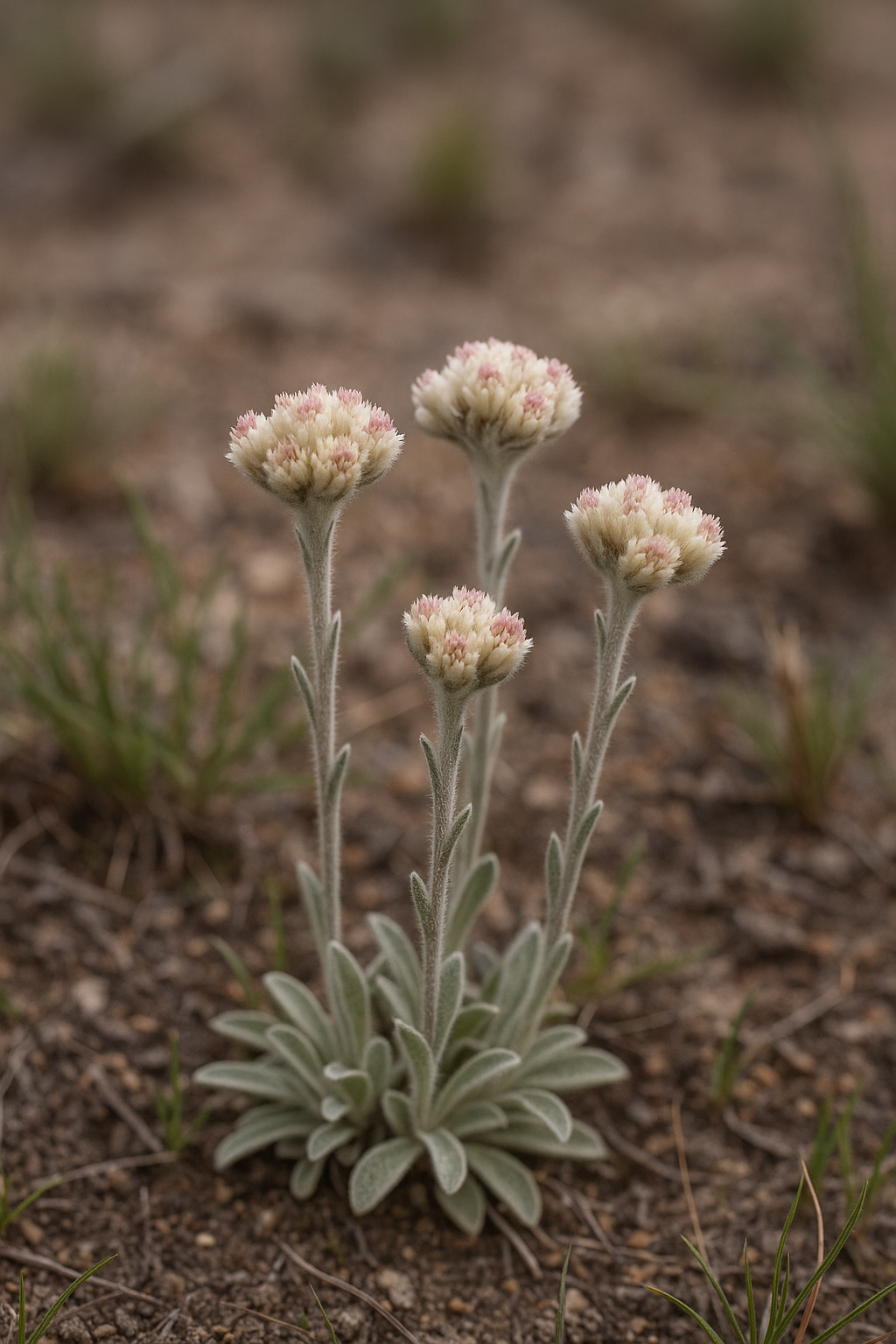
Antennaria tansleyi is a low-growing perennial herb that typically forms mats or loose clumps from short stems or stolons. Plants are generally compact and ground-hugging. Leaves are often arranged in basal rosettes and along short flowering stems; leaf blades are usually gray-green to silvery because of a dense covering of fine hairs, giving the plant a woolly or felted appearance. Flowering stems are short and bear small clusters of composite flower heads. Heads are composed of numerous small florets and often appear as whitish, cream, or pinkish tufted clusters; individual heads are inconspicuous compared with many other Asteraceae but collectively form noticeable clusters. A pappus of fine hairs is typically present on the fruit, aiding wind dispersal. Seasonal variation includes more pronounced woolliness and compact form during dry or cold periods, with flowers appearing during the local growing season (often in summer in northern and montane climates).
Habitat & Distribution
Antennaria tansleyi is typically found in northern and montane western North America, with documented occurrences in Alaska, Montana, and Wyoming. It is often associated with open, well-drained sites such as alpine and subalpine meadows, rocky slopes, tundra hollows, and open coniferous or mixed-wood sites. The species commonly grows in soils that are sandy, gravelly, or otherwise well-drained; it generally prefers full sun to partial shade and can tolerate the exposed, seasonal conditions of high-elevation and high-latitude habitats.
Ecological Role
Pussytoes in general attract a variety of small pollinators; Antennaria flowers are typically visited by small bees, flies, and other insects able to access their compact florets. Many Antennaria species produce a pappus-bearing achene adapted for wind dispersal. In montane and tundra communities, Antennaria species can contribute to groundcover stability and provide forage for small herbivores, especially early in the growing season.
Human Uses & Cultural Significance
No well-documented, species-specific traditional or modern uses for Antennaria tansleyi are widely reported in the botanical literature. The genus Antennaria has a history of limited traditional uses in some regions, but such uses should not be attributed to A. tansleyi without specific sources.
Conservation & Interesting Facts
Conservation status for Antennaria tansleyi is not widely documented at a national level; local populations should be considered in context of regional habitat conditions. Many species in the genus exhibit interesting reproductive strategies—including vegetative spread and apomixis (asexual seed production)—which often complicate species boundaries and taxonomy. The characteristic woolly leaf surface helps reduce water loss and protect foliage from intense sunlight and cold in exposed alpine and arctic environments.
From Instagram