Prince-of-Wales feather
Amaranthus hypochondriacus
BloomEDU
Identify it today. Know it next time.
Add Prince-of-Wales feather to BloomEDU and a short quiz tomorrow will check if the name stuck.
Get BloomEDU — add Prince-of-Wales featherFree · iOS · Android
Identity & Classification
Scientific name: Amaranthus hypochondriacus. Verified common names: Prince-of-Wales feather, prince's-feather, a type of grain amaranth. Family: Amaranthaceae. Genus: Amaranthus. Taxonomically this species belongs to the group of amaranths that include both ornamental and grain-producing taxa; it is closely related to other cultivated grain amaranths.
Visual Description
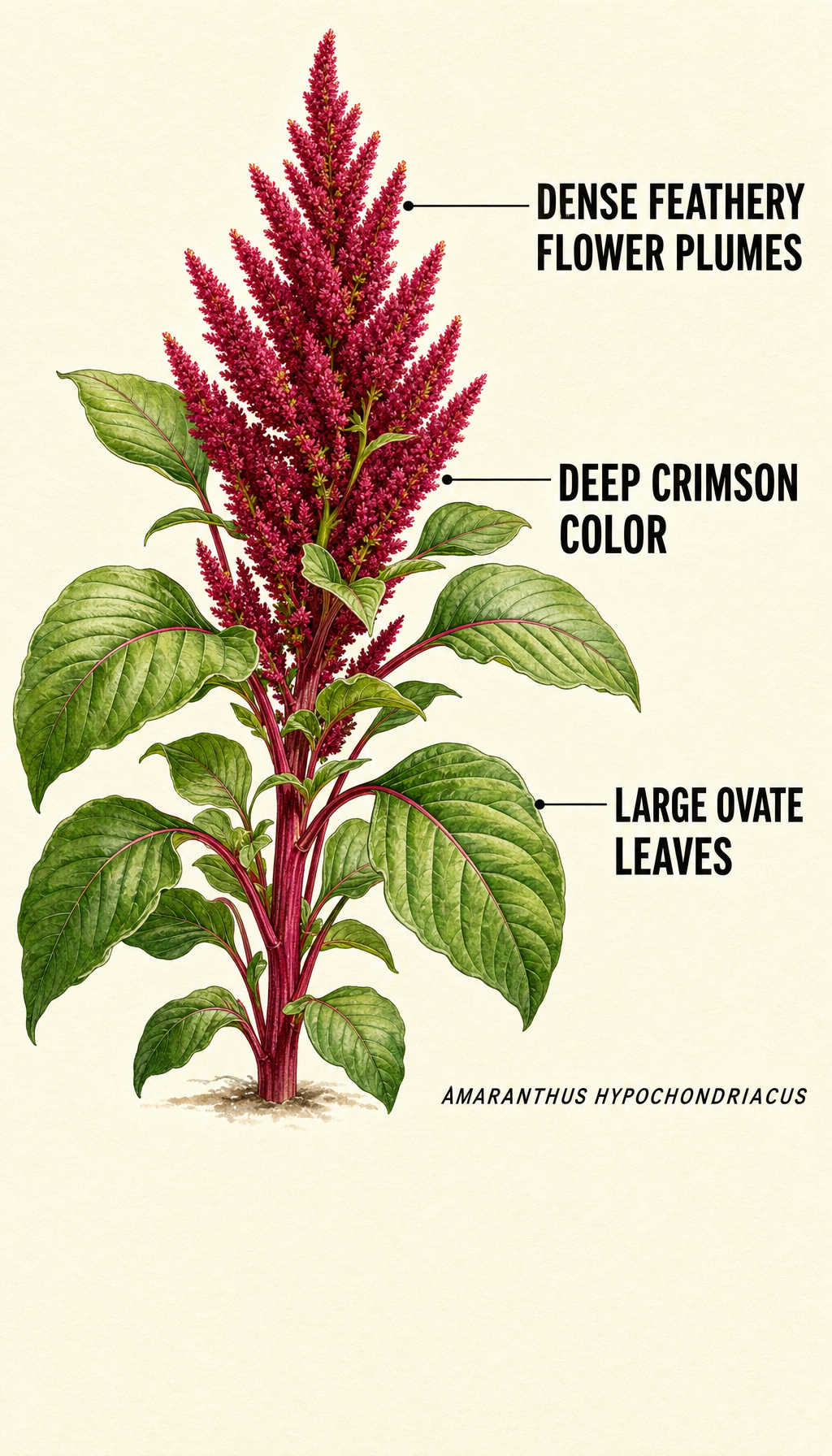
Overall form: An erect annual herb that typically forms a single or few robust stems with an upright habit. Plants can often reach over human height in favorable conditions. Flower characteristics: Inflorescences are dense, elongated panicles or plumes composed of many tiny, apetalous flowers; individual flowers are inconspicuous, but the massed inflorescence is showy. Coloration of the blooms and bracts is commonly deep crimson to magenta, though greenish or gold tones may occur in some forms. Leaf structure and arrangement: Leaves are alternate, simple, generally ovate to lanceolate with entire or slightly wavy margins and a distinct petiole; leaf surfaces may be green to tinged with red. Distinctive identifying features: Long, feathery, often drooping terminal inflorescences with vivid coloration and a coarse, one-stemmed habit; seed-bearing clusters that mature to dense, grain-like seeds. Seasonal variation: As an annual, foliage and blooming typically develop through the warm season with peak flowering in late summer to autumn in temperate regions.
Habitat & Distribution
General growing conditions and ecosystems: Often cultivated in gardens and fields and commonly found as an escape or weed in disturbed sites, roadsides, and cultivated ground. Prefers warm, sunny sites and is often found in full sun. Moisture and soil preferences: Generally adaptable to a range of soils but typically grows best in fertile, well-drained soils; tolerates dry spells once established. Geographic distribution: Recorded in U.S. states including Arizona, California, Florida, Kansas, Massachusetts and other states across the country; occurs where climate and cultivation permit.
Ecological Role
Flowers are small and primarily adapted for self-pollination or wind dispersal of pollen, though the dense inflorescences may attract bees and other insects that visit for pollen or nectar. Seeds are small and can be a food resource for granivorous birds and small mammals. Ecologically this species often behaves as a colonizer of nutrient-rich, disturbed soils and can establish readily in cultivated and ruderal habitats.
Human Uses & Cultural Significance
Amaranthus hypochondriacus is one of the species historically and currently cultivated as a grain amaranth and is also widely grown as an ornamental for its dramatic plumes. As with other amaranths, leaves and seeds have been used as food in various cultures; some amaranths can accumulate nitrates or contain soluble oxalates, so standard food-safety precautions are appropriate.
Conservation & Interesting Facts
Not generally regarded as rare or threatened; widely cultivated and commonly naturalized in many areas. Interesting fact: Amaranths, including A. hypochondriacus, use the efficient C4 photosynthetic pathway, which helps them thrive in hot, sunny environments. Its common name reflects the showy, feather-like appearance of the inflorescences.
From Instagram