manyflower onion
Allium pleianthum
BloomEDU
Identify it today. Know it next time.
Add manyflower onion to BloomEDU and a short quiz tomorrow will check if the name stuck.
Get BloomEDU — add manyflower onionFree · iOS · Android
Identity & Classification
- Scientific name: Allium pleianthum
- Common name: manyflower onion
- Family: Amaryllidaceae (Allioideae); species of Allium have historically been placed in Liliaceae in older treatments
- Genus: Allium
Visual Description
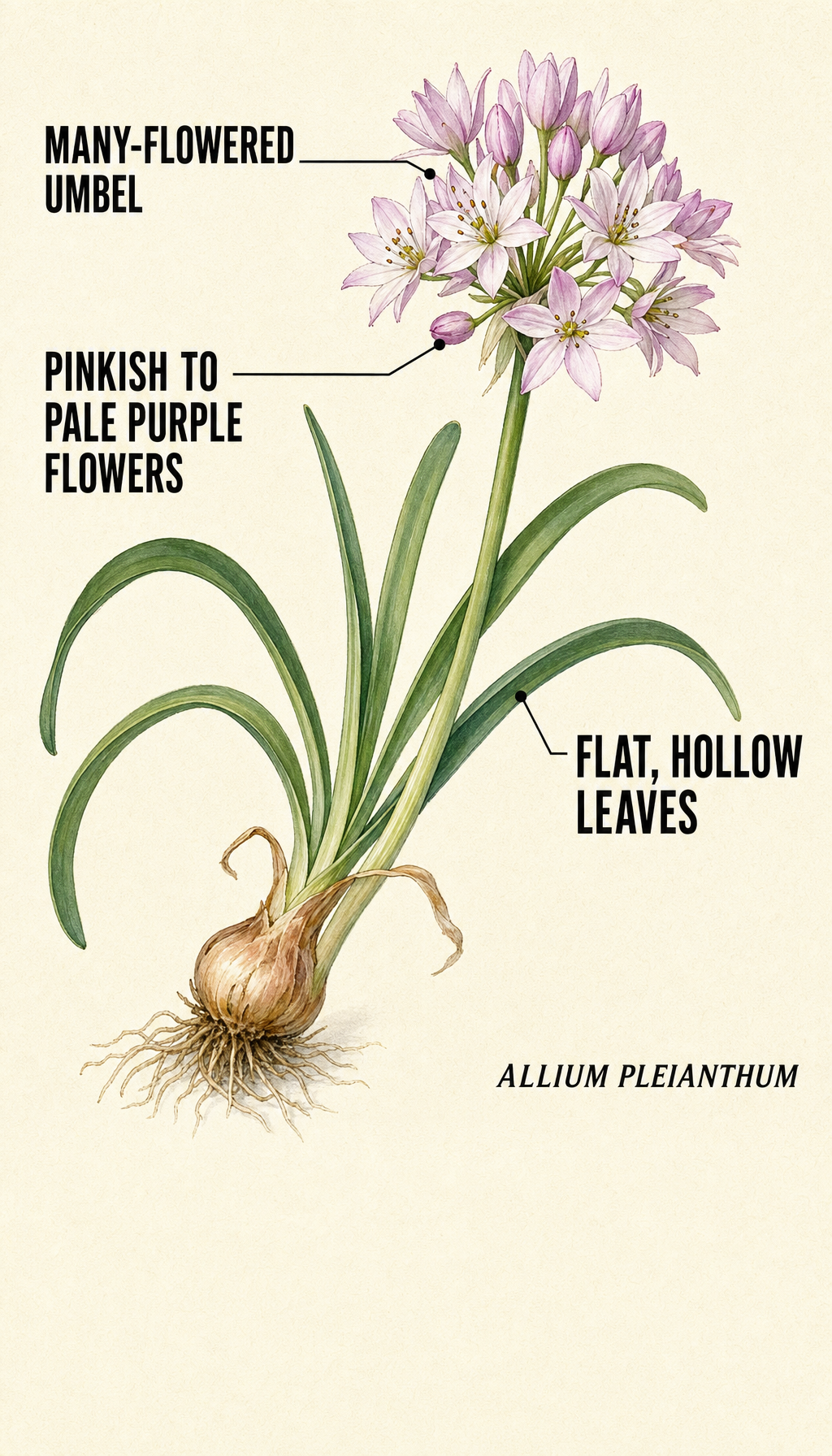
- Overall form: A perennial, bulbous herb arising from one or more underground bulbs and producing a single leaf-bearing basal rosette and one or more leafless flowering stalks (scapes). Plants are generally compact but can produce conspicuous flower clusters at the scape tip.
- Flowers: Inflorescence a rounded to hemispherical umbel bearing numerous small, star-like flowers. Individual flowers have six tepals (often referred to as petals in non-technical descriptions), six stamens, and a central ovary. Flower color may range from white to pinkish or pale purple in related Allium species; manyflower onion typically produces many small, closely packed blooms in each umbel.
- Leaves: Basal leaves are usually a few in number, linear to lanceolate, often hollow or channeled in cross-section, and typically with a smooth margin. Leaves often wither or are reduced by the time the plant is in full bloom.
- Distinctive features: The combination of a true bulb, a naked rounded umbel with numerous small flowers, and the hollow/channeled basal leaves helps distinguish manyflower onion from other spring herbs and grasses. The densely flowered umbel is a key field character.
- Seasonal variation: Plants are perennial and may die back to the bulb after flowering and seed set. Foliage vigor and timing of flowering can vary with elevation and local moisture conditions.
Habitat & Distribution
- Growing conditions and ecosystems: Often found in open, well-drained sites such as dry to mesic meadows, rocky slopes, grasslands, and open forest margins. Tolerant of sunny to partly shaded conditions depending on site.
- Soil and moisture preferences: Typically associated with well-drained soils; can occur on rocky or shallow soils as well as more developed meadow soils.
- Geographic distribution: Recorded in Oregon. Local abundance and precise range within the state can vary by habitat.
Ecological Role
- Pollinators: Flowers of Allium species are commonly visited by a variety of insects, especially bees and other short-tongued pollinators; manyflower onion is often insect-pollinated.
- Wildlife interactions: Bulbs and foliage are generally not a major food source for large herbivores; woody bulbs and onion-like compounds may deter some mammals. Allium species contribute nectar and pollen resources to native insect communities.
- Niche: A spring- to early-summer flowering bulbous herb adapted to survive unfavorable seasons underground and reproduce via seed and bulb offsets.
Human Uses & Cultural Significance
- Edibility and toxicity: Many Allium species have characteristic onion/garlic compounds. Some Allium are edible, but specific traditional or culinary uses of Allium pleianthum are not well documented in the botanical literature. Allium species can be toxic to dogs and cats and may cause hemolytic anemia in susceptible animals.
Conservation & Interesting Facts
- Unique adaptations: Bulb dormancy allows persistence through dry or cold seasons; the elevated umbel presents many small flowers to pollinators efficiently.
- Interesting fact: Allium flowers are composed of tepals rather than distinct petals and sepals, a feature common to the genus.
From Instagram