field garlic
Allium oleraceum
BloomEDU
Identify it today. Know it next time.
Add field garlic to BloomEDU and a short quiz tomorrow will check if the name stuck.
Get BloomEDU — add field garlicFree · iOS · Android
Identity & Classification
Scientific name: Allium oleraceum. Verified common name: field garlic. Family: Amaryllidaceae (subfamily Allioideae); historically placed in Liliaceae/Alliaceae in older treatments. Genus: Allium. Taxonomic relationships: clearly allied with other wild onions and garlics in Allium.
Visual Description
Overall form: A small, perennial bulb-forming herb with one or a few upright, leafless flowering stalks (scapes) arising from basal bulbs; plants typically form loose clusters via bulbs and bulblets. Flowering height and leaf length can vary with site and age.
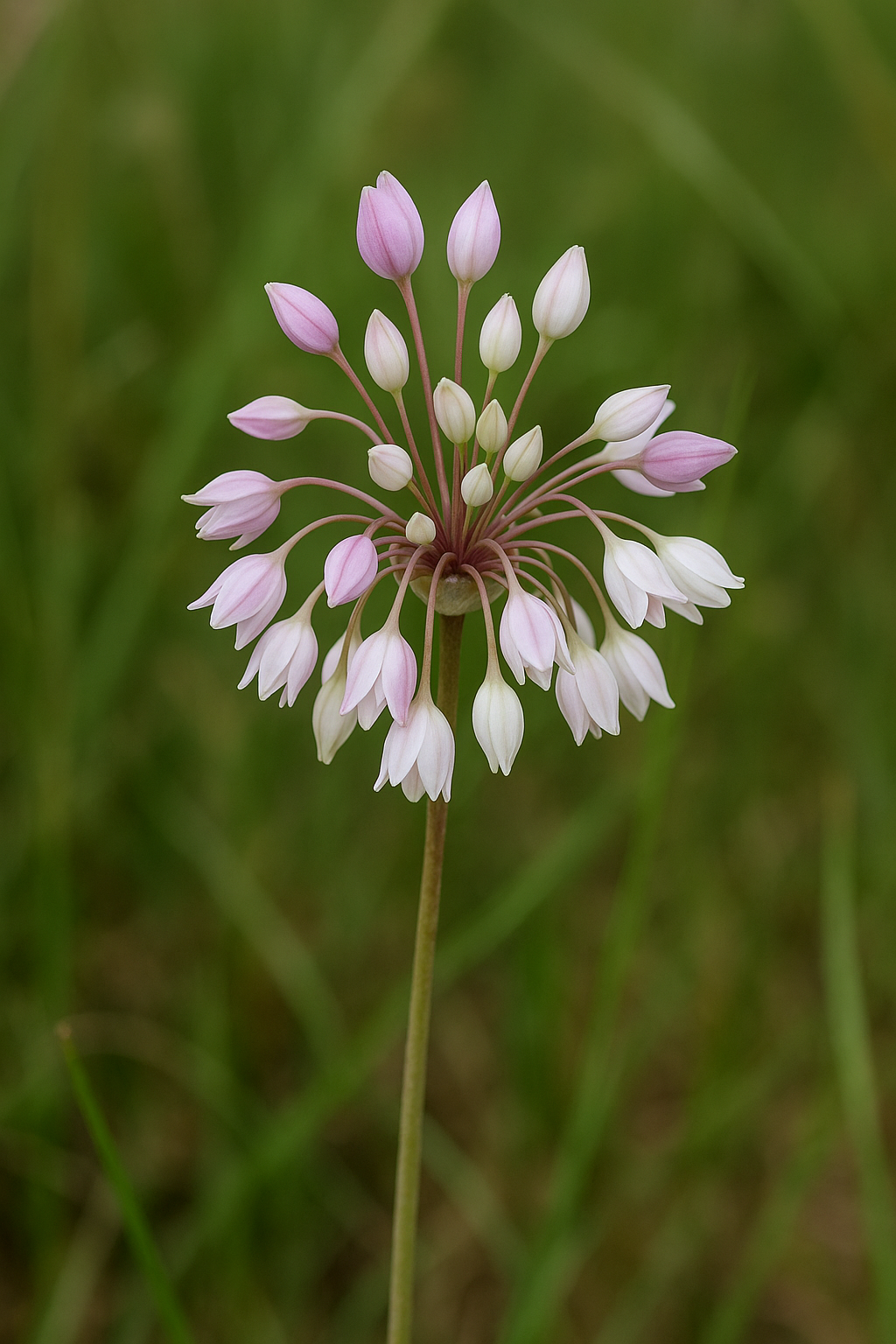
Flowers: Flowers arranged in a terminal, hemispherical to rounded umbel that often contains a mix of open flowers and small rounded bulblets. Individual flowers are small, broadly bell-shaped to starry, typically with six tepals (the perianth segments that resemble petals). Color is most often pink to purplish but can be paler or whitish.
Leaves: Basal, strap-like or narrow, grassy to slightly channeled leaves that usually wither by the time seed matures; leaf surfaces may be somewhat rough or textured. Leaf arrangement is primarily basal rather than alternate along the scape.
Distinctive features: Garlic/onion odor when leaves or bulbs are crushed; presence of small bulblets among or replacing flowers in the umbel (a key field characteristic distinguishing it from some related Allium species).
Seasonal variation: Leaves are most prominent during the vegetative and early flowering period and may die back as the season progresses; umbels may show a mixture of flowers and bulblets as flowering advances.
Habitat & Distribution
General conditions: Typically found in open, often well-drained habitats such as meadows, roadside verges, grasslands, and open woodland edges; often occupies calcareous or neutral soils but can persist on a range of substrates. Prefers full sun to partial shade.
Moisture/light/soil: Often grows in moderately dry to mesic sites with good drainage and moderate fertility.
Geographic distribution: A Eurasian species that is naturalized in parts of eastern North America; recorded occurrences include Kentucky, Massachusetts, New York, Pennsylvania, and Virginia.
Ecological Role
Pollinators: Flowers provide nectar and pollen and are commonly visited by bees and other insect pollinators.
Interactions: The nectar/pollen resources support generalist pollinators; vegetative bulblets enable local clonal spread and persistence in disturbed places.
Human Uses & Cultural Significance
Uses: As with many Allium species, field garlic has a garlic-like aroma and has been used as a culinary herb in its native range; such uses are documented historically but vary regionally.
Toxicity: Members of the Allium genus are known to be toxic to some domestic animals (notably dogs and cats) if ingested in sufficient quantities.
Conservation & Interesting Facts
Conservation: Not generally regarded as a species of conservation concern where it is established; local status may vary.
Interesting facts: The production of bulblets in the inflorescence is a distinctive reproductive strategy that allows rapid vegetative spread in addition to seed production. The characteristic garlic scent released when tissues are crushed is due to sulfur-containing compounds common to Allium species.
From Instagram