Arizona monkshood
Aconitum infectum
BloomEDU
Identify it today. Know it next time.
Add Arizona monkshood to BloomEDU and a short quiz tomorrow will check if the name stuck.
Get BloomEDU — add Arizona monkshoodFree · iOS · Android
Identity & Classification
Scientific name: Aconitum infectum
Verified common names: Arizona monkshood (commonly referred to more broadly as monkshood or wolfsbane for species in this genus)
Family: Ranunculaceae
Genus: Aconitum
Note: Aconitum infectum is a member of the monkshood genus Aconitum within the buttercup family; taxonomic relationships among Aconitum species can be complex, but placement in this genus and family is well established.
Visual Description
Overall form: Aconitum infectum is a perennial herbaceous plant with erect stems arising from a perennial rootstock. Plants typically form upright clumps and often reach heights from several tens of centimeters up to around a meter in favorable sites.
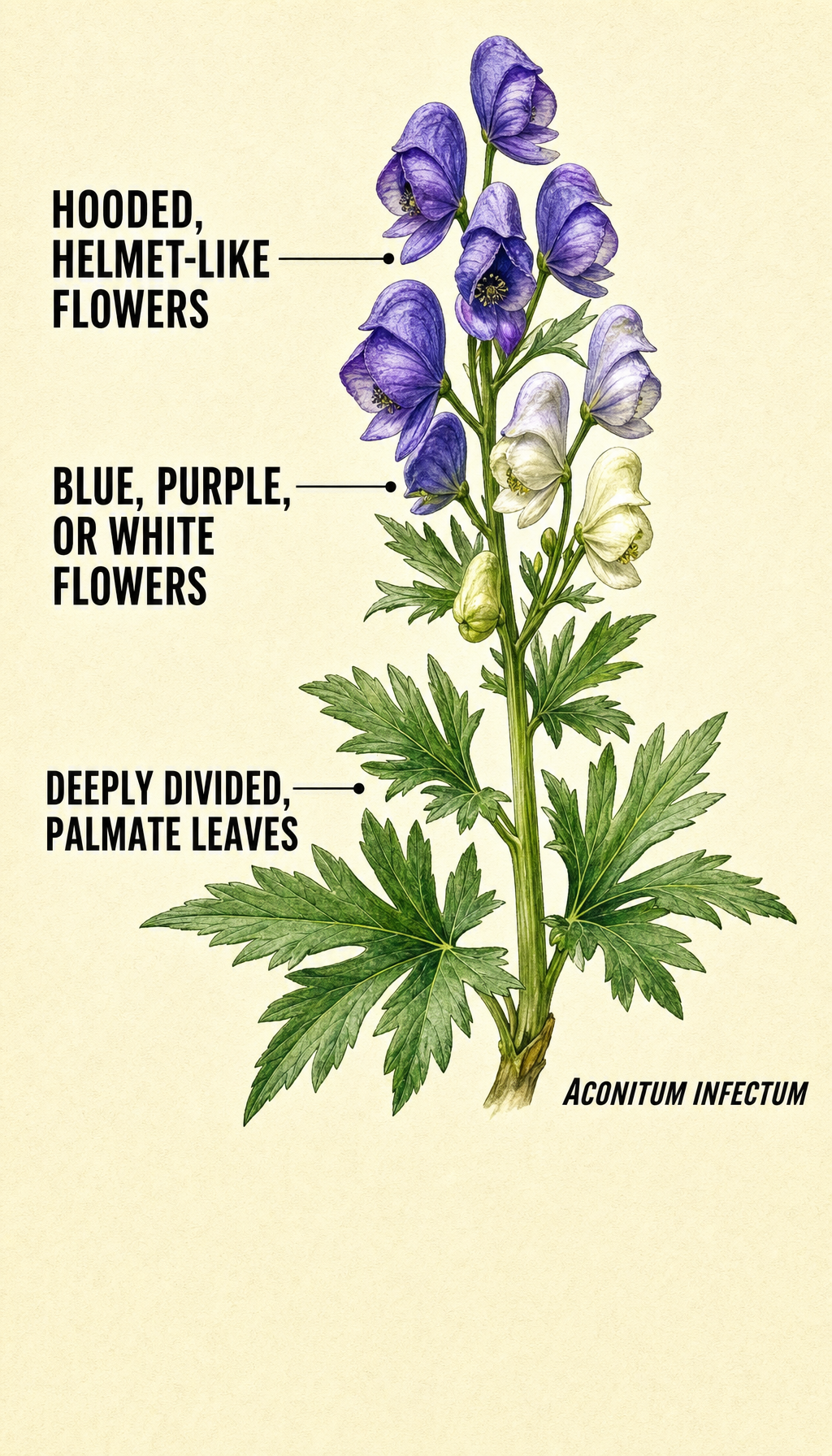
Flowers: Inflorescences are usually racemes or clusters of showy, hooded flowers. Each flower has a distinctive helmet-shaped upper sepal that gives the genus its common name. The floral structure includes multiple sepals (one forming the hood) and petaloid nectary structures; flowers are generally zygomorphic. Color is most often blue to purple, though paler or white-flowered forms can occur.
Leaves: Leaves are alternate and typically deeply lobed or divided, often with a palmate or pinnate appearance; lobes may be toothed. Foliage is usually medium to dark green and persists through the growing season.
Distinctive features: The unmistakable helmet-shaped flower, clustered racemes, and deeply divided leaves help distinguish Arizona monkshood from other mountain wildflowers. Presence of toxic alkaloids in tissues is a characteristic of the genus.
Seasonal variation: Plants generally produce foliage in spring, flower in the warm season (often mid to late summer in montane regions), and set seed afterward; foliage may die back after the growing season.
Habitat & Distribution
Growing conditions: Arizona monkshood is typically found in cooler, moister microsites compared with surrounding arid landscapes. It is often associated with mountain meadows, streambanks, and open coniferous or mixed woodlands where soils are reasonably moist and well drained.
Light and soil: Prefers partial shade to dappled sun and soils that retain moisture without being waterlogged.
Geographic distribution: Known from Arizona. Within that state it is commonly associated with higher-elevation or cooler sites rather than low-elevation desert.
Ecological Role
Pollinators: Flowers of Aconitum species are adapted for insect pollination, and bumblebees and other long-tongued bees are important pollinators capable of entering the helmet to access nectar.
Wildlife interactions: The plant’s potent alkaloids generally deter mammalian herbivores; documented interactions are primarily pollination by bees rather than extensive grazing.
Human Uses & Cultural Significance
Toxicity: Like other Aconitum species, Arizona monkshood contains powerful alkaloids and should be regarded as poisonous. Handling and especially ingestion can be hazardous. Historical medicinal and toxic uses are well documented for the genus, but any specific use should be referenced to authoritative sources.
Conservation & Interesting Facts
Conservation status is variable among Aconitum taxa and is not stated here. Fascinatingly, the helmet-shaped sepal is an adaptation that shelters the reproductive organs and guides specialized pollinators, while the plant’s chemical defenses deter most herbivores, illustrating a combination of morphological and chemical strategies for survival in montane habitats.
From Instagram